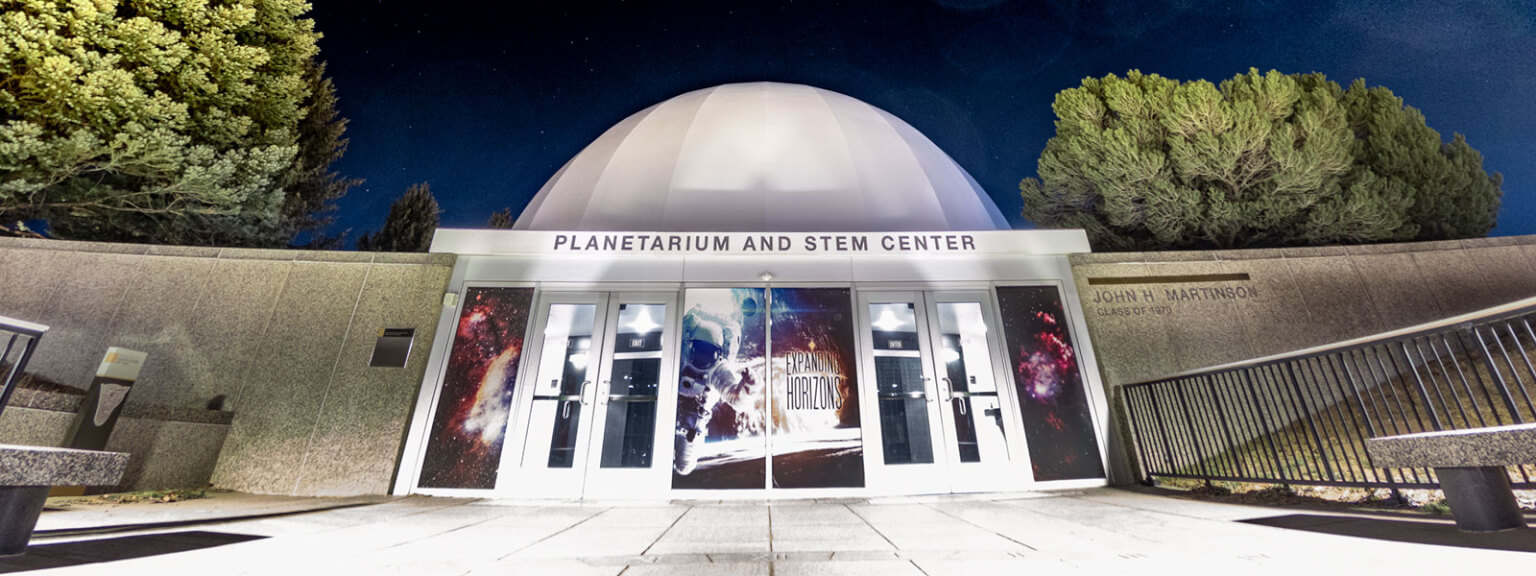
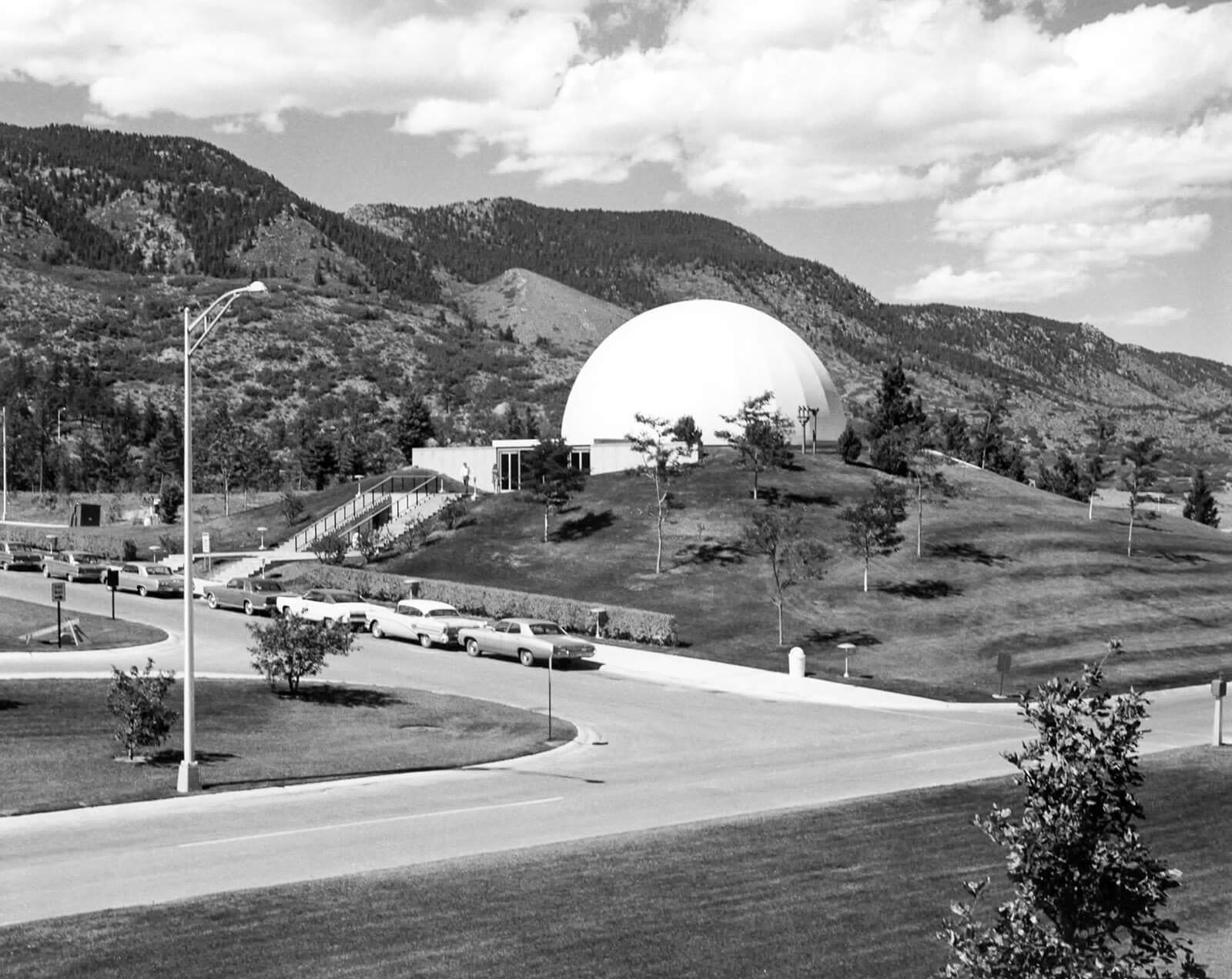
Planetarium
Request Base Access
Access procedures at the U.S. Air Force Academy continue to affect the visitor experience. While the installation remains open, anyone without a DoD ID card must request and obtain a visitor pass to enter the base using the Planetarium Base Access link associated with the week of your planned visit. Once your request is received, the 10th Security Forces Squadron’s Pass and Registration Office will conduct a background check, and you will receive a decision via text within 72 hours. If approved, proceed to either the North or the South Gate on the day of your approved visit date and present a Real ID for base access.
Base Access Links
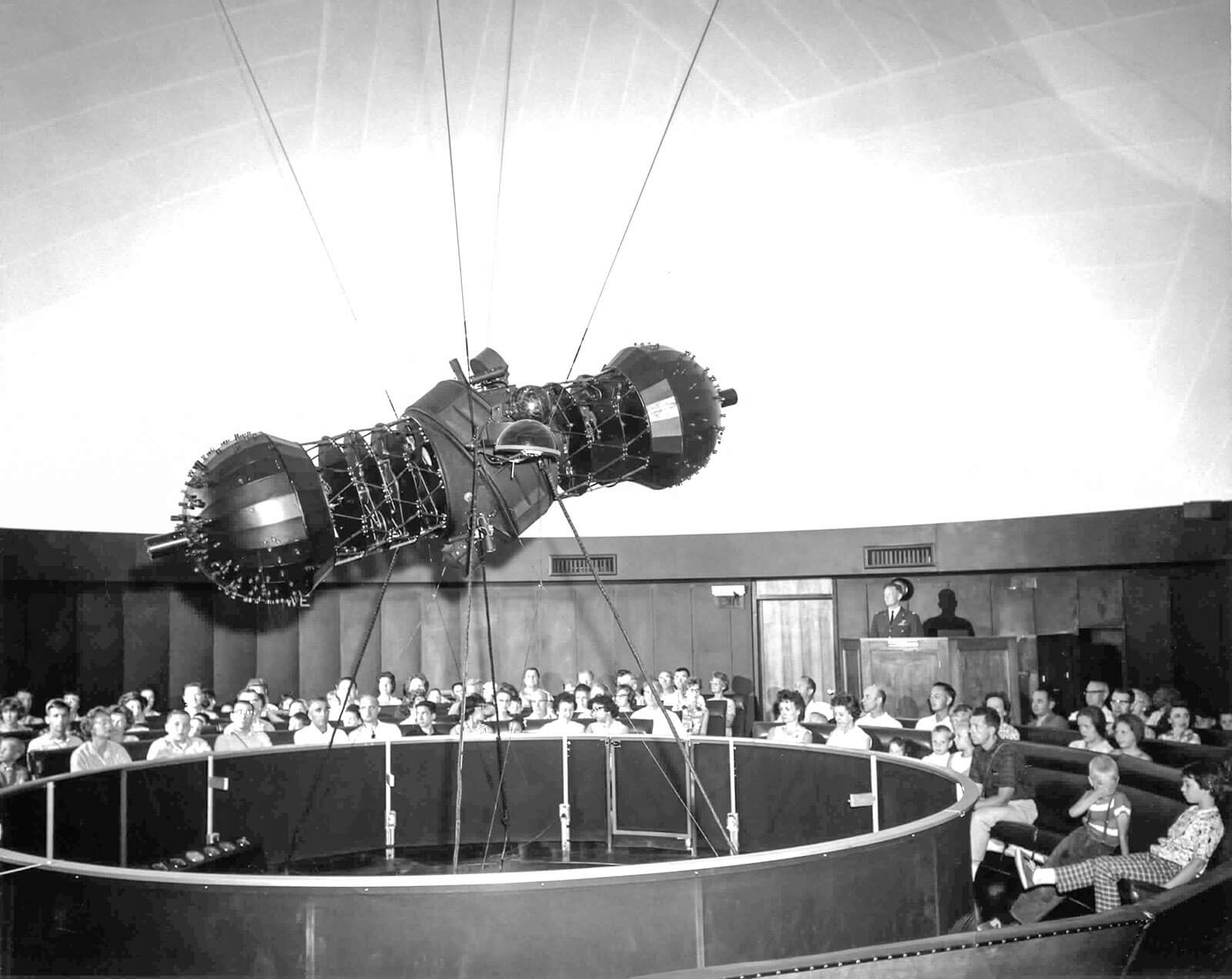
We offer a diverse range of full-dome and IMAX films, live talks and educational events using our state-of-the-art 8K projection technology and immersive surround sound.
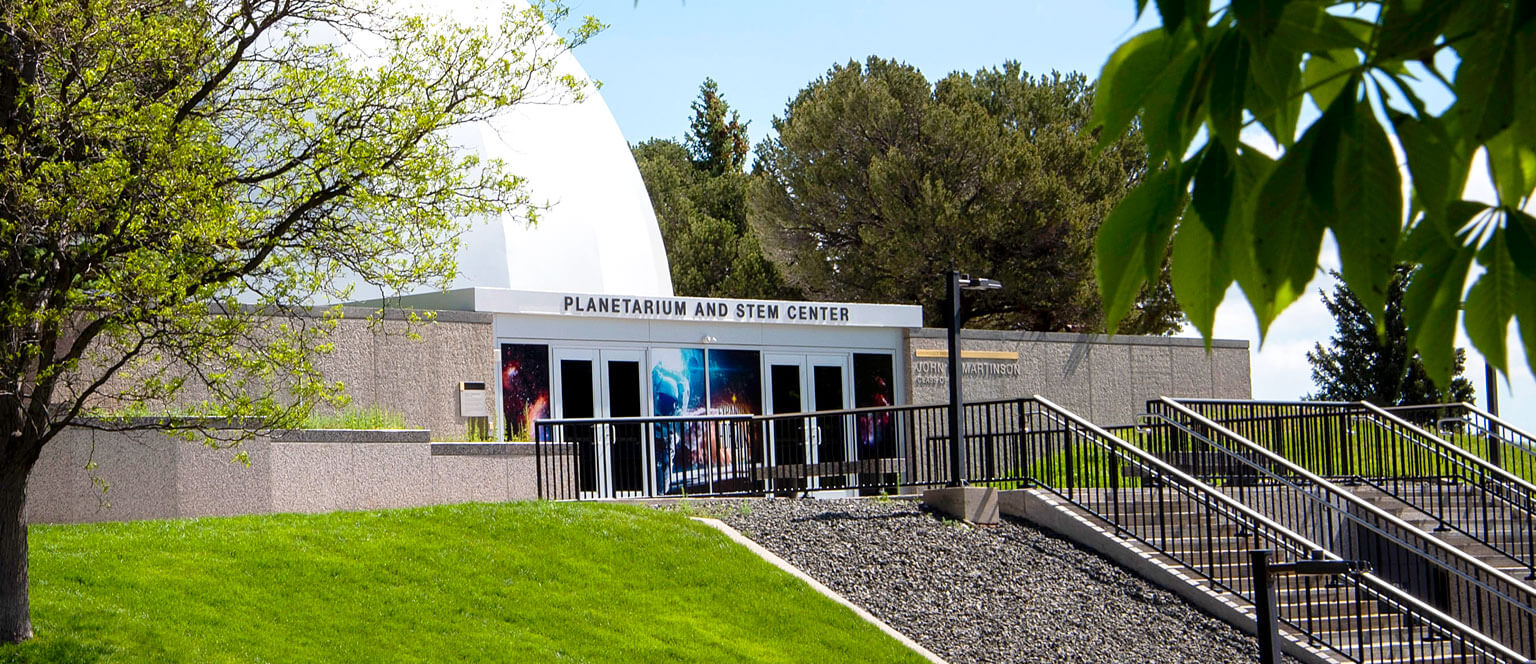
The U.S. Air Force Academy’s Planetarium enhances our Science, Technology, Engineering, and Math (STEM) outreach and cadet education mission through public shows, field trips, and cadet classes.
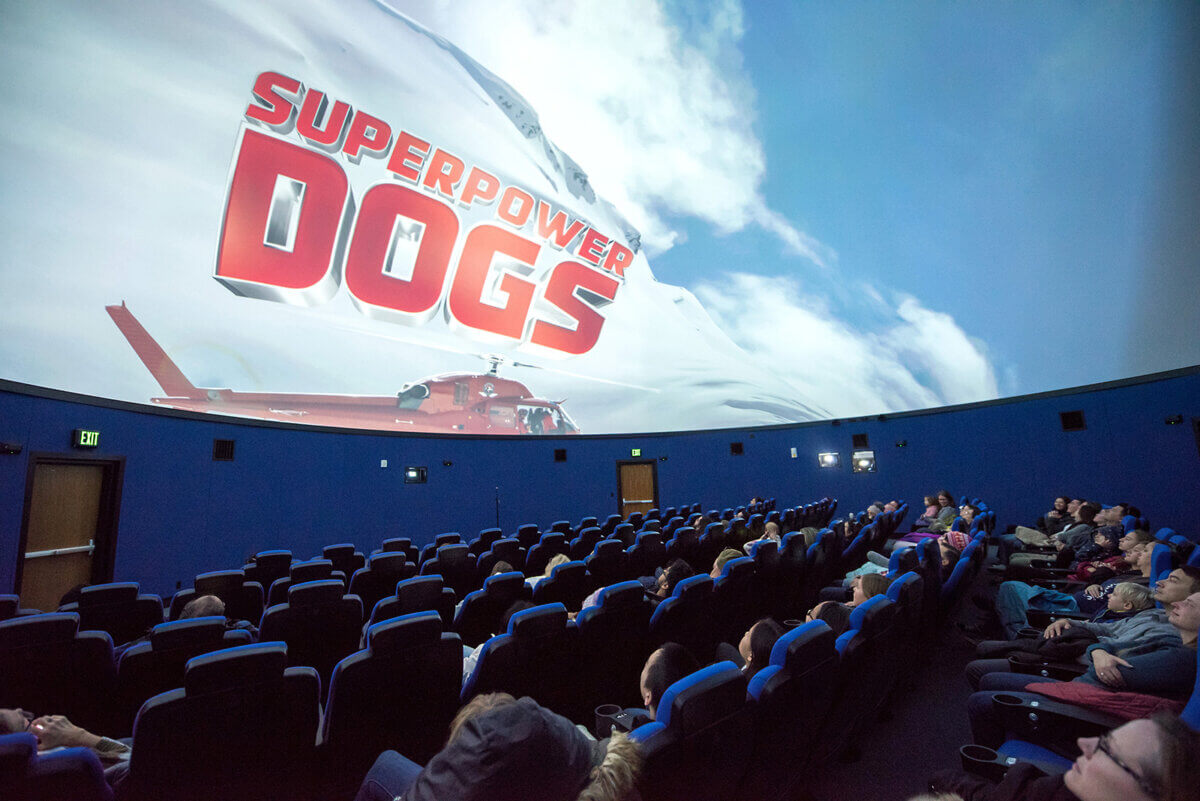
Free Public Shows
All public shows are free and open to all. Seating for public shows is on a first come, first serve basis. We do not accept reservations for public shows and the Planetarium does not use tickets. We recommend arriving 10 minutes prior to the show time. Parents and chaperones are responsible for children’s behavior.
The Planetarium is closed on Graduation Day and federal holidays.
Show descriptions and run times are located at the bottom of this page.
Planetarium Field Trip/Group Visit Requests being taken for 2025-26 School Year: Please complete the Online Request Form.
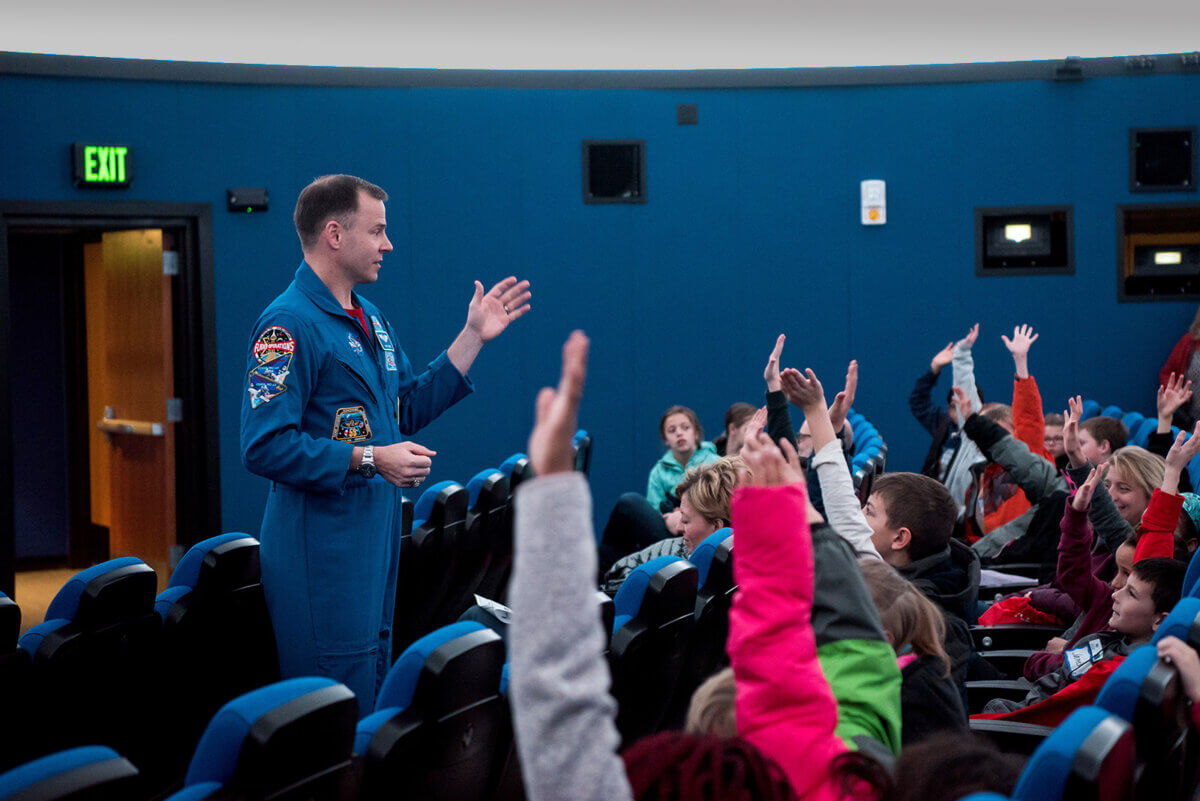
School Field Trips and Group Shows
Elementary, Middle, and High Schools may reserve planetarium field trips at no cost. When requesting a school visit, teachers may select from the list of programs found just below our schedule. We also offer live, interactive astronomy shows tailored to your grade’s science standards.
Homeschool groups and classes with fewer than 20 students can join one of our Homeschool Open House Days, listed in our Public Show Schedule. To reserve seats at our Homeschool Open House, register using the link provided next to the show date and time. If your plans change and you cannot attend, please email planetarium@afacademy.af.edu in order for your seats to be opened for other guests.
Educators interested in additional STEM resources and opportunities can find STEM Outreach information here.
Planetarium Field Trip/Group Visit Request
If you would like to schedule a school field trip or a group showing in the planetarium, please click the button below and complete the online request form. Our Planetarium school field trips and group showings are free of charge as a service to the community provided by the U.S. Air Force Academy.
Field Trips or Groups requesting a private show need to be a minimum of 20 people. If you have a special request for less than 20 people, please send a direct email to planetarium@afacademy.af.edu for consideration.
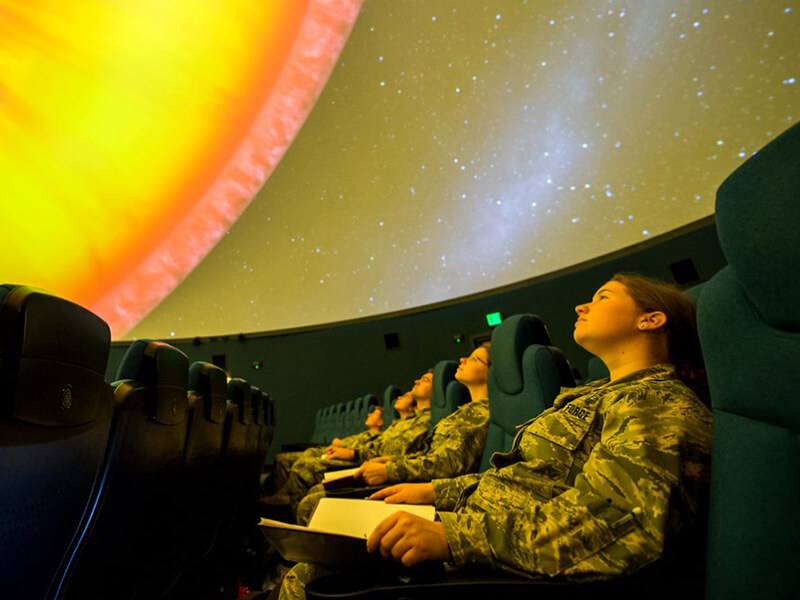
Cadet Shows
The Planetarium creates an immersive learning environment for cadets that can’t be replicated in a traditional classroom or online environment, leading to greater comprehension of complex topics. Although its primarily used as a source of astronomy and astrophysics education, the capabilities and content have expanded to encompass a variety of disciplines such as biology, chemistry, geology, engineering and history. To discuss how we can support curriculum or schedule a visit Monday through Friday, faculty and staff should email planetarium@afacademy.af.edu.
Available Shows
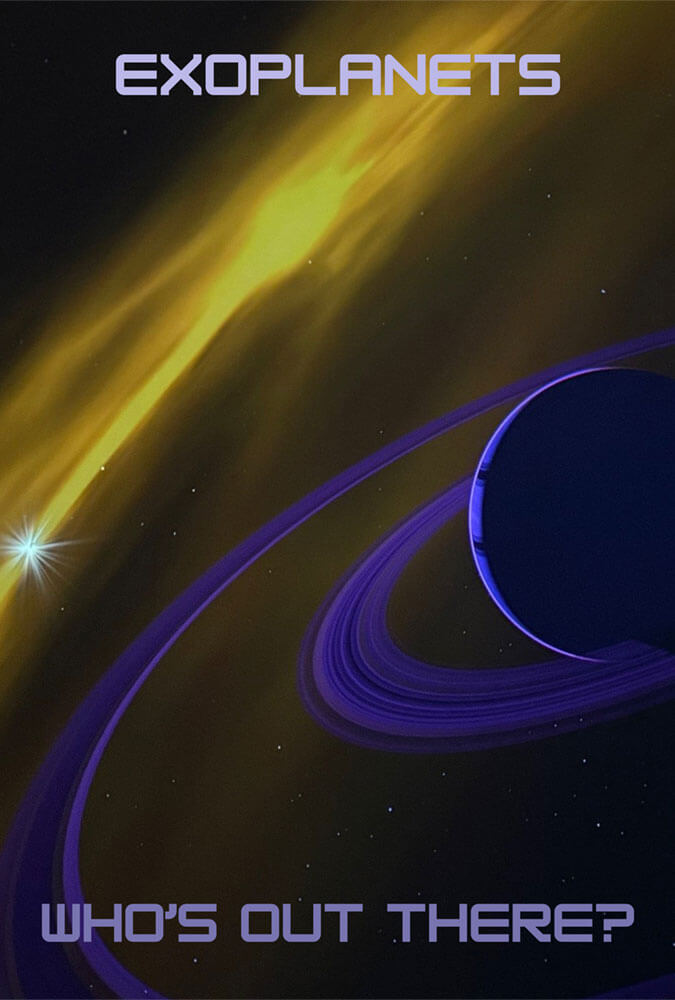
Journey across the cosmos with our astronomer to three extrasolar systems that help us answer the question that asks who, if anyone, is out there in our galaxy? Starting at our home solar system and travelling up to 200 light years away, the science behind other life forms and the planets they might live on is explained by an out-of-this-world expedition.
Run time: 25 minutes
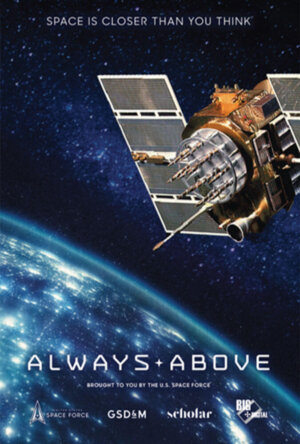
Since the beginning of time, people have gazed upward at the night sky in fascination. But most people don’t realize what is up there or how much our modern way of life depends on the thousands of satellites that fly around our planet. Orbiting the Earth are satellites that allow us to communicate with each other, monitor the weather, help us get to where we’re going and keep our country safe.
Always Above explores how close space is to our daily lives and the role that the U.S. Space Force plays in launching, operating and defending these assets.
This 12-minute, visually stunning journey will take audiences from the depths of the ocean to thousands of miles into space. Always Above is an inspiring, educational experience for people of all ages who have ever looked to the skies and asked, “What’s up there?”
Run time: 12 minutes
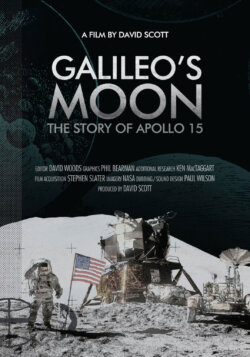
This Apollo 15 50th Anniversary film, Galileo’s Moon, was produced by the Apollo 15 crew and associates to record some historical highlights of the mission as well as to share their personal experiences during the exploration of the Hadley Apennine site on the Moon during 1971. The film was produced privately from archival material retrieved from the period of the Apollo program.
The stunning visuals of the surface of the Moon taken during the Apollo 15 mission make you feel like you are one of the crew.
Run time: 55 minutes

June 6, 1944: The largest Allied operation of World War II began in Normandy, France. Yet, few know in detail exactly why and how, from the end of 1943 through August 1944, this region became the most important location in the world.
Blending multiple cinematographic techniques, including animation, CGI and stunning live-action images, “D-Day: Normandy 1944” brings this monumental event to the world’s largest screens for the first time ever. Audiences of all ages, including new generations, will discover from a new perspective how this landing changed the world. Exploring history, military strategy, science, technology and human values, the film will educate and appeal to all.
Narrated by Tom Brokaw, “D-Day: Normandy 1944” pays tribute to those who gave their lives for our freedom… A duty of memory, a duty of gratitude.
Run time: 45 minutes
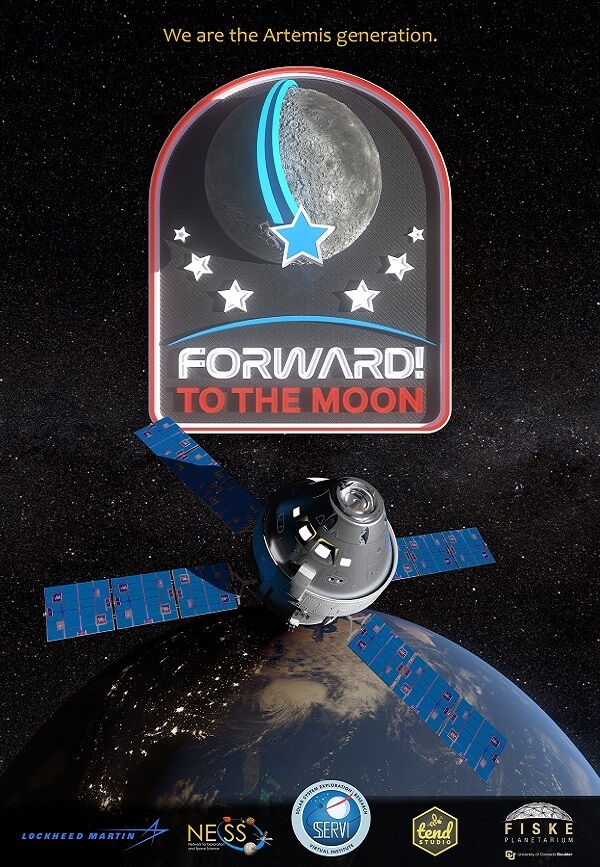
Kari Byron from Crash Test World and MythBusters launches us on a journey beyond the Earth towards a sustainable future in space.
NASA’s 21st century Artemis program, named after the Greek moon Goddess and twin of Apollo, is the next step in our mission to explore the universe and land the first woman and person of color on the surface of the Moon. Produced by Fiske Planetarium in collaboration with TEND Studio.
Subtitles available by request.
Run time: 27 minutes
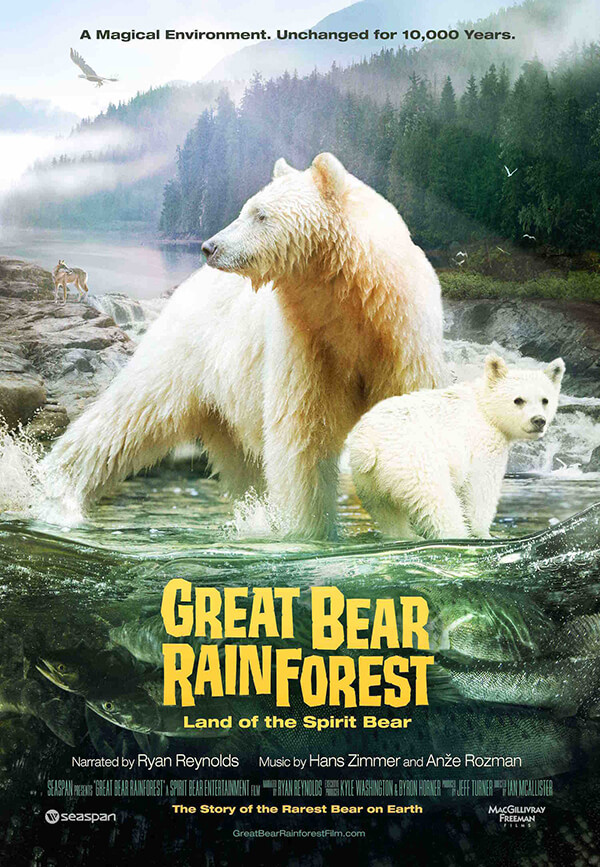
Journey to a land of grizzlies, coastal wolves, sea otters and the all-white spirit bear — the rarest bear on earth — in the film Great Bear Rainforest. Hidden from the outside world, the Great Bear Rainforest is one of the wildest places left on earth. Found on Canada's remote Pacific coast, it is the last intact temperate rainforest in the world—a place protected by the region's indigenous people for millennia. Now, for the first time ever, experience this magical world in IMAX and giant screen theatres, and discover the land of the spirit bear.
Narrated by Ryan Reynolds
Run Time: 43 minutes
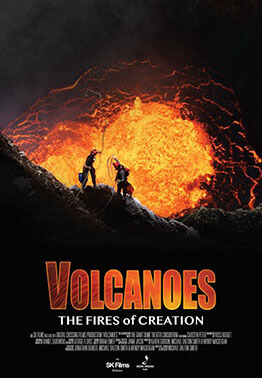
Discover molten worlds and exploding craters! For billions of years, volcanoes have helped forge the world we know. Continents, the air we breathe and even life itself, have been shaped by volcanic energy. Volcanic processes have created extraordinary ecosystems and wildlife habitats. With over 500 active volcanoes, the Earth is bursting at the seams with these forces of mass construction.
Audiences will dodge boulders at the edge of an active volcano in Indonesia, descend to a lava lake in Vanuatu and visit incredible acid ponds, geysers and mineral deposit fields in Ethiopia. Travel across the globe to see the archeological ghost town of Pompeii, hydrothermal vents at the bottom of the ocean and witness the devastating effects of the 2018 Kilauea eruption in Hawaii.
Run Time: 42 minutes
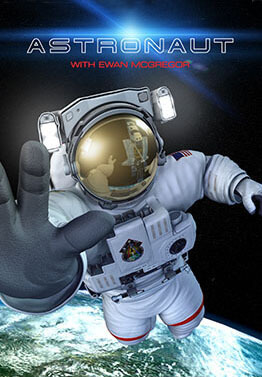
ASTRONAUT takes you from Earth into space... and beyond. Experience a rocket launch from inside the body of an astronaut. Explore the amazing worlds of inner and outer space, from floating around the International Space Station to maneuvering through microscopic regions of the human body. Discover the perils that lurk in space as we subject 'Chad,' our test astronaut, to everything that space has to throw at him. ASTRONAUT is an experience like nothing on Earth.
Run Time: 24 minutes
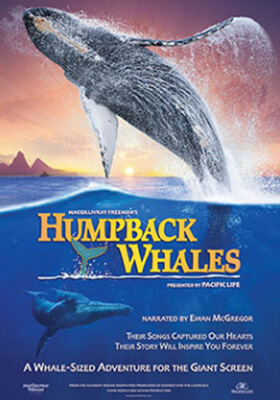
Humpback Whales is an extraordinary journey into the mysterious world of one of nature's most awe-inspiring marine mammals. Set in the waters of Alaska, Hawaii and the remote islands of Tonga, this ocean adventure offers audiences an up-close look at how these whales communicate, sing, feed, play and take care of their young. Found in every ocean on earth, humpbacks were nearly driven to extinction 50 years ago, but today are making a slow but remarkable recovery. Join a team of researchers as they find out why humpbacks are the most acrobatic of all whales, why they sing their haunting songs, and why these intelligent, 55-foot, 50-ton animals migrate up to 10,000 miles round-trip every year.
Run Time: 40 minutes
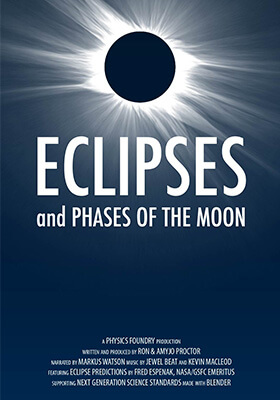
This is more than an eclipse show—it supports NGSS (Next Generation Science Standards) curriculum, including:
- Phases of the Moon
- Solar and Lunar Eclipses
- Moon Lit by Reflected Sunlight
- Moon's Rotational Period and Orbit
- Scale/Orientation of Earth-Moon System
- Composition of the Lunar Surface
- Shape of the Solar System
Target Audience: Students age 8+ and general audience
Run Time: 20 minutes
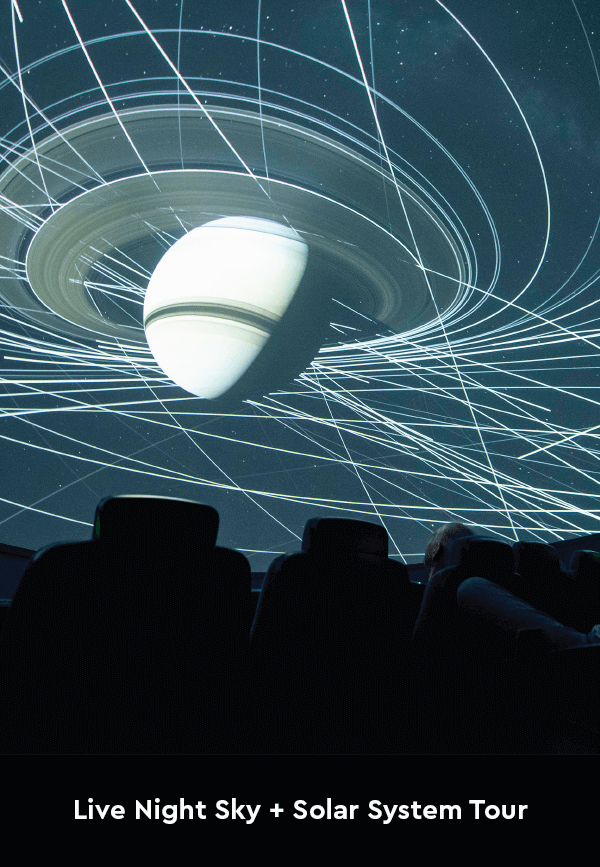
We start our live show by examining the night sky. Free of light pollution, our immersive dome ceiling lets us clearly see the stars, planets and constellations in our area.
Hop aboard an expedition into the solar system with our astronomer! From visiting the sun and our neighboring planets to the seeing where Earth is located within the Milky Way, this journey through the solar system is sure to engage space enthusiasts of all ages.
Watch a sneak peek!
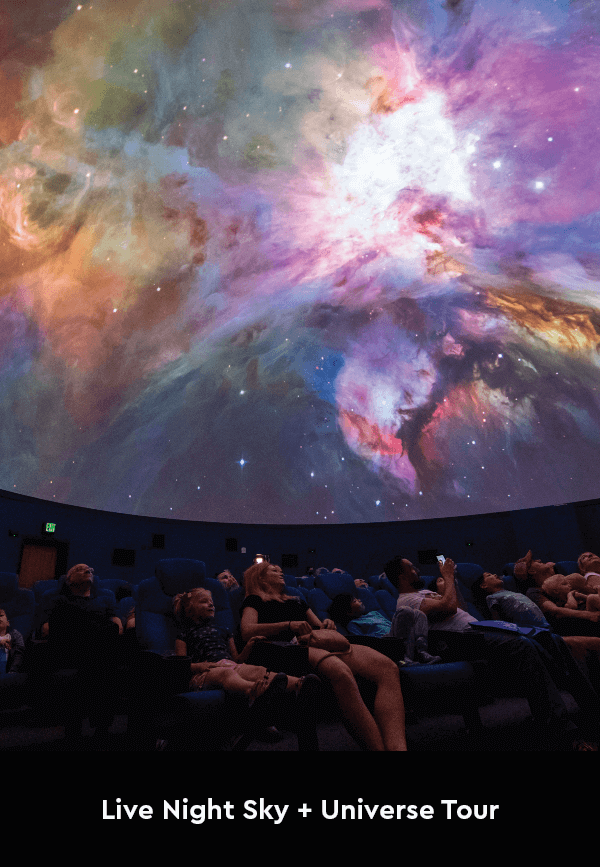
After observing the beauty and wonders of the ever-changing night sky, our astronomer will guide us beyond the reaches of our solar system on a grand tour of the universe. Along the way, we’ll explore the wonders of space as we head to the edge of the observable Universe. Be ready to visit planets, stars, asteroids, black holes, and more.
Watch a sneak peek!

John (“Otter”) Stratton is a young American fighter pilot who flies the F-15 Eagle, arguably the most potent and successful fighter plane ever built. His grandfather was a decorated World War II flying ace, and he intended to follow in his footsteps. At Red Flag, the international training exercise for air forces of allied countries, many of the world’s best pilots meet for the most challenging flying of their careers. Red Flag is the final training for pilots and their aircrews before being sent into actual combat. We follow our young pilot as he makes his way through this extraordinary event held in the desert of Nevada.
Run Time: 49 minutes
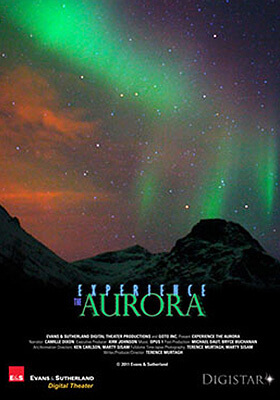
Over seven months in the Arctic Circle, our crews captured timelapse images of the Aurora Borealis with high resolution digital SLR cameras outfitted with fisheye lenses. The results are spectacular. For the first time, the aurora has been captured as it was meant to be experienced, as a display that covers the entire sky. This immersive show shares the science behind the aurora and tells the story of the quest to find and photograph the aurora to show in planetariums. Winner of 2 Telly Awards.
Run Time: 27 minutes
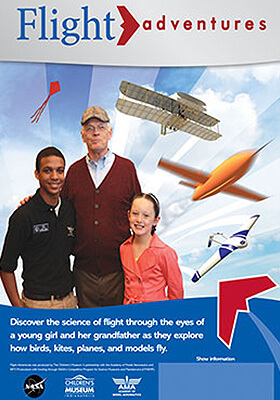
Dreams of flying, model aircraft and a young girl and her grandfather come together in this multi-media planetarium show about the science of aeronautics. Learn about famous inventors and aviators of the past and the pioneers who first revealed the four forces of flight. See images of aircraft past, present and future and imagine where flight might take us.
Run Time: 20 minutes
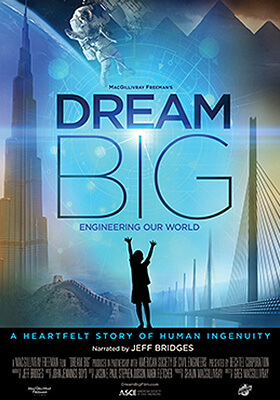
Narrated by Academy Award® winner Jeff Bridges, Dream Big: Engineering Our world is a first of its kind film that will transform how we think about engineering. From the Great Wall of China and the world’s tallest building, to underwater robots, solar cars and smart, sustainable cities, Dream Big celebrates the human ingenuity behind engineering marvels big and small, and reveals the heart that drives engineers to create better lives for people around the world.
Run Time: 42 minutes
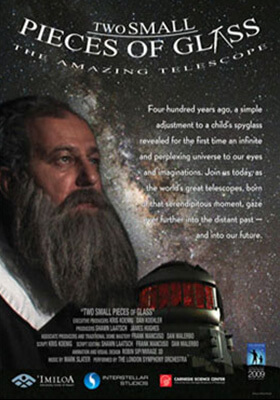
Galileo’s telescopic observations began a revolution, transforming our views of the cosmos and our place within it. It’s a revolution which, four hundred years later, continues. Today you can attend star parties where amateur astronomers set up their telescopes for public viewing. Views through such telescopes would have amazed Galileo. Two Small Pieces of Glass puts you in the middle of a modern star party. Discover the wonders that even a small amateur telescope can reveal and learn about the scientists that made such views possible.
Subtitles available by request.
Run Time: 23 minutes
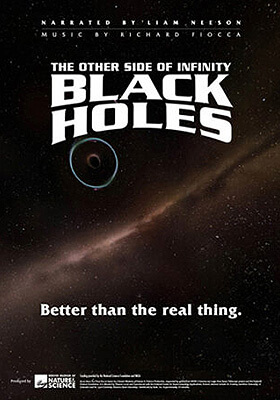
Seen by millions worldwide, Black Holes: The Other Side of Infinity is one of the most successful planetarium shows ever produced. This cutting-edge production features high-resolution visualizations of cosmic phenomena, working with data generated by computer simulations to bring the current science of black holes to the dome screen. Audiences will be dazzled with striking, immersive animations of the formation of the early universe, star birth and death, the collision of giant galaxies, and a simulated flight to a super-massive black hole luring at the center of our Milky Way galaxy. Narrated by Liam Neeson.
Subtitles available by request.
Run Time: 24 minutes
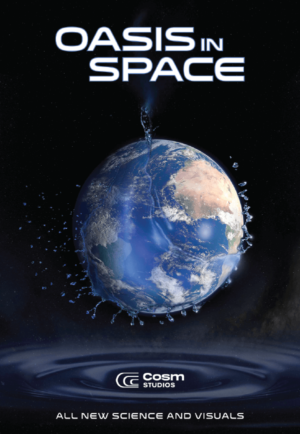
Oasis in Space will transport you on a startling and beautiful voyage through our universe, galaxy and solar system in search of liquid water, a key ingredient for life on Earth. We begin our journey by exploring Earth, with its vast oceans and plentiful water that makes life possible. One by one, we fly to the other planets and moons, discovering their characteristics, such as atmosphere, temperature and composition.
Download the educator's guide.
Run Time: 24 minutes
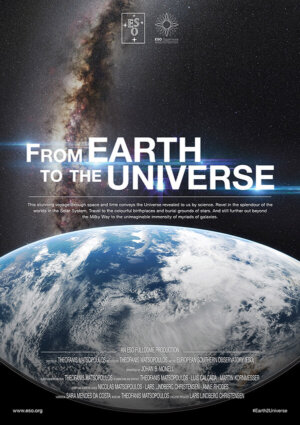
In a stunning voyage through space and time, From Earth to the Universe shares the wonders of the Universe as revealed to us by science. From early astronomers like Copernicus and Galileo, humans have been grasping to understand the universe in which we live. This story takes us on a journey from those early times to modern astronomy and the newest explanations of the wonders of the cosmos which capture our imaginations.
Run Time: 32 minutes
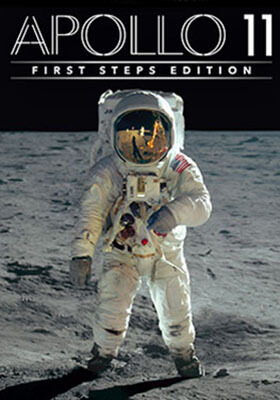
Astronauts Neil Armstrong, Edwin “Buzz” Aldrin and Michael Collins blasted away from Earth on a Saturn V rocket on July 16, 1969. On July 20, Armstrong and Aldrin set foot on the moon, the first humans to do so. The three returned to Earth on July 24.
The filmmakers reconstruct the exhilarating final moments of preparation, liftoff, landing and return of this historic mission—one of humanity’s greatest achievements and the first to put men on the moon. With a newly-discovered trove of never-before-seen footage and audio recordings, Apollo 11: First Steps Edition joins Neil Armstrong, Buzz Aldrin and Michael Collins, the Mission Control team and millions of spectators around the world, during those momentous days and hours in 1969 when humankind took a giant leap into the future.
Run Time: 48 minutes

Join an immersive adventure to experience the life-saving superpowers and extraordinary bravery of some of the world’s most amazing dogs. In this inspiring true story narrated by Chris Evans, our best friends are also real-life superheroes. Journey around the globe to meet remarkable dogs who save lives and discover the powerful bond they share with their human partners. Follow ‘Halo’, a rookie puppy training to join one of the most elite disaster response teams in America. Meet ‘Henry’, an avalanche rescue expert in the mountains of British Columbia, ‘Reef’, a Newfoundland lifeguard with the Italian coastguard, ‘Ricochet’, a Californian surf legend helping people with special needs, and the Bloodhound brothers, ‘Tipper and Tony’, who are leading the fight to save endangered species in Africa. As we discover the incredible abilities of dogs and the astonishing science behind their superpowers, we’ll never look at our best friends the same way again!
Run Time: 47 minutes
Black Holes have become a major topic of interest in the past half decade. With the ever-increasing power and sensitivity of ground-based telescopes and space observatories, we know more about galaxies and black holes than ever before.
Supermassive black holes are found in most galaxies and we're beginning to uncover how the merging of galaxies activate galactic centers.
This engaging full-dome film was produced by Fiske Planetarium in collaboration with APS Professor, Dr. Julie Comerford and former graduate student Dr. Becky Nevin through support from an NSF award.
Run time: 22 minutes
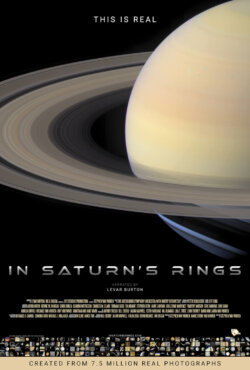
In Saturn’s Rings is a groundbreaking giant-screen adventure that takes audiences on a journey of the mind, heart and spirit, from the Big Bang to the awe-inspiring rings of Saturn.
Over 7.5 million mostly unseen real images from the Cassini-Huygens Mission to Saturn, Sloan Digital Sky Survey, Hubble Telescope Milky Way time lapses, and more are brilliantly brought to life in this ground-breaking epic immersive journey across space and time.
From the earliest images after the Big Bang, to the final photographs Cassini took before plunging to its end in Saturn’s clouds, In Saturn’s Rings, like space exploration itself, is a journey of the heart, mind and spirit that moves audiences with some of the most amazing space images ever seen.
Run time: 45 minutes

Experience on the giant screen the remarkable story of three animal species rescued from the brink of extinction and heartfelt adventure to save endangered species around the world as we show that positive change is possible.
Run Time: 40 minutes
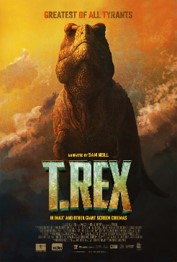
For over a hundred years, dinosaurs have captivated audiences in museums and at the box office, with one towering above the rest—the Tyrannosaurus rex. Advances in CGI wizardry and breakthroughs in tyrannosaur paleontology over the past 25 years have set the stage for a fresh look at the “king,” from its early years to its prime. Now, in collaboration with top tyrannosaur scientists, a coalition of natural history institutions, and pioneering paleo and visual effects artists, GSF presents the most dazzling and accurate giant screen documentary ever made on this legendary predator—and its carnivorous Cretaceous cousins.
This immersive film explores the life of the GOAT—the Greatest of All Tyrants—while highlighting famous specimens, landmark discoveries, and the evolving interplay between speculation and scientific evidence. Narrated by Sam Neill, the film tells the remarkable true story of three kids who discovered a teenage T. rex fossil, a find that made international headlines in over 2,000 media outlets.
Run Time: 42 minutes
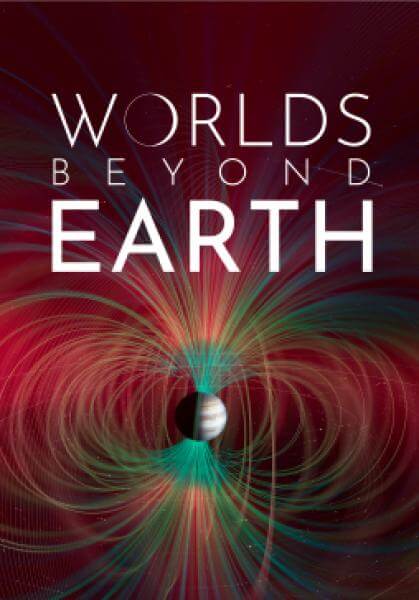
Journey far beyond our own blue planet to marvel at the latest discoveries from our cosmic neighbors. Travel through our solar system like you never have before.
Immersive visualizations of distant worlds.
Groundbreaking space missions.
Breathtaking scenes showing the evolution of our solar system.
Run time: 24 minutes
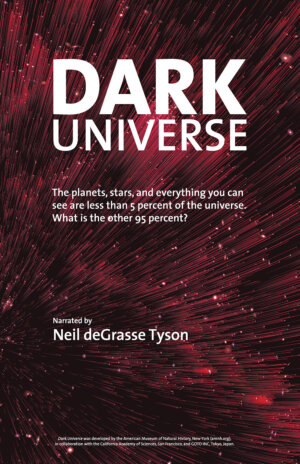
The planets, stars, and everything you can see are less than 5 percent of the universe. What is the other 95 percent? Dark Universe examines the invisible dark matter underlying galaxies that, together with dark energy, accounts for that other 95 percent of the universe’s total energy and mass. Narrated by astrophysicist Neil deGrasse Tyson.
Run time: 25 minutes
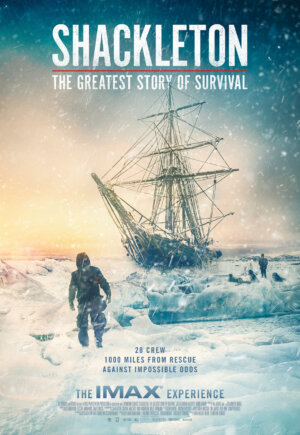
'Shackleton - The Greatest Story of Survival’ reveals the true story of polar explorer Sir Ernest Shackleton and the crew of the Endurance, told by the only man ever to have repeated their incredible feat.
Run Time: 47 minutes

Space reporter Miles O'Brien guides you through the first human mission to Mars — a daring 1000-day mission to fly an international crew to the red planet and return them safely to Earth. Many challenges will have to be met in order for the crew to succeed and unlock the secrets of the new world.
Mars 1001 is a visually stunning experience of exactly what the first human adventure to the red planet could look like... a complete and realistic mission to Mars!
Run Time: 53 minutes
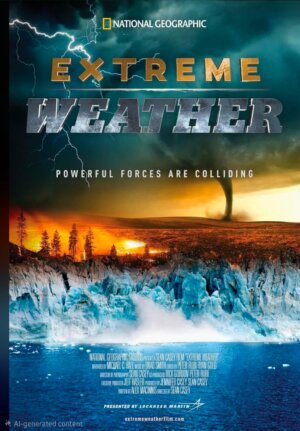
Extreme Weather is an up-close look at some of the most astonishing and potentially deadly natural phenomena, tornadoes, glaciers, and wildfires while showing how they are interconnected and changing our world in dramatic ways.
Run Time: 53 minutes
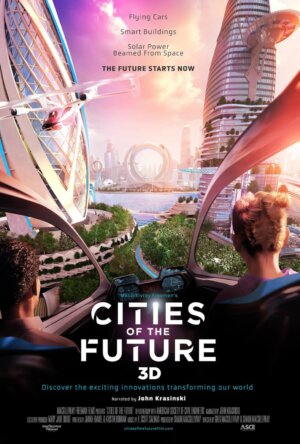
Imagine stepping 50 years into the future and finding smart cities designed to be totally sustainable. Renewable energy is our primary power source, space-based solar power provides solar energy 24 hours a day, everything is recycled, and you travel in individualized pods that run on little or no energy. This isn’t science fiction. Engineers are making plans for a sustainable world right now, and it’s coming to the giant screen!
Cities of the Future is produced in association with American Society of Civil Engineers, the same group who brought you Dream Big.
Run Time: 45 minutes