Air Force leaders pilot T-19A Kestrel in historic Academy debut
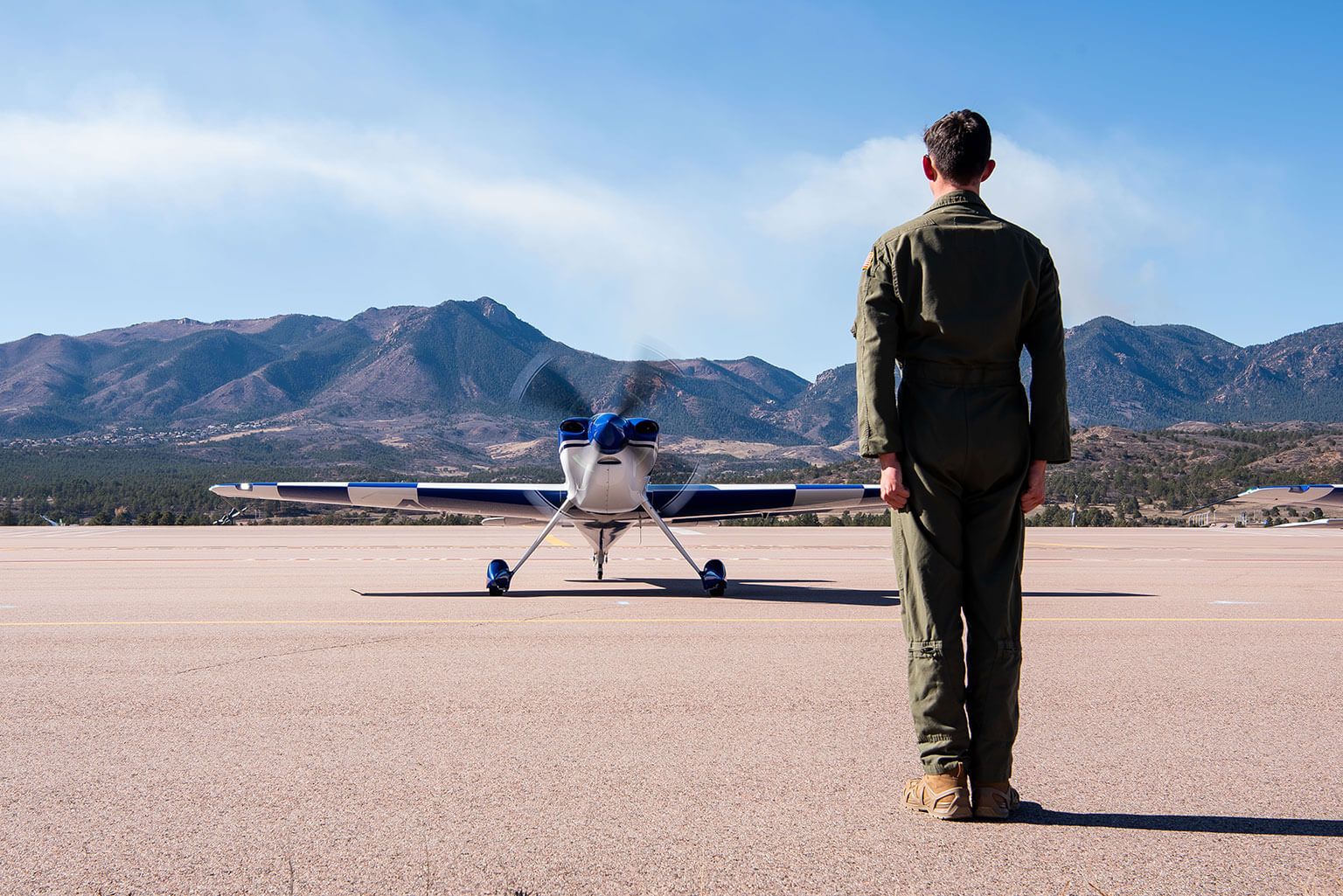
A U.S. Air Force Academy cadet stands in front of a T-19A Kestrel aircraft during its debut ceremony at Davis Airfield, U.S. Air Force Academy, Colo., Nov. 12, 2026. The T-19A is the Academy’s first aircraft dedicated to powered aerobatic training and will expand future cadet airmanship opportunities. (U.S. Air Force photo by Trevor Cokley)
U.S. Air Force Academy Strategic Communications
U.S. AIR FORCE ACADEMY, Colo. – Four T-19A Kestrel aircraft soared over the U.S. Air Force Academy’s Cadet Wing during noon meal formation Nov. 12, marking the official public debut of the Academy’s first aircraft dedicated to powered aerobatic training.
The flyover marked a new chapter in the Academy’s aviation history and offered cadets a firsthand example of leadership in action, as senior leaders piloted the aircraft that will help shape the Academy’s future airmanship program.
At the controls were Air Force and Academy leaders: Air Force Chief of Staff Gen. Ken Wilsbach, Academy Superintendent Lt. Gen. Paul Moga, Academy Provost Brig. Gen. James Valpiani, and initial cadre member Lt. Col. Evan Backes.
The aircraft landed at Davis Airfield, where the leaders stepped out of the aircraft and joined attendees for a formal ceremony.
During the ceremony, the senior leaders highlighted the significance of the Air Force’s acceptance of four donated single-engine, two-seat aerobatic aircraft, outlining the T-19A program’s purpose and its potential to enhance the Academy’s airmanship training.
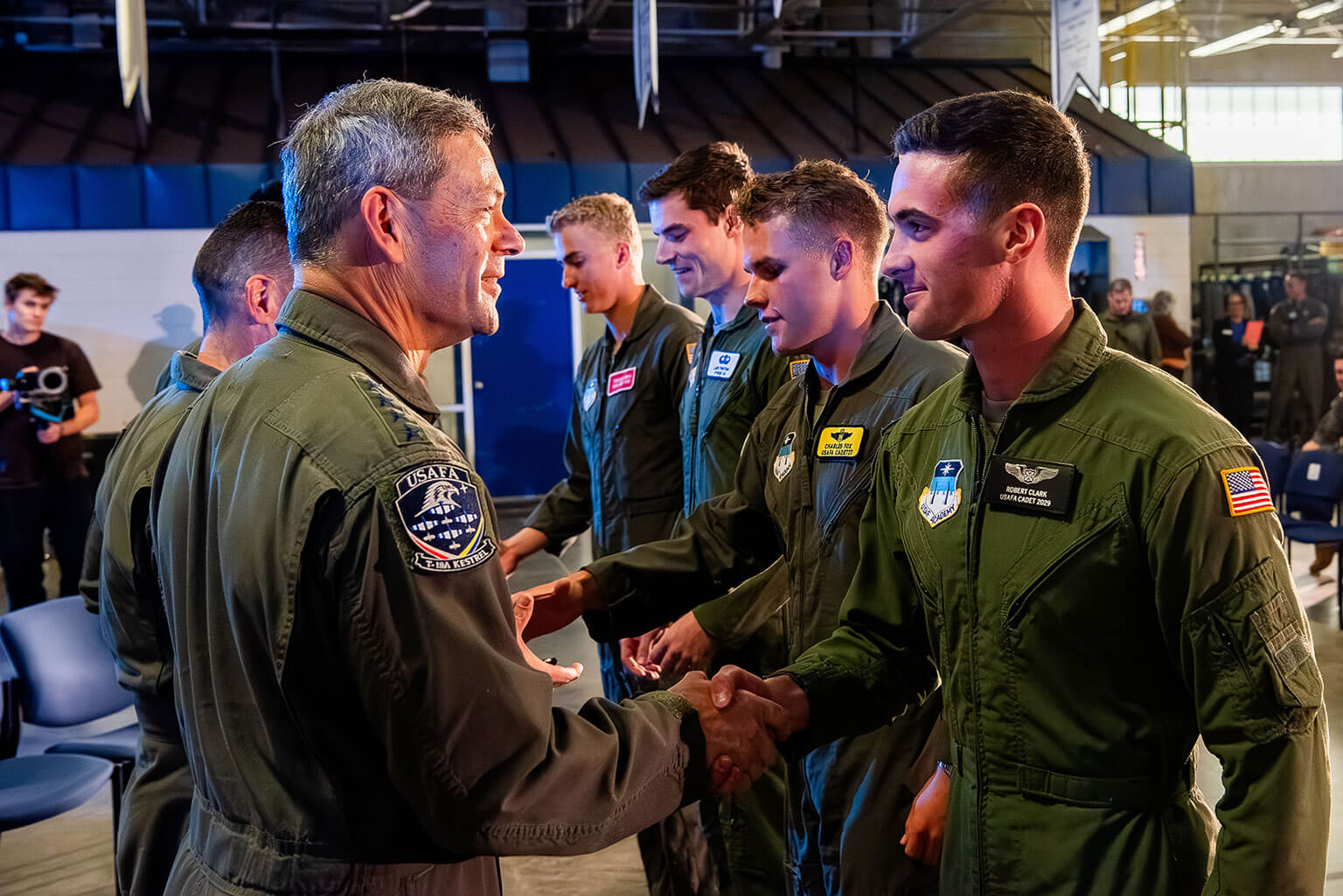
Air Force Chief of Staff Gen. Ken Wilsbach presents ceremonial keys to the T-19A Kestrel aircraft to Cadet 3rd Class Robert Clark at Davis Airfield, U.S. Air Force Academy, Colo., Nov. 12, 2026. Fox accepted the keys on behalf of the Cadet Wing, symbolizing the next generation of Air Force leaders who will benefit from expanded airmanship training opportunities. (U.S. Air Force photo by Trevor Cokley)
Passing the keys to the next generation
The ceremony included a symbolic key presentation connecting the aircraft’s arrival directly to the cadet body. Each of the four T-19A aircraft features accents corresponding to the four Academy class colors, representing each class across the Cadet Wing.
During the presentation, four cadets representing each class and class color received the keys to their respective aircraft. The presentation symbolized the Academy’s commitment to preparing successive generations of aviators and leaders, while recognizing the vital role cadets play in the program’s development and future.
Cadets have been central to the development of the T-19A program. The initiative will provide opportunities for participating cadets to fly a powered aerobatic aircraft, expanding their flying experience and developing foundational airmanship skills applicable to future aviation training.
A select group of cadets also participated in choosing the name “Kestrel” for the T-19A. Named after a small, agile falcon known for its precise flight and ability to hover while hunting, the kestrel embodies characteristics that resonate with the aircraft’s aerobatic capabilities. The name will help shape the identity of an aircraft that will support future generations of Academy aviators.
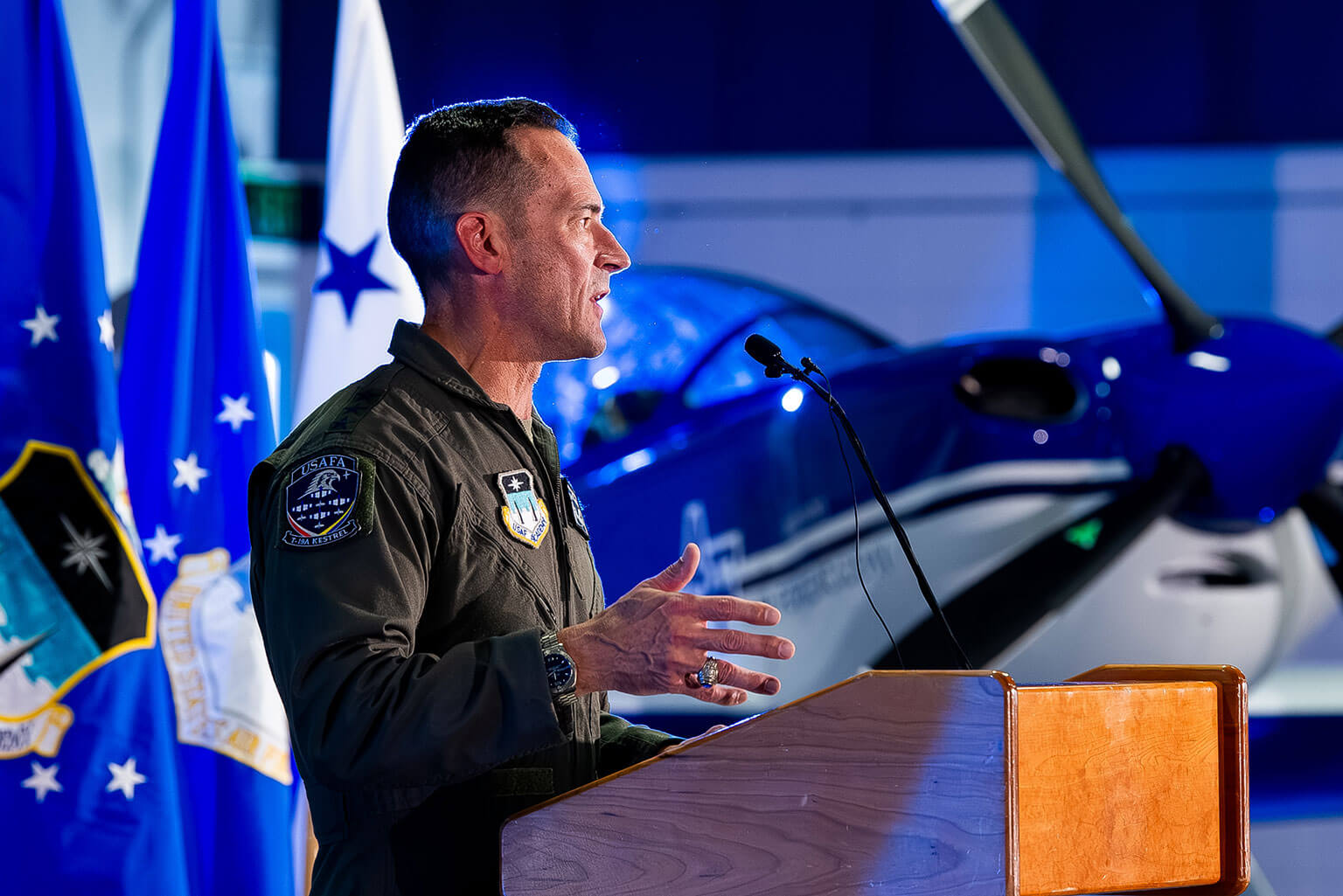
U.S. Air Force Academy Superintendent Lt. Gen. Paul Moga delivers remarks during the T-19A Kestrel debut ceremony at Davis Airfield, U.S. Air Force Academy, Colo., Nov. 12, 2026. The aircraft will support the development of an aerobatic training program designed to strengthen cadets’ aviation skills, confidence, discipline and leadership. (U.S. Air Force photo by Trevor Cokley)
Expanding cadet airmanship opportunities
The T-19A introduces a new dimension to the Academy’s existing airmanship programs, creating opportunities to develop advanced aviation skills while reinforcing the confidence, discipline and leadership required of future officers.
“The arrival of the T-19A marks an exciting new chapter in airmanship training here at the Academy,” said Moga. “This aircraft will provide an opportunity to train our cadets in ways that were previously not possible. We will strengthen their aviation skills and develop the confidence, discipline and leadership required of future Air Force officers.”
Six active-duty military pilots from the Academy’s staff and the 306th Flying Training Group were selected to form the initial cadre responsible for developing and executing an aerobatic training curriculum.
As the program matures, the Academy plans to increase cadet involvement through structured training, mentorship and leadership opportunities, with the long-term goal of establishing a nationally competitive aerobatic and demonstration team.
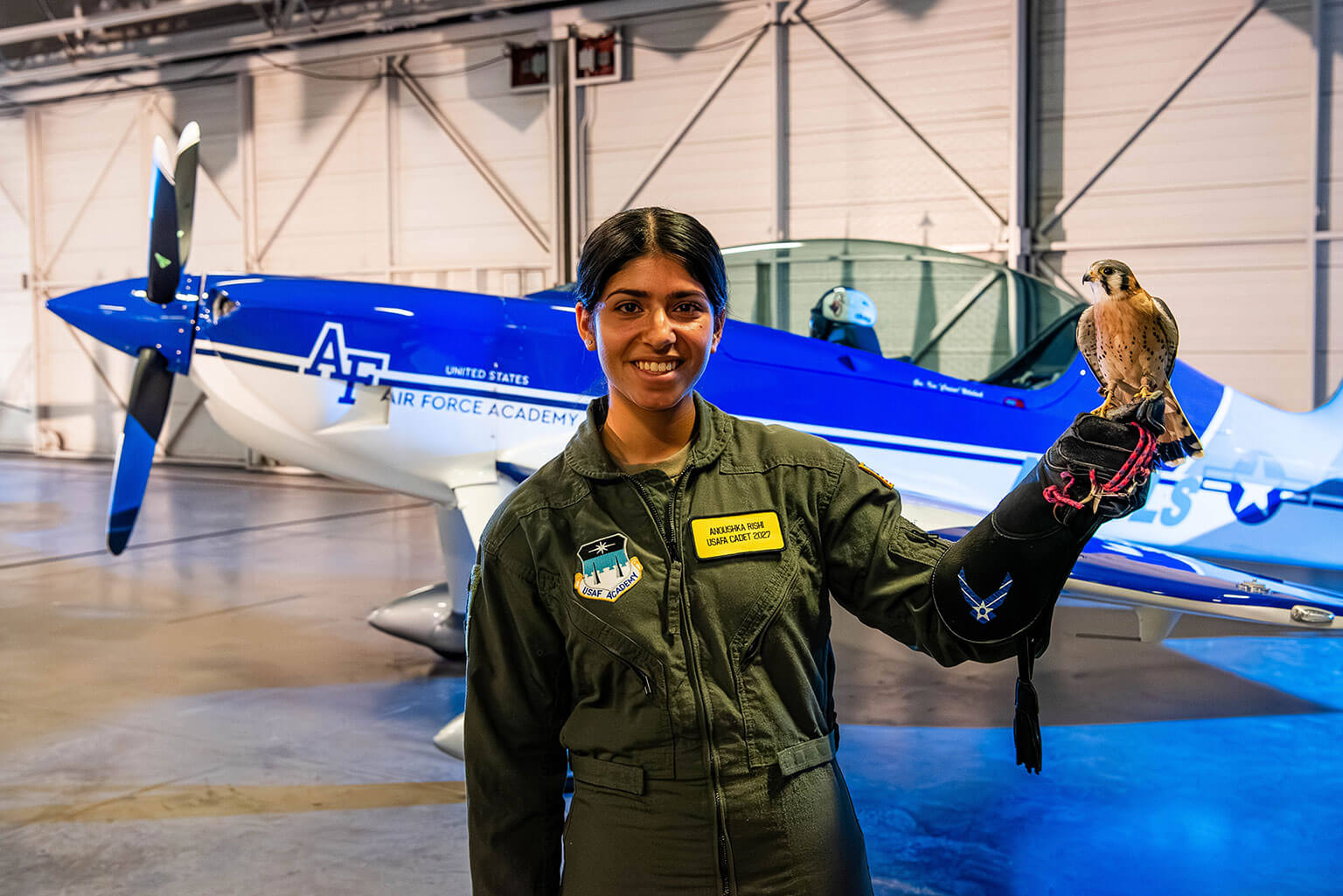
Cadet 1st Class Anoushka Rishi holds Woodstock, an American kestrel, in front of a T-19A Kestrel aircraft during its debut ceremony at Davis Airfield, U.S. Air Force Academy, Colo., Nov. 12, 2026. The aircraft will expand airmanship opportunities through advanced aerobatic training and increased cadet involvement in aviation programs. (U.S. Air Force photo by Trevor Cokley)
Investing in the next generation
The initial cadre will lead demonstration activities and help develop future aerobatic training and competition opportunities. The program also envisions a cadet development pipeline, providing select cadets opportunities to progress from foundational aviation skills toward advanced aerobatic performance.
The T-19A Kestrel’s arrival represents not only a new aviation capability, but also an investment in the cadets who will lead the Air Force of tomorrow.
“To the cadets who will have the privilege of flying these airplanes: take advantage of it. Learn everything you can and, most importantly, challenge yourselves,” said Wilsbach. “Every sortie is an opportunity to become a better aviator and a better leader.”
He concluded with this charge to cadets:
“Learn how to master this machine, do it safely, manage your risk along the way. You take it on the road and bring back trophies,” said Wilsbach.
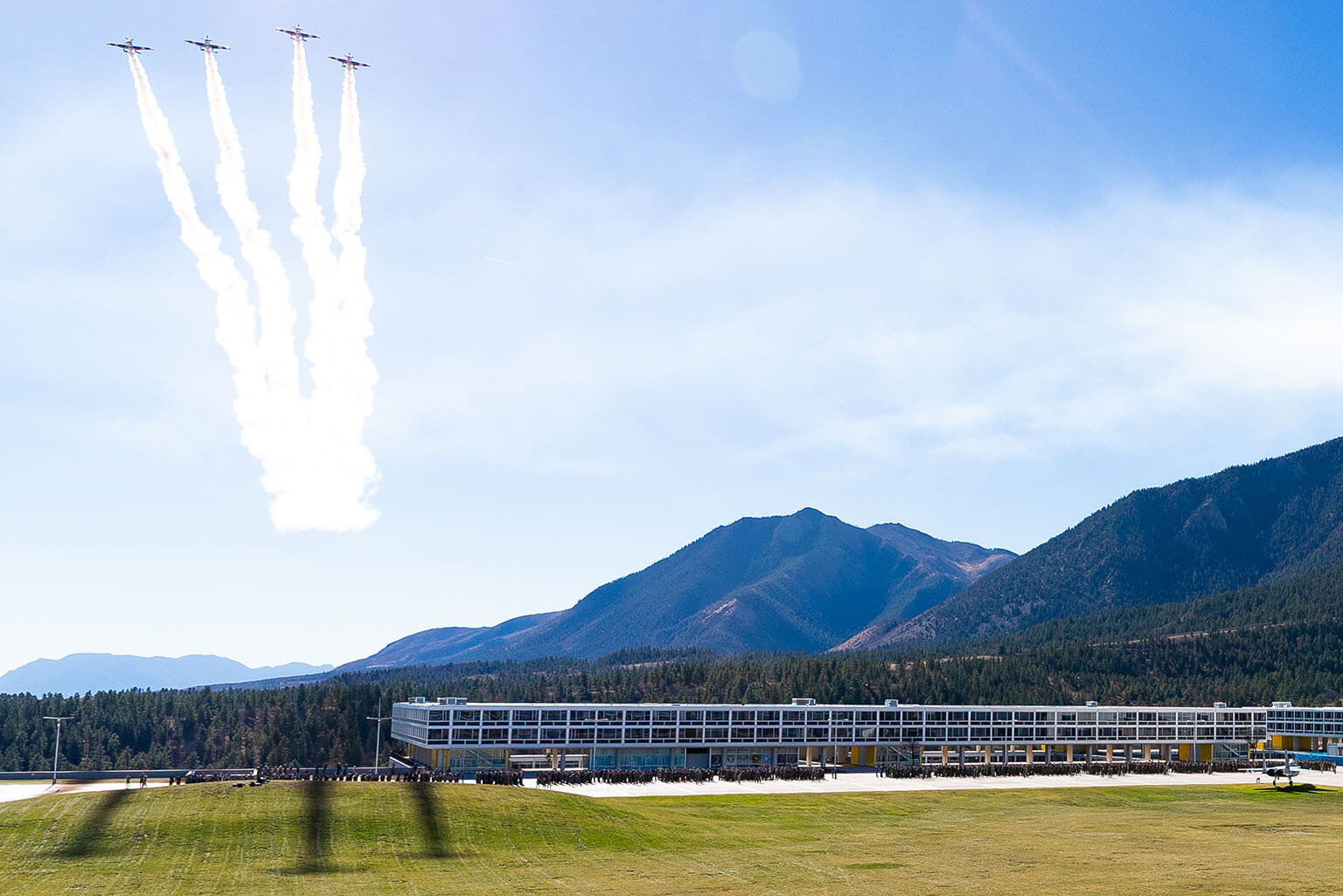
Four T-19A Kestrel aircraft fly over the Cadet Wing during noon meal formation at the U.S. Air Force Academy, Colo., Nov. 12, 2026. Piloted by senior Air Force leaders, the flyover marked the public debut of the Academy’s first aircraft dedicated to powered aerobatic training, expanding cadet airmanship opportunities. (U.S. Air Force photo by Ray Bahner)
See more photos on Flickr and take a virtual tour of the Davis Airfield.