Cadets study battery performance in small unmanned aerial systems
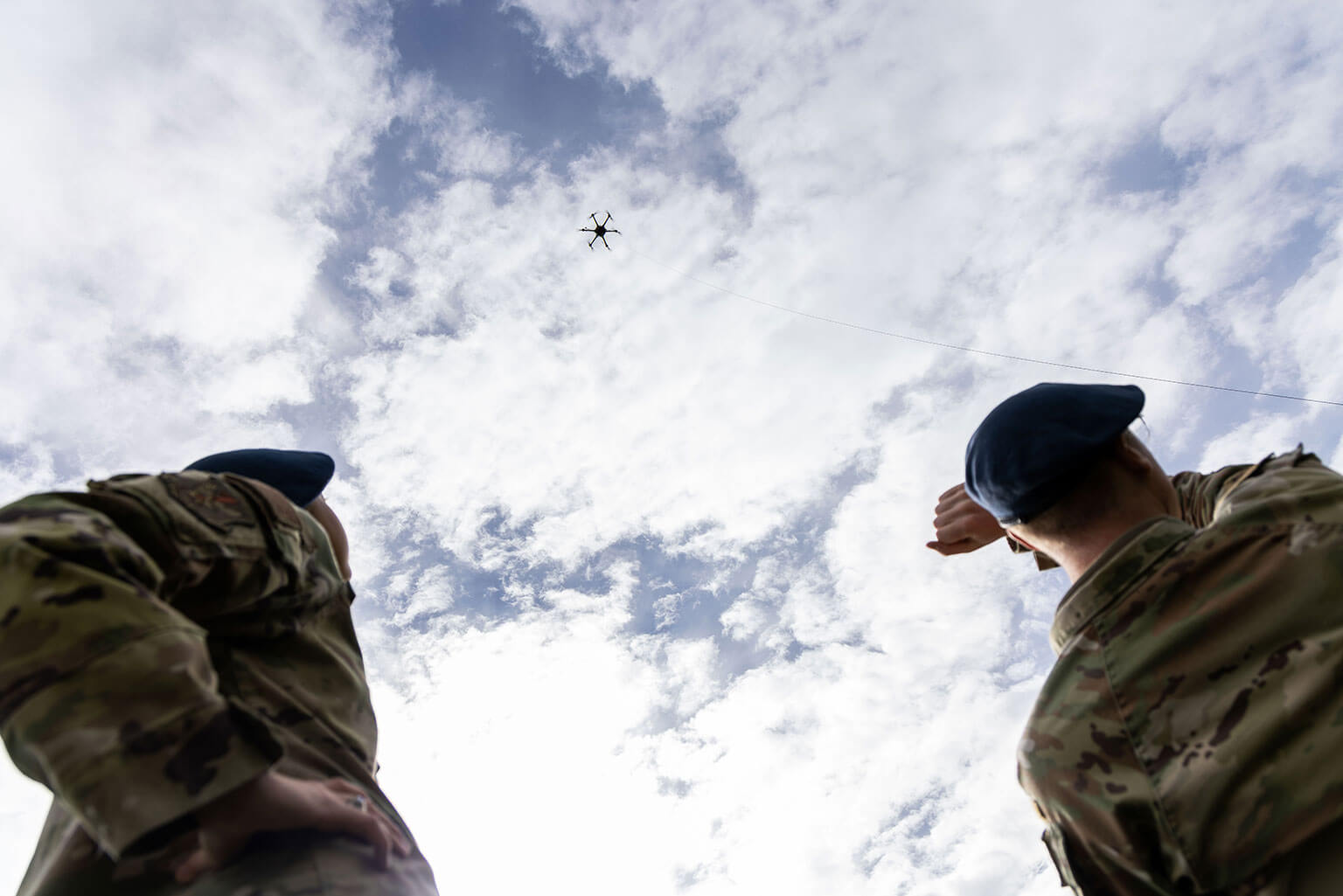
Cadet 1st Class Jillian Essig, left, and Cadet 1st Class Adam Pearse observe an unmanned aerial vehicle during flight testing at the U.S. Air Force Academy, Colo. The cadets are collecting flight data as part of a NASA-funded research project examining how environmental conditions and flight characteristics affect unmanned aircraft battery performance. (U.S. Air Force photo by Trevor Cokley)
By SSgt Michael Ward
U.S. Air Force Academy Strategic Communications
U.S. AIR FORCE ACADEMY, Colo. – U.S. Air Force Academy cadets are collecting flight data from small unmanned aerial systems (sUAS) to study how environmental conditions and flight characteristics affect battery performance.
The research is part of a NASA University Leadership Initiative project within the Academy’s Department of Electrical and Computer Engineering. The capstone project, Small Unmanned Aerial Systems Data Collection, is developing a publicly available dataset that combines aircraft telemetry with synchronized weather information.
Lt. Col. Don “Bash” Yates, an assistant professor in the Department of Mathematical Sciences, supports the research by helping collect real-time wind data. A precision wind sensor aboard a separate weather drone measures wind conditions during flight testing. Yates said this type of real-time wind data is missing from existing datasets.
The project examines how variables such as payload, airspeed, altitude and wind affect battery voltage, current draw and temperature. Cadets collect data from several types of aircraft, including quadcopters, hexacopters, octocopters and fixed-wing unmanned aerial vehicles.
“Accurate, platform-specific models of energy consumption and flight performance are prerequisites for Federal Aviation Administration integration pathways, operator certification, route planning, autonomous decision-making and sustained beyond-visual-line-of-sight operations,” Yates said.
Yates also emphasized the cadets’ role in the research.
“Cadets from the Department of Electrical and Computer Engineering are full partners in the work,” he said.
The team hopes the dataset will address gaps in existing research and help NASA and other researchers improve models of unmanned aircraft energy consumption and battery performance.
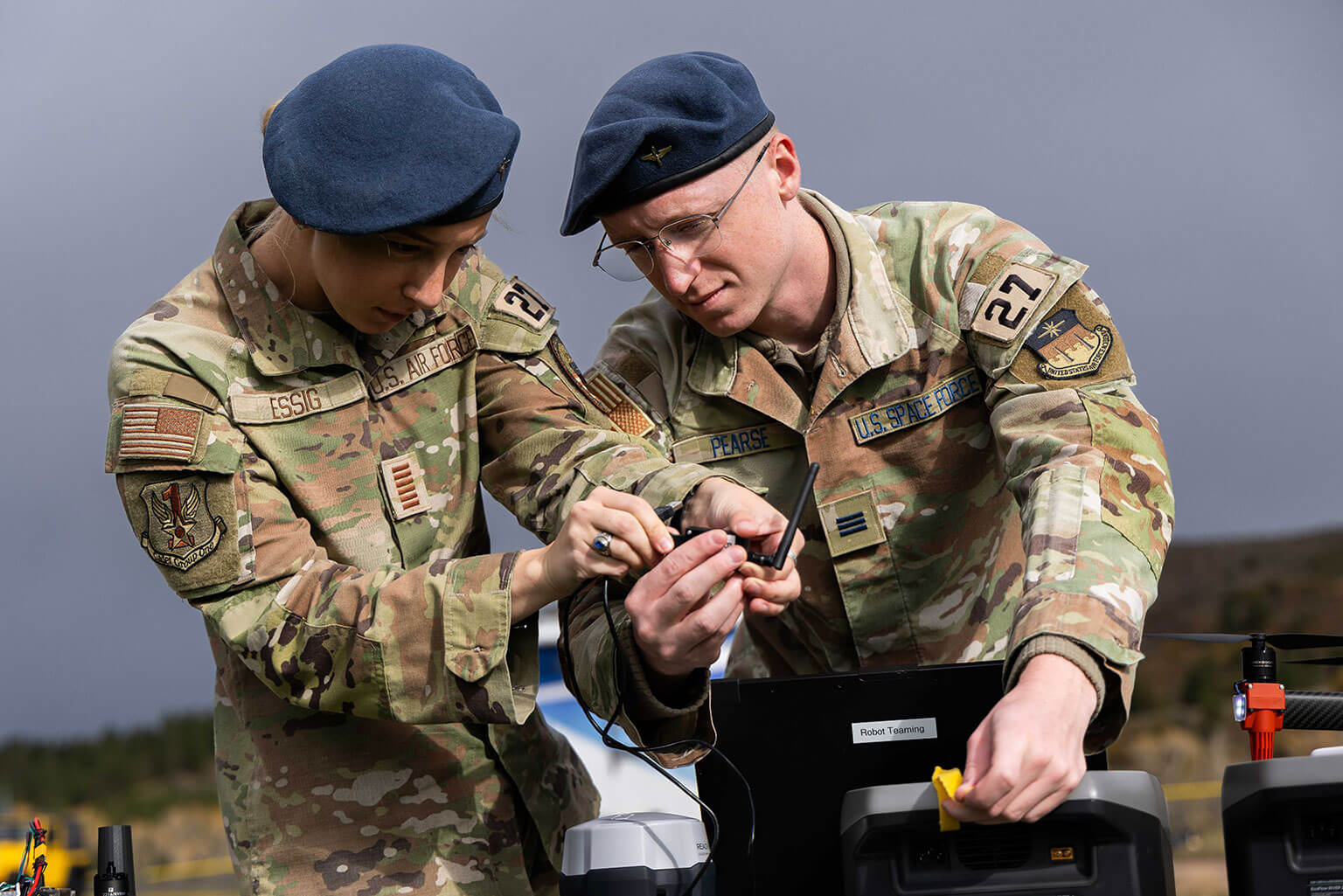
Cadet 1st Class Jillian Essig, left, and Cadet 1st Class Adam Pearse, right, review data collection equipment during small unmanned aerial systems research at the U.S. Air Force Academy, Colo. The cadets are preparing equipment for flight testing as part of a NASA-funded project examining how flight conditions affect unmanned aircraft battery performance. (U.S. Air Force photo by Trevor Cokley)
From flight testing to data collection
The aircraft are equipped with systems that record battery voltage, current draw and temperature alongside flight information. By comparing those measurements with environmental conditions, researchers can study how different flight profiles and operating conditions affect energy use.
The project uses four sUAS platforms: a Tarot 460 quadcopter, a Tarot X6 hexacopter, a 3DR X8 coaxial octocopter and a tailless delta-wing fixed-wing aircraft. Testing allows the team to compare data across different aircraft configurations and operating conditions.
Cadet 1st Class Adam Pearse, an Electrical and Computer Engineering major, helps design and operate the onboard data-collection system. He monitors battery energy characteristics and temperature as they relate to flight conditions, including payload, airspeed, altitude and wind. He also remotely pilots the aircraft during flight testing and helps coordinate task assignments across the capstone team.
“The most interesting thing about working with these aircraft is getting to see them autonomously execute missions and collect data based on the designs we came up with,” Pearse said. “Watching an engineering project jump from ideas and theory to real, tangible prototypes and live testing is an incredibly rewarding experience.”
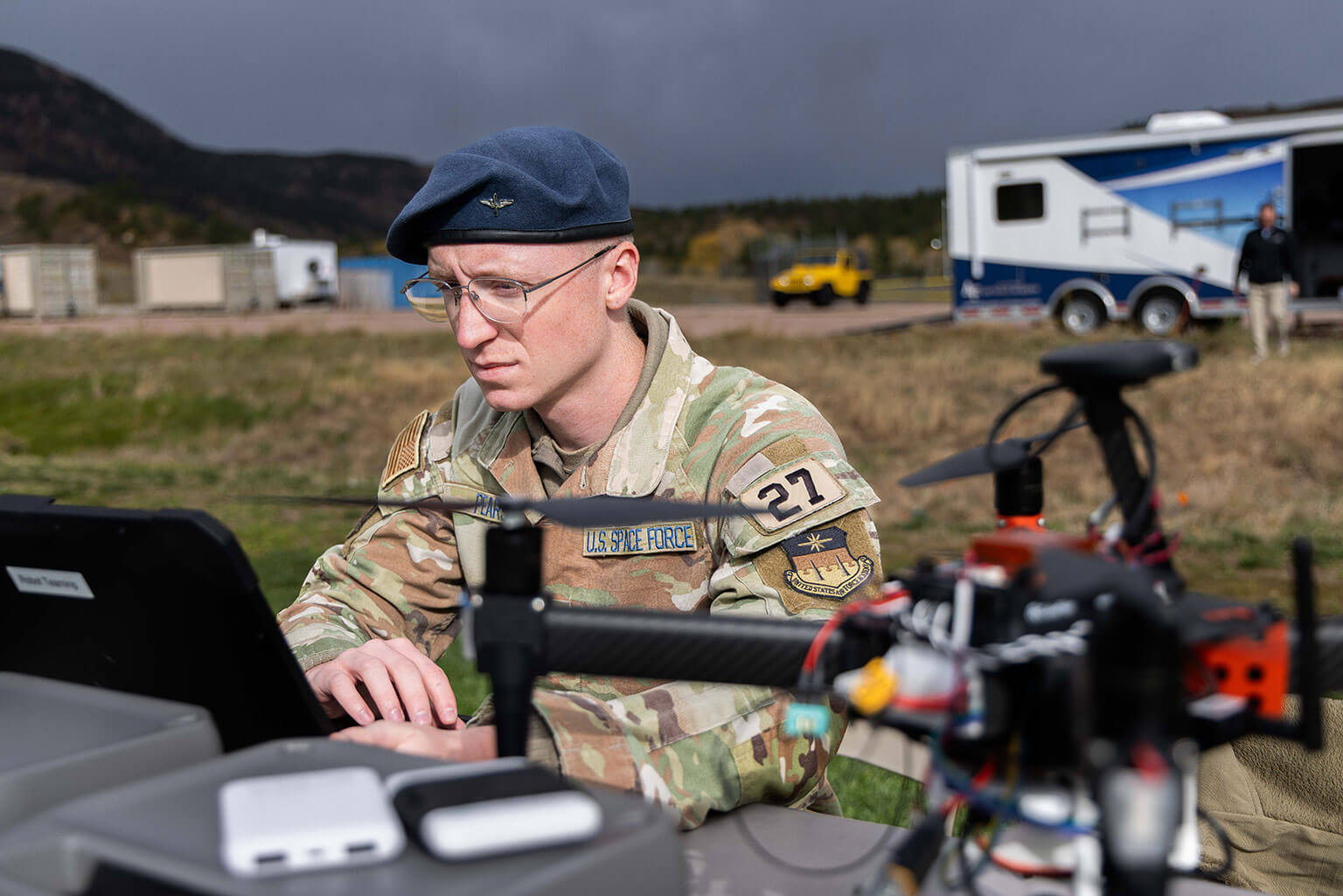
Cadet 1st Class Adam Pearse works on a computer beside an unmanned aerial vehicle at the U.S. Air Force Academy, Colo. Pearse supports the project’s data collection efforts, helping monitor aircraft and battery performance during flight testing. (U.S. Air Force photo by Trevor Cokley)
Building the procedures behind the data
While Pearse focuses on instrumentation and aircraft operations, Cadet 1st Class Jillian Essig, an Electrical and Computer Engineering major, focuses on flight planning, procedures and integrating environmental data into the research.
Essig helped develop standard operating procedures for the software and preflight and postflight checklists. She also helped program autonomous flight paths and created Python scripts to integrate weather information from the Academy’s High Wind Alert System into the project’s data collection.
Collecting useful data requires more than completing a successful flight. The team must ensure its software and data systems are ready to capture the information needed for each test.
“Sometimes a successful flight does not mean a successful data collection,” Essig said. “We have to make sure that our software is working and that all of our data systems are ready to go. The night before a flight can be just as important as the flight itself.”
As an Air Force Academy glider instructor pilot, Essig was familiar with established checklists and structured training sorties. The research project has given her the opportunity to help develop procedures and determine what information needs to be collected during each flight.
Her experience coordinating operations at Davis Airfield also helps connect the engineering team with airfield personnel and the tower, ensuring flight testing is coordinated within the Academy’s busy airspace.
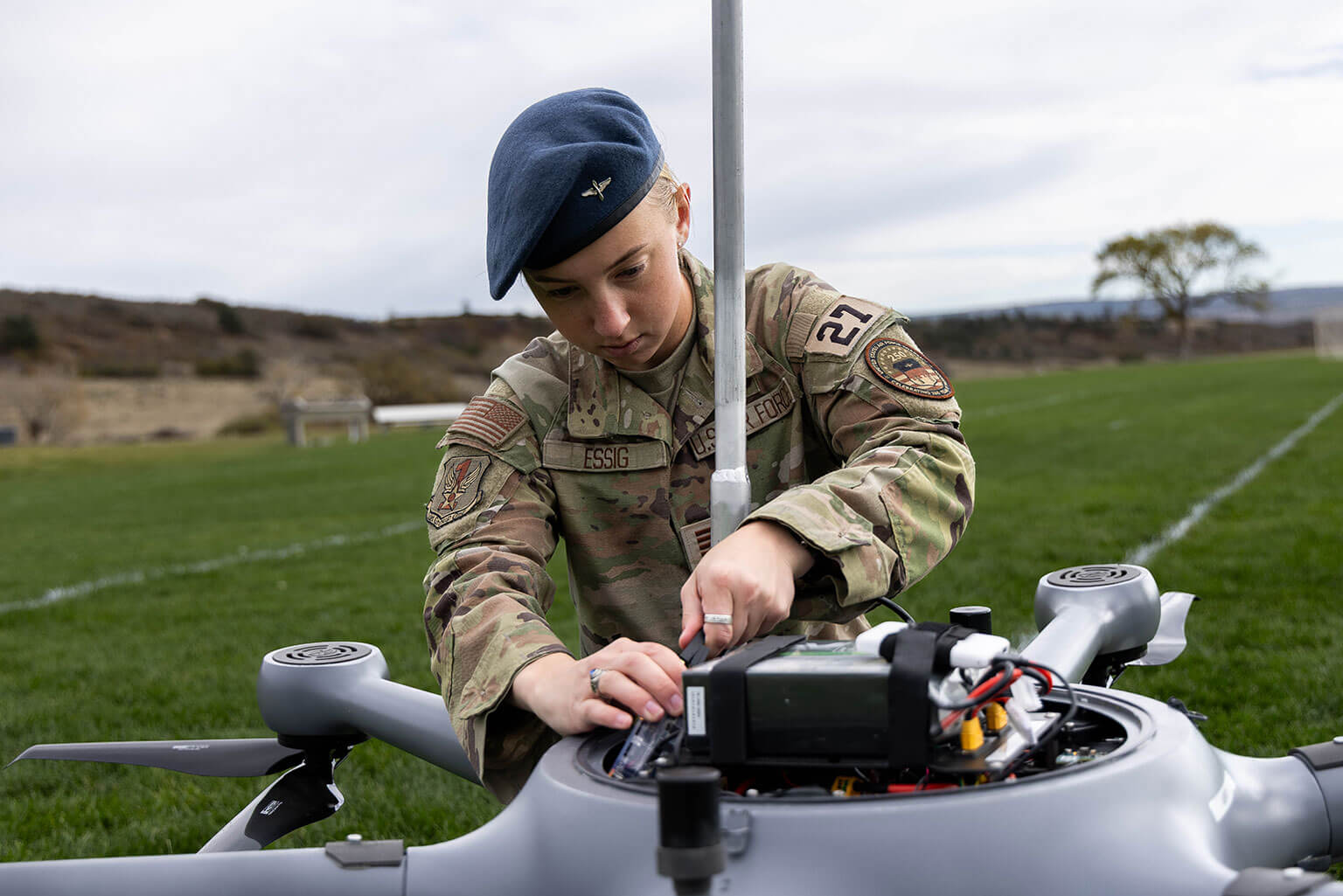
Cadet 1st Class Jillian Essig works with an unmanned aerial vehicle at the U.S. Air Force Academy, Colo. Essig supports flight testing and data collection for a NASA-funded research project examining how flight conditions affect unmanned aircraft battery performance. (U.S. Air Force photo by Trevor Cokley)
Research with future operational applications
Beyond collecting engineering data, the project gives cadets an opportunity to consider how unmanned aircraft could be used in future military operations.
Pearse said sUAS have the potential to change how the military approaches certain missions by offering lower-cost options and reducing risk compared with some manned aircraft operations. Their capabilities can also give decision-makers more flexibility when considering how to accomplish a mission.
The work has also changed how Pearse approaches engineering problems. Rather than focusing only on developing an ideal technical solution, he said the team must consider what will meet mission requirements within available time and resources.
That approach requires cadets to be resourceful, evaluate risk and find ways to make effective use of available capabilities.
Through the NASA-funded research, cadets are gaining experience in aircraft operations, data collection and engineering while contributing information that can support future unmanned aircraft research.
See more photos of cadets operating small unmanned aerial systems on Flickr.