Spring Culminating Exercise Tests Cadet Warfighter Skills
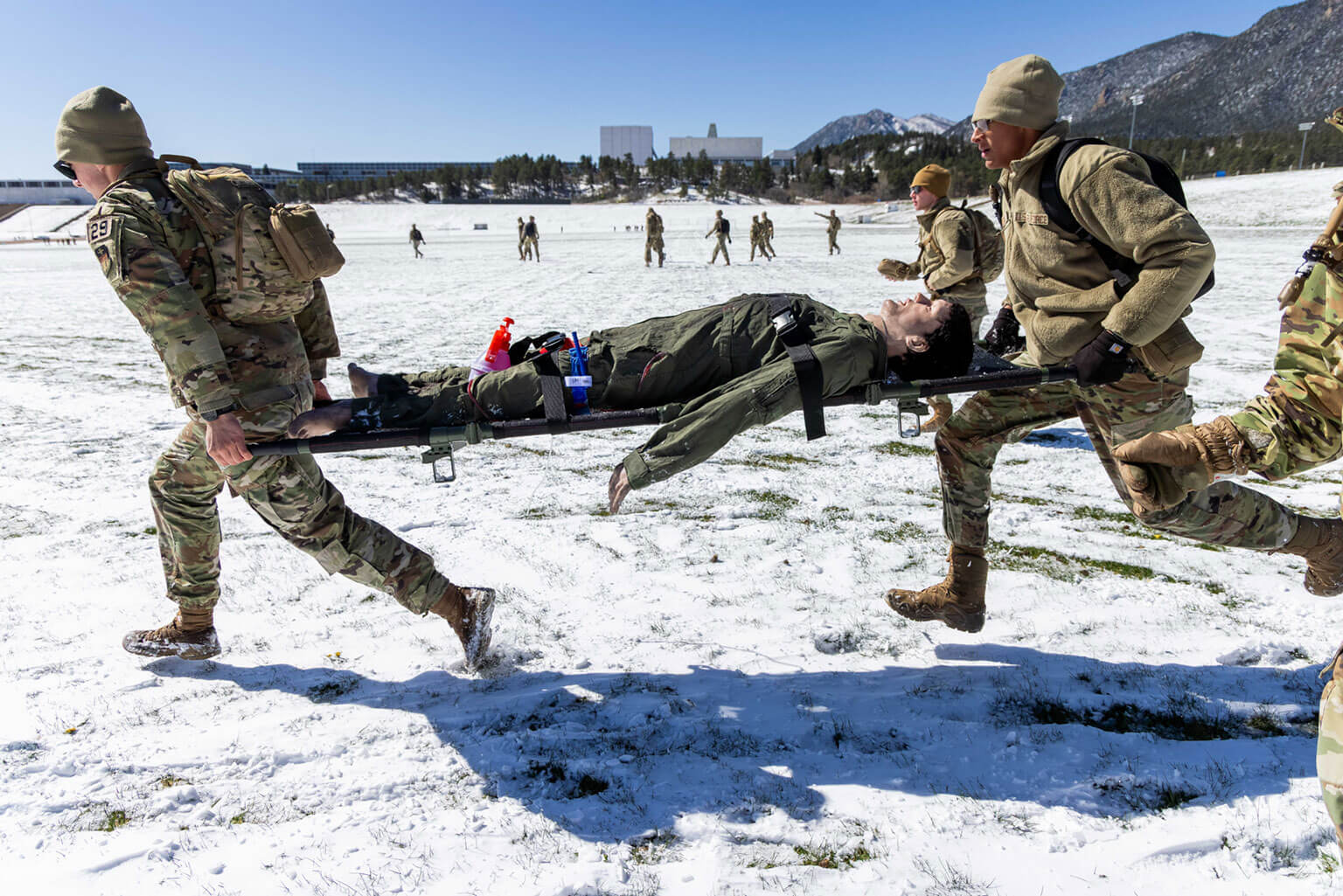
Cadets transport a manikin patient after assessing and treating its injuries during the Superintendent’s Challenge as part of the Spring Culminating Exercise (CULEX) at the U.S. Air Force Academy, Colo., April 18, 2026. Nearly 3,000 cadets participated in the CULEX, a rigorous and realistic military training exercise, to develop into combat-ready, future Air Force and Space Force leaders. (U.S. Air Force photo by Trevor Cokley)
By Tech. Sgt. Zach Vaughn
U.S. Air Force Academy Strategic Communications
U.S. AIR FORCE ACADEMY, Colo. – Nearly 3,000 cadets participated in the U.S. Air Force Academy’s Spring Culminating Exercise (CULEX) April 15-18, 2026.
The CULEX is a rigorous and realistic multi-domain military training exercise that develops cadets into combat-ready Air Force and Space Force leaders.
“Our focus is forging these cadets into warfighters,” said Lt. Col. Benjamin Mackey, division chief for Cadet Wing Operations. “We’re presenting them with opportunities to learn and grow. The CULEX allows them to test their military training so that when they graduate, they’re ready to lead on Day One in any environment.”

Cadets travel to their defensive positions within their Joint Operations Area during the Spring Culminating Exercise (CULEX) at the U.S. Air Force Academy, Colo., April 16, 2026. The CULEX applied classroom learning and small-group military training in a notional field training environment, where cadets practiced command and control, cyber operations, and integrating space effects into their mission planning and other joint force capabilities. (U.S. Air Force photo by Ray Bahner)
From classroom to combat scenarios
The comprehensive exercise applied classroom learning and small-group military training in a notional field training environment, where cadets practiced command and control, cyber operations, and integrating space effects into their mission planning and other joint force capabilities.
“The CULEX exposed cadets to leading in a joint warfighting construct,” Mackey said. “It provided them with a reference of the framework they’ll use as officers and gave them valuable background knowledge, which will make them that much more effective working with their sister services.”
The exercise required cadets to synchronize efforts across multiple teams and functional areas, reinforcing how individual actions contribute to mission success at a larger scale. Cadets were expected to assess evolving situations, prioritize tasks and make timely decisions while maintaining accountability for their teams and mission objectives.
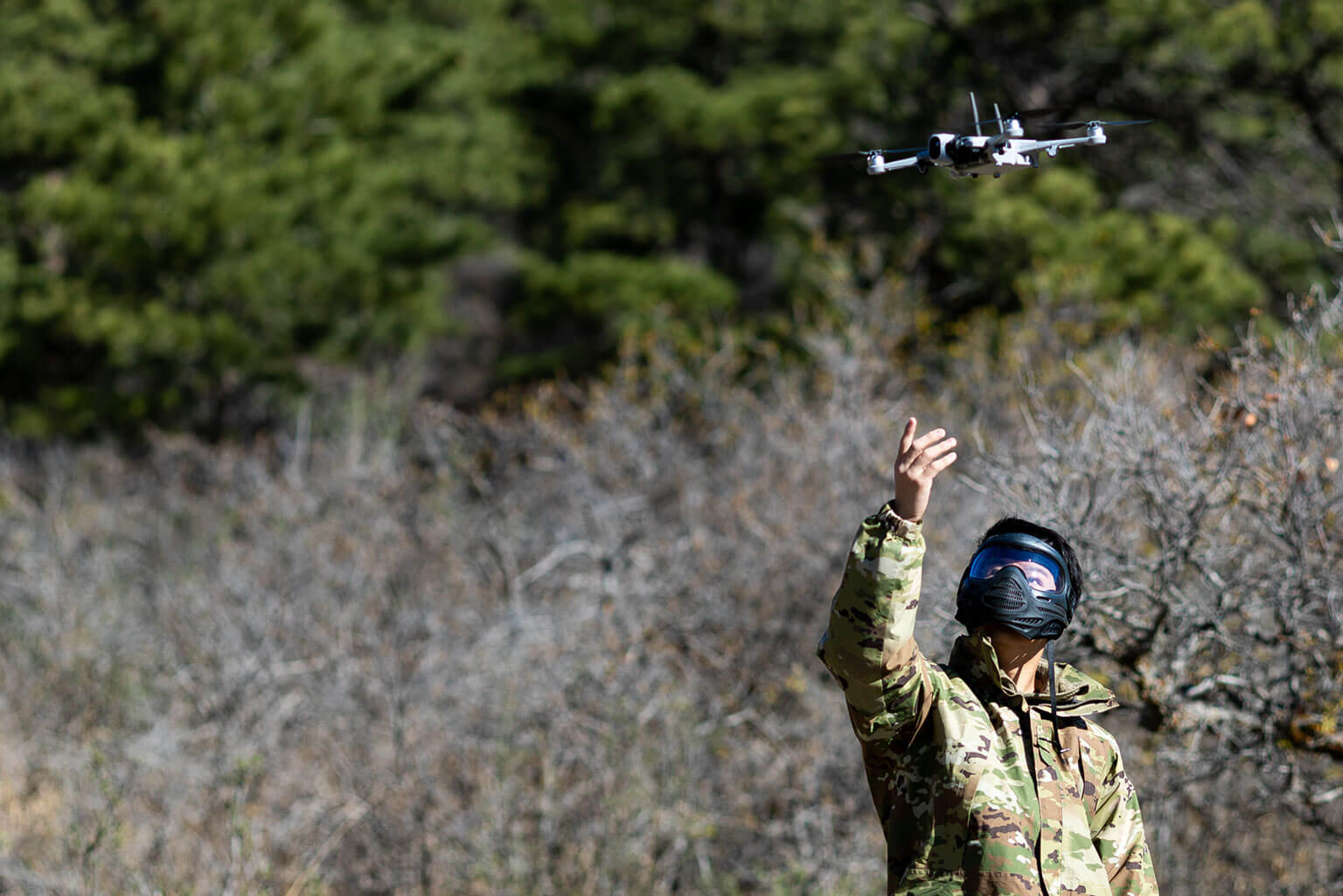
A cadet launches a drone to support base defense within the Joint Operations Area during the Spring Culminating Exercise (CULEX) at the U.S. Air Force Academy, Colo., April 16, 2026. Academy officials directed the CULEX as a cumulative test for cadets to incorporate lessons learned during their Basic Cadet Training, Silver Training weekends, and individual leadership training. (U.S. Air Force photo by Ray Bahner)
Decision-making under pressure
Academy planners designed the exercise around realistic and stressful scenarios to develop critical thinking skills while testing the mettle of cadets.
“This exercise gave cadets a chance to sharpen their skills within a controlled yet dynamic environment,” said Tech. Sgt. Richard McArdle, an Academy exercise planner. “We designed it to replicate something they’ll most likely see during their Air Force or Space Force careers to improve their ability to adapt and overcome in ever-changing environments.”
A separate group of cadets served as an opposing force (OPFOR), a tactical enemy team that worked to disrupt friendly operations within each Joint Operations Area (JOA).
“We designed the exercise to have these items called injects,” said McArdle. “When a cadet squadron or JOA meets a certain objective, one of the injects will be triggered to change the scenario to give the cadets more things to think about and adapt to.”
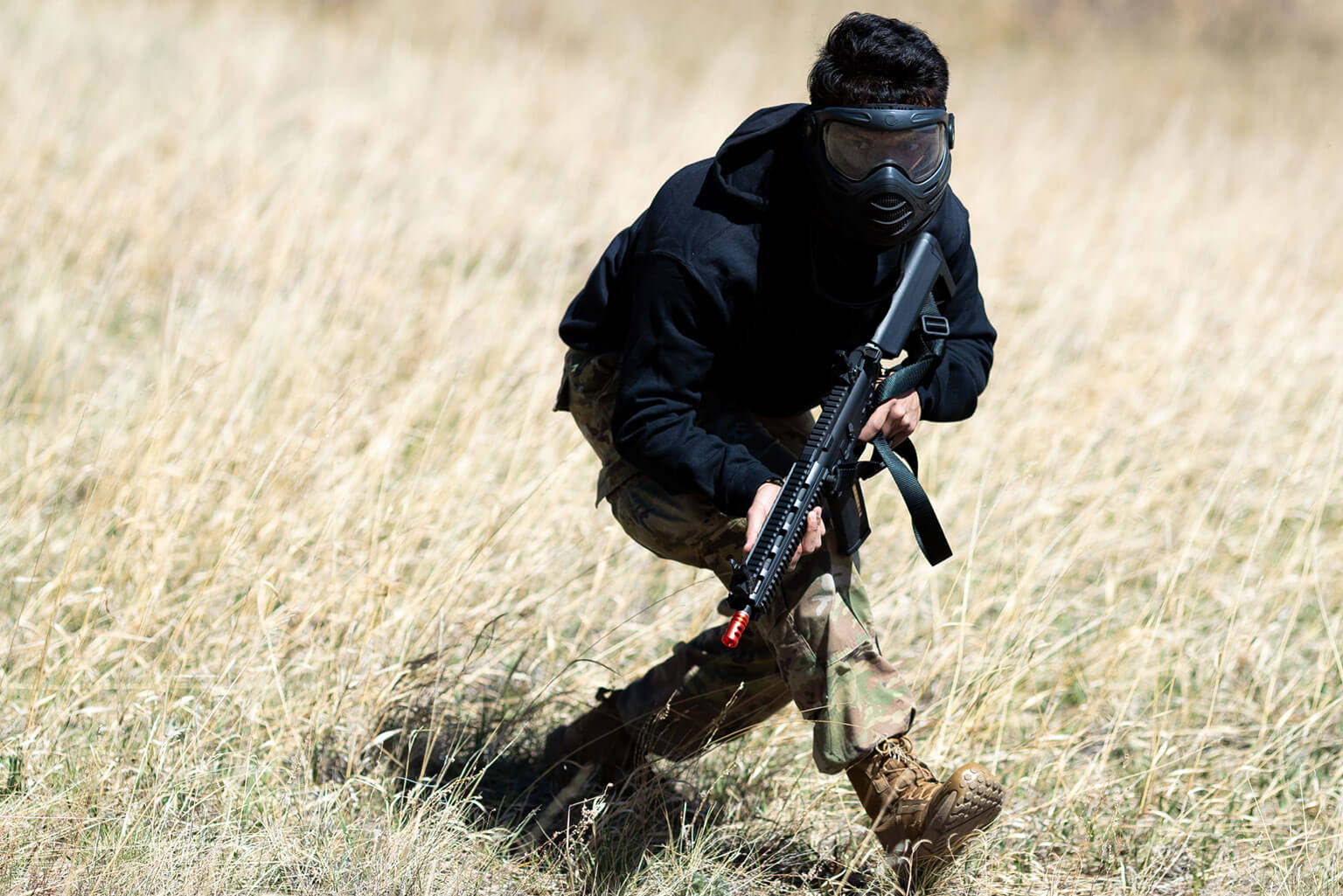
A cadet on the opposing force (OPFOR) attacks a dismounted patrol of cadets during the Spring Culminating Exercise at the U.S. Air Force Academy, Colo., April 16, 2026. During the exercise, a Quick Response Force used small unit tactics and field communication techniques to locate and extract a cadet from enemy territory. (U.S. Air Force photo by Ray Bahner)
Applying training in real-time scenarios
One scenario involved the Air Expeditionary Task Force issuing an order to the Joint Personnel Recovery Center to rescue a cadet in enemy territory.
“It was an opportunity for cadet leadership to test how they’ve organized, trained and equipped their fellow cadets to be ready to step into a specified role within a larger scenario to accomplish the mission,” Mackey said. “I’m impressed with how they’ve gotten after it.”
The Quick Response Force received the order, prepared themselves and used navigation, small unit tactics, Tactical Combat Casualty Care (TCCC), and field communication techniques to locate and extract their teammate.
“My biggest takeaway was learning how to adapt in real-time,” said Cadet 2nd Class Joseph Bevivino, Quick Response Force commander. “Our plans changed quickly, and we had to make decisions and maintain command and control from a distance. It reinforced how important communication, flexibility and trust are in a dynamic environment.”
The sense of ownership extended beyond individual missions to the exercise’s overall design and execution.
“One thing that makes the Academy unique is that we place an immense amount of responsibility on the cadets,” McArdle said. “They played a big part in making this exercise happen. From providing logistical support to mission planning, which allowed permanent party to tailor what we do around what the cadets planned for. The CULEX has so many moving parts, and without the cadets, permanent party, contractors and civilians, it would have been impossible.”
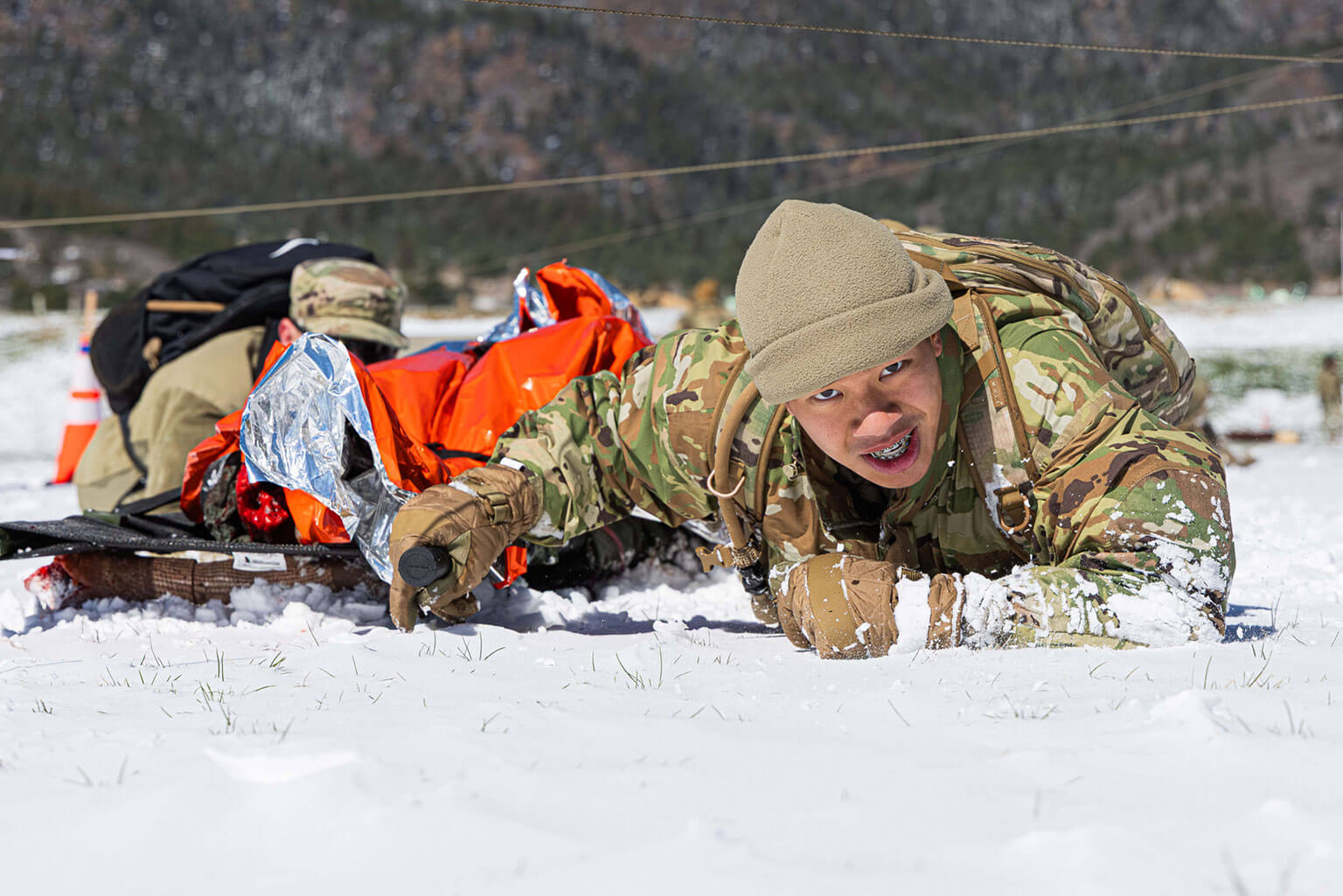
A cadet performs a low crawl after assessing and treating a manikin patient during the Superintendent’s Challenge as part of the Spring Culminating Exercise (CULEX) at the U.S. Air Force Academy, Colo., April 18, 2026. CULEX equipped cadets with a broad range of leadership skills and experience to ensure they are ready to lead on Day One. (U.S. Air Force photo by Trevor Cokley)
Preparing leaders for Day One
The multi-day training event ensured cadets gained the leadership skills and experience needed to navigate unforeseen challenges throughout their careers, according to Mackey.
“The skills that the cadets learn might not directly translate into their Air Force Specialty Code (AFSC) or Space Force Specialty Code (SFSC),” said Mackey. “But their leadership, teamwork, and problem-solving skills will absolutely translate to any job they’ll do.”
Academy officials directed the CULEX as a cumulative test for cadets to incorporate lessons learned during their Basic Cadet Training, Silver Training weekends, and individual leadership training, ensuring they are prepared for the rigors of leadership upon graduation and commissioning as second lieutenants in the U.S. Air Force or U.S. Space Force.
See more photos of the Spring Culminating Exercise on Flickr and learn more about cadet military training.