Space Education prepares cadets for future missions
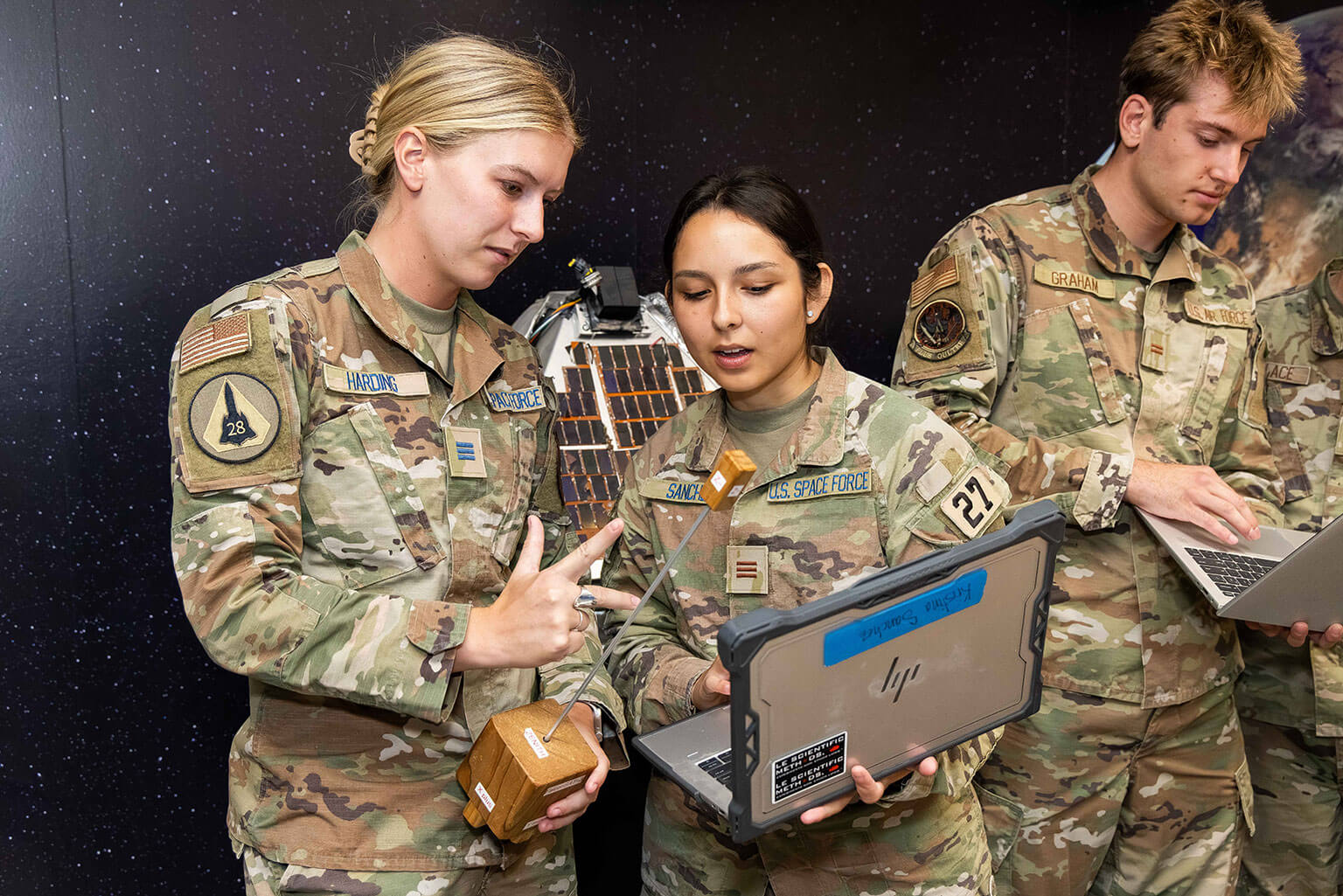
U.S. Air Force Academy cadets work on FalconSAT 11 during a capstone class at the Academy in Colorado Springs, Colo., Sept. 23, 2026. Space-related capstone projects give cadets opportunities to apply classroom learning through hands-on technical work. (U.S. Air Force photo by Trevor Cokley)
By SSgt Brandon Schneider
U.S. Air Force Academy Strategic Communications
U.S. AIR FORCE ACADEMY, Colo. – Space education at the U.S. Air Force Academy extends beyond cadets preparing to become Guardians. Cadets encounter the space domain through academics, research, extracurricular opportunities and military training that prepare them for service in the Air Force and Space Force.
Space across the cadet experience
The Academy offers 29 dedicated space courses where cadets can build on the foundation they receive through the core curriculum. U.S. Space Force Maj. Emily Lagarile, assistant professor of military and strategic studies, said space education has become increasingly integrated throughout the cadet experience.
All cadets receive a baseline understanding of the space domain through core Military and Strategic Studies and Astronautical Engineering courses. Cadets interested in further study can pursue electives, research, clubs and capstone projects.
“Space has not only been integrated across the Cadet Wing, but now finds itself in the classroom, in student clubs, in capstone projects, and in military training exercises,” Lagarile said.
This year’s Validation Exercise demonstrated that integration by incorporating cyber and space operations in addition to air and ground operations.
For some cadets, those opportunities build throughout their Academy experience and eventually connect them with real-world military challenges.
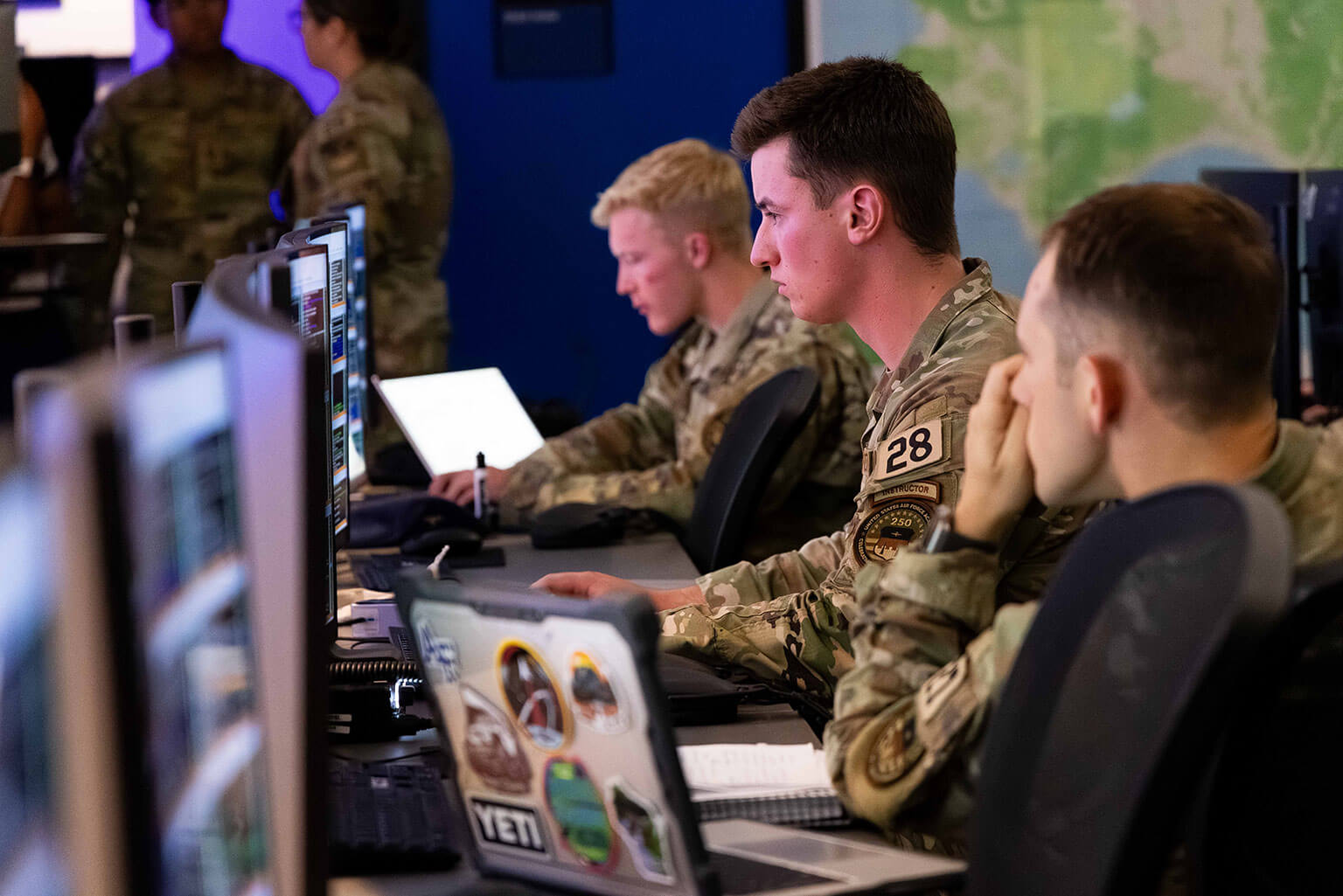
U.S. Air Force Academy cadets participate in the Validation Exercise at the Academy in Colorado Springs, Colo., Sept. 18, 2026. The exercise incorporates air, ground, cyber and space operations, giving cadets opportunities to apply their education and training in a military environment. (U.S. Air Force photo by Trevor Cokley)
From the classroom to real-world challenges
Cadet 1st Class Emilia Dobek, who is preparing to commission into the Space Force, has built on her academic foundation through research and other space-related experiences at the Academy.
Her experience includes NATO space deterrence research, international partnerships and research through the Institute for Future Conflict.
Working with the Institute for Future Conflict, Dobek led a cadet capstone team supporting Space Force S3 at the Pentagon. The team examined a Space Force research question involving when and to what extent the service should invest in cislunar space, the region between Earth and the moon.
Dobek applied knowledge from Advanced Astrodynamics, Space Warfighting, Future Conflict and previous policy experiences to address the military research question. Those experiences, she said, helped her understand the operational impacts of the space domain and approach complex problems in new ways, which she sees as one of the strengths of an Academy education.
“I would say that the Academy provides opportunities within the space domain that you cannot find anywhere else,” Dobek said.
Space education also benefits cadets preparing to enter the Air Force.
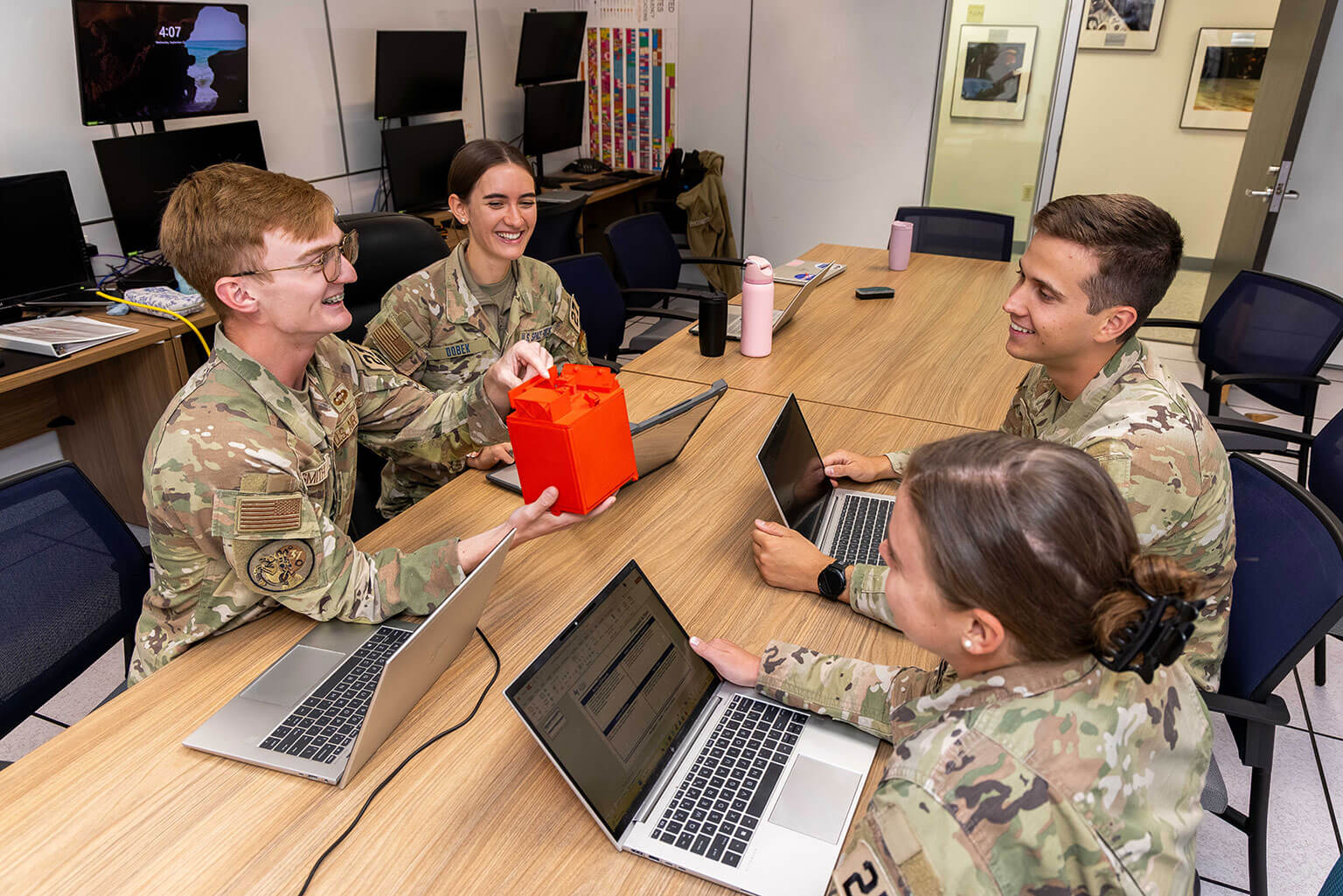
U.S. Air Force Academy cadets collaborate on FalconSAT 11 during a capstone class at the Academy in Colorado Springs, Colo., Sept. 23, 2026. The FalconSAT program gives cadets hands-on experience applying classroom knowledge to satellite design, testing, building and operations. (U.S. Air Force photo by Trevor Cokley)
Preparing airmen through space education
About 10% of Academy graduates commission into the Space Force, making space education relevant not only to future Guardians but also to the majority of graduates who will serve in the Air Force. Understanding the space domain helps Air Force-bound cadets recognize how space capabilities support a wide range of missions.
“My MSS 444 class, ‘Space and Cyber Strategy for National Defense,’ is a class of mostly pilot selects,” Lagarile said, “and my goal is that students come out of the class aware of how space relates to and supports their respective career field.”
Cadet 1st Class Edward Johnson once viewed Air Force and Space Force operations as largely separate. His experiences at the Academy changed that perspective.
Johnson has worked on the FalconSAT 11 avionics sub-team, participated in the Azimuth Space Program and spent six weeks conducting research and gaining operational experience with the 15th Space Surveillance Squadron through the Cadet Summer Research Program.
“The most important way I can see what I have learned about space applying to my future Air Force career is through my different perspective in problem-solving,” Johnson said. “This difference in approach to problem-solving from many of my peers can help us be more innovative and effective as a team.”
Johnson said space capabilities can also directly support air operations. Satellite intelligence, surveillance and reconnaissance can inform an aircraft’s mission before takeoff, while GPS and satellite communications can continue supporting the aircraft in flight.
Recognizing those connections helps Air Force-bound cadets see how their future career fields fit into the broader operational picture.
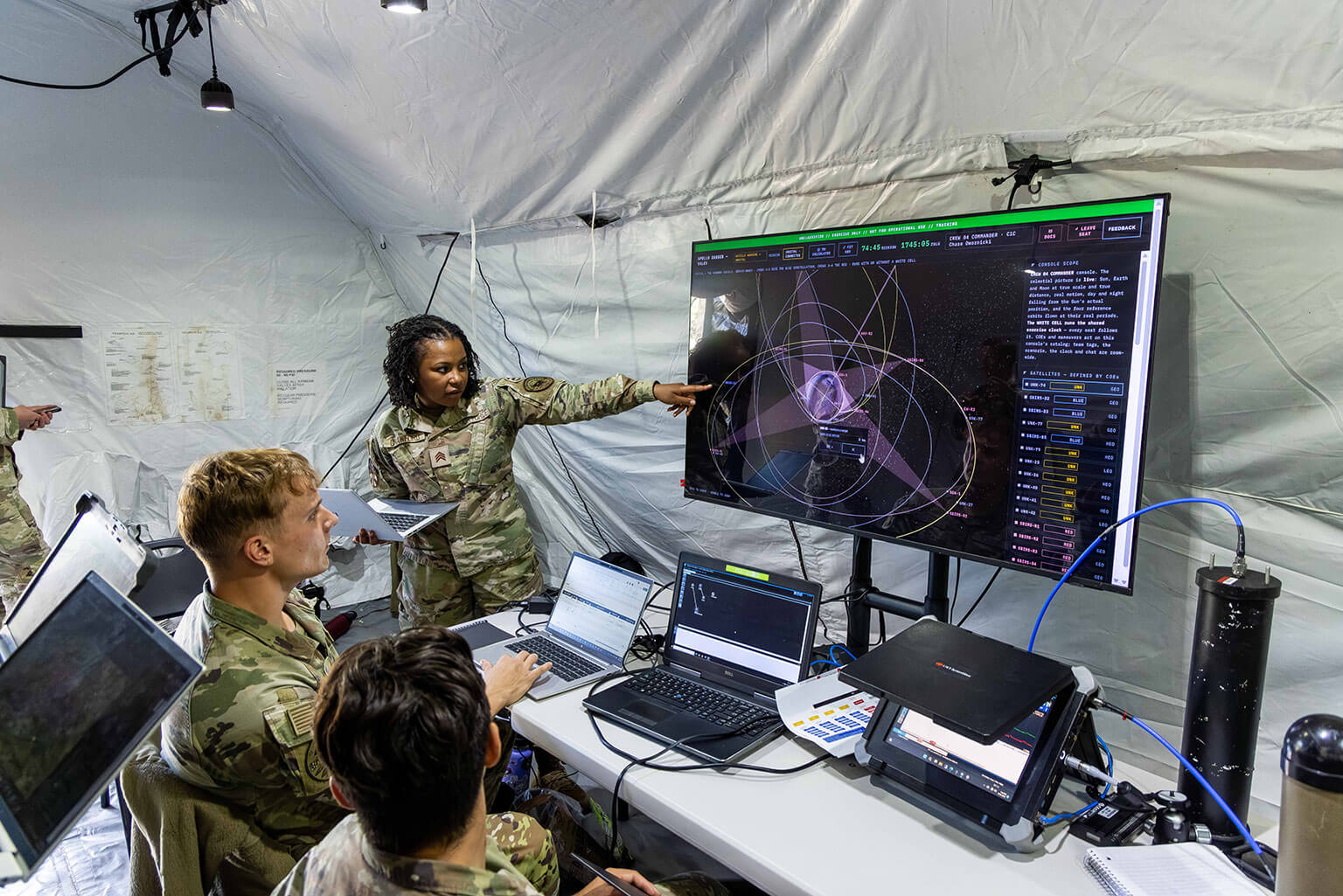
U.S. Air Force Academy cadets participate in the Validation Exercise at the Academy, Colo., Sep. 18, 2026. The 2026 VALEX incorporated cyber and space operations in addition to air and ground operations, giving cadets opportunities to apply their education and training in a military environment. (U.S. Air Force photo by Trevor Cokley)
Understanding space in the joint fight
Johnson said his experiences have changed how he views the relationship between Air Force and Space Force operations.
“From what I have seen, you cannot be successful in one domain without the support of the other,” Johnson said. “Coordination between the Air Force and Space Force, and a positive working relationship, is crucial to mission success.”
That understanding becomes increasingly important as cadets prepare to serve as Air Force and Space Force officers.
“These cadets are a part of a generation of Air Force and Space Force officers that will commission with space designated as a warfighting domain,” Lagarile said. “Understanding how space supports the joint fight is vital to securing our competitive edge as a military.”
From the classroom to research and military training, cadets have opportunities to apply what they learn before they are commissioned into the Air Force or Space Force.
“If cadets can leave the Academy understanding why space is important to their future career, the joint fight, and their daily lives, I think we have been successful,” Lagarile said.
See more photos on Flickr and take a virtual tour of the Academy.