Cadet Warfighter Instructor’s Course equips cadets for future fight
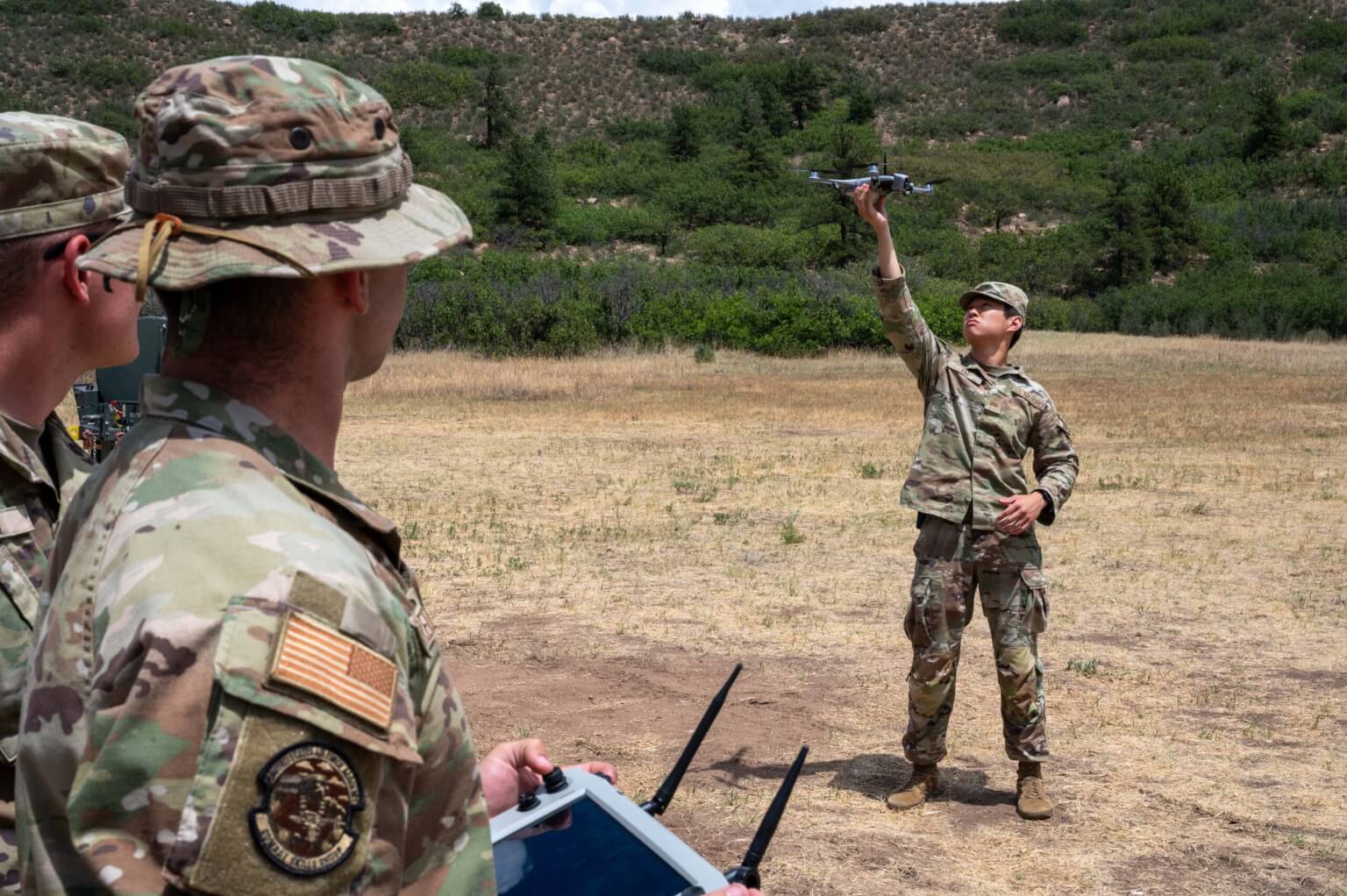
Cadet 1st Class Ryan Kim (right), Cadet Warfighter Instructor’s Course (CWIC) Instructor, catches a small unmanned aerial system during a CWIC Field Training Exercise at the U.S. Air Force Academy, Colo., July 28, 2026. The Academy’s most recent iteration of CWIC taught more than 120 cadets how to lead, teach expeditionary skills and build warfighter readiness within the Cadet Wing. (U.S. Air Force photo by Tech. Sgt. Zach Vaughn)
By Tech. Sgt. Zach Vaughn
U.S. Air Force Academy Strategic Communications
U.S. AIR FORCE ACADEMY, Colo. – The Cadet Warfighter Instructor’s Course (CWIC) develops 2nd class cadets into instructors who lead and teach expeditionary skills at the U.S. Air Force Academy.
During three weeks of field training July 11 through Aug. 1, more than 120 cadets strengthened their knowledge of base defense, small unit tactics, small unmanned aerial systems (sUAS) operations and Tactical Combat Casualty Care techniques. The training prepares cadets to return to their squadrons as instructors, where they reinforce expeditionary skills across the Cadet Wing.
Academy leaders said CWIC prepares cadets to lead in uncertain and demanding operational environments by reinforcing the leadership skills they’ll rely on throughout their careers.
“CWIC exists to bridge the gap between classroom knowledge and the realities of leading in uncertainty,” said Capt. Luis Lopez, Branch Chief of the Exercise and Wargaming Branch. “The program places cadets in demanding, mission-oriented environments where they must communicate clearly, make sound decisions under pressure and lead small teams when conditions are imperfect. Those are timeless leadership requirements regardless of career field.”
“The Air Force has placed a larger emphasis on us growing our core expeditionary skills,” said Cadet 1st Class Ty Odom, CWIC commander. “Our cadets will take these lessons back to their squadrons so we can actively build and retain that warfighting expertise throughout the Cadet Wing year after year.”
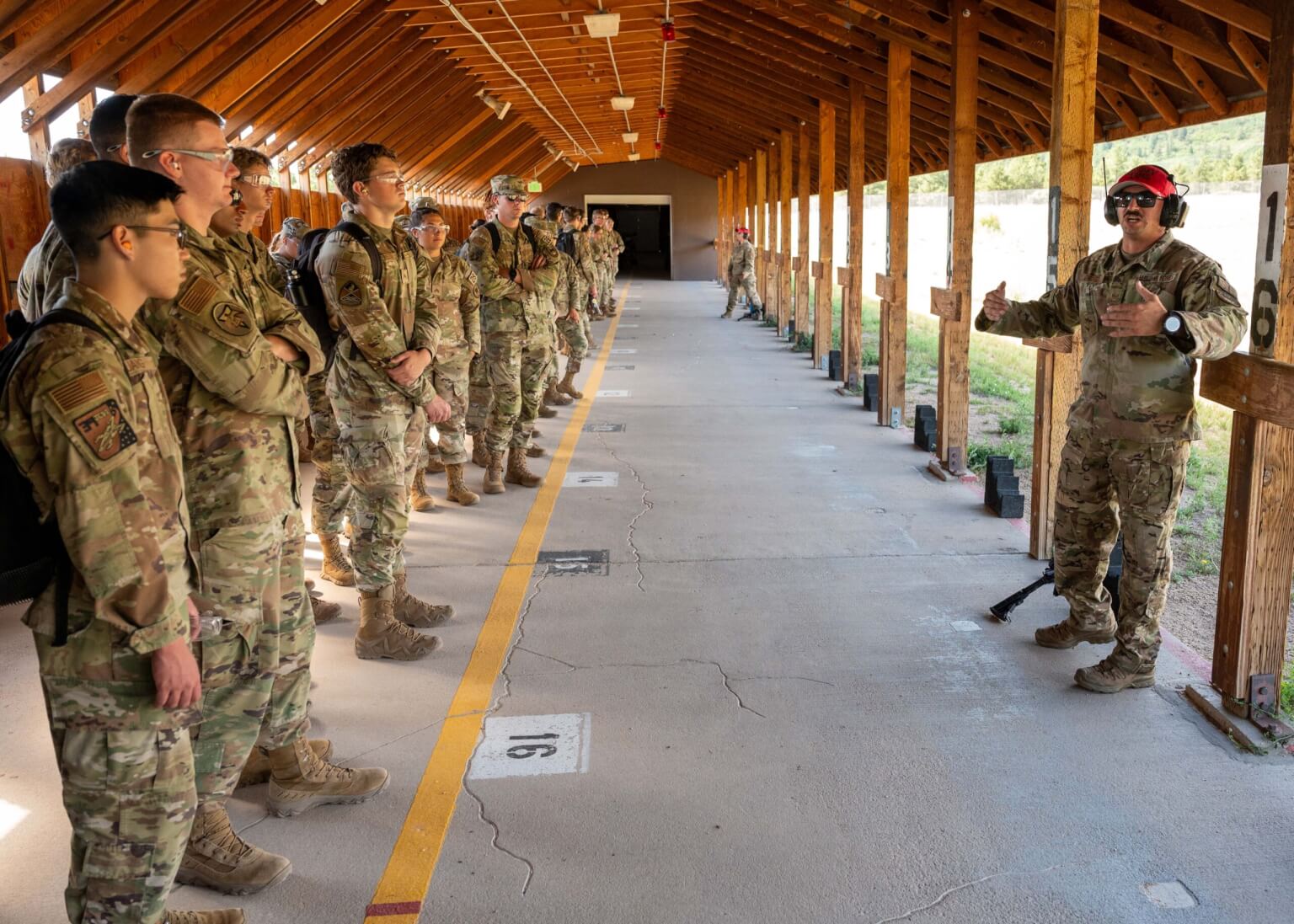
Tech. Sgt. Matthew Gardner (right), 10th Security Forces Squadron, Combat Arms Training and Maintenance (CATM) Instructor, teaches Cadet Warfighter Instructor’s Course (CWIC)participants how to operate a CATM line and sight an optic during a CWIC practical application session, at the U.S. Air Force Academy, Colo, July 29, 2026. CWIC participants learn tactical level techniques and procedures and how to apply them at the operational level using command and control principles. (U.S. Air Force photo by Tech. Sgt. Zach Vaughn)
Preparing for the future fight
CWIC instructors, including cadet leaders, Survival, Evasion, Resistance and Escape specialists and special operations experts, taught cadets command and control, administration and logistics support operations. The training prepares future officers to lead in operational environments throughout their careers.
For Cadet 2nd Class Emily Wagner one of the most valuable lessons was learning how to develop and communicate operational plans.
“One of the biggest takeaways for me was learning how to write an operations order or OPORD,” said Wagner. “I learned what an effective mission statement looks like and can edit ones that aren’t written well to make them better. That’s helpful because OPORDs are so common throughout the Air Force.”
OPORDs help military leaders communicate mission objectives, execution plans and available resources. According to U.S. joint doctrine, they serve as a critical command-and-control tool for mission effectiveness.
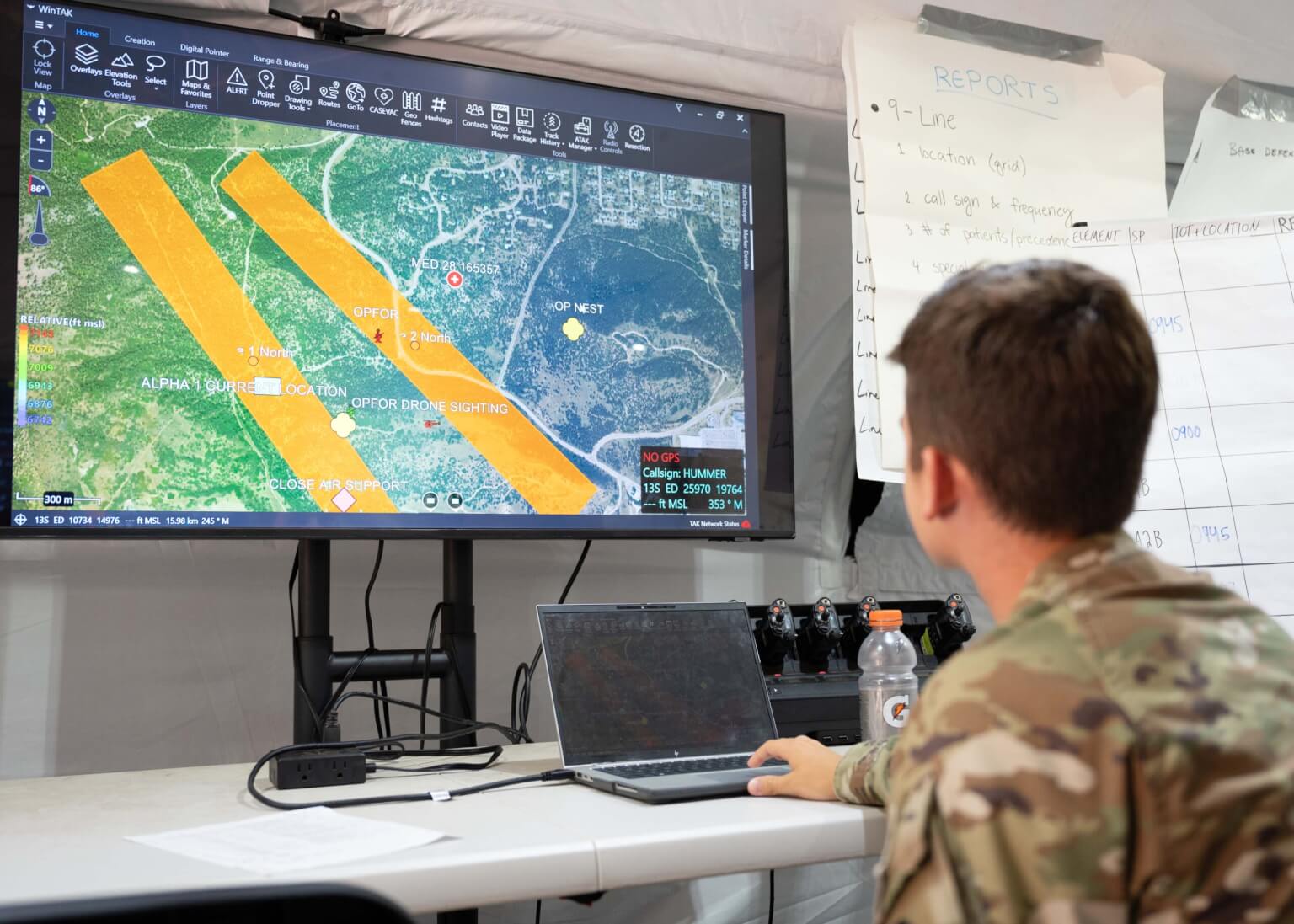
Cadet 2nd Class Noah Marino, Cadet Warfighter Instructor’s Course (CWIC) participant, oversees a common operating picture within a Tactical Operations Center (TOC) during a CWIC Field Training Exercise at the U.S. Air Force Academy, Colo., July 28, 2026. CWIC students learned how to work within a TOC to apply operational-level command-and-control principles to a practical training scenario. The multi-week course prepares cadets to lead, teach expeditionary skills and build warfighter readiness within the Cadet Wing. (U.S. Air Force photo by Tech. Sgt. Zach Vaughn)
Building confidence in the field
Odom said CWIC supports the Academy’s mission of forging warfighters to win by providing cadets with realistic opportunities to lead, teach and perform in austere conditions while building the confidence they’ll need as future officers.
“CWIC was created to familiarize cadets with the materials to become experts in how to shoot, move, communicate, medicate and automate,” said Odom. “We need them really good at those skills while also teaching them how to be an instructor so they can teach their fellow cadets. We’re also teaching them things they would learn at a basic instructor course like how to build a curriculum, how to plan exercises, evaluate, give feedback and conduct proper after-action reports.”
As the CWIC commander, Odom is responsible for developing the next generation of cadet warfighters and future Air Force and Space Force officers. He applied his unique experiences as a former enlisted Airman to his current position. Odom said his prior enlisted experience shaped the way he approaches cadet instruction.
“I really believe in CWIC because I understand the importance of those expeditionary skills,” said Odom. “One of my roles, during my time with the 8th Security Forces Squadron at Kunsan Air Base, was training augmentees and ensuring they understood the importance of defending the base, which has been an enduring mission over there for quite a long time.”
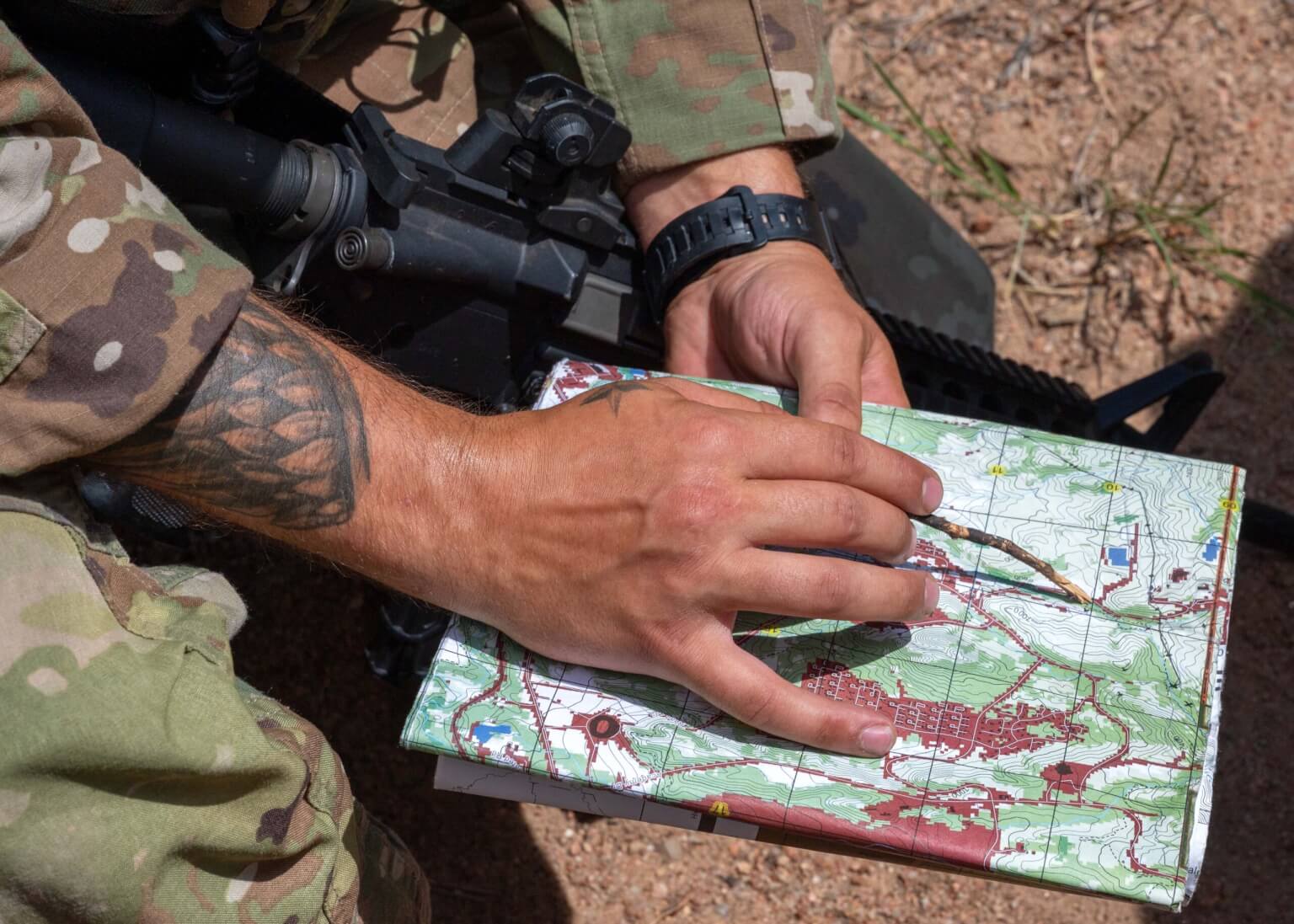
A Cadet Warfighter Instructor’s Course (CWIC) participant orients his squad to an observation post using a topographical map during a Field Training Exercise at the U.S. Air Force Academy, Colo., July 28, 2026. CWIC prepares cadets to lead, teach expeditionary skills to fellow cadets and build warfighter readiness for the future fight. (U.S. Air Force photo by Tech. Sgt. Zach Vaughn)
Controlling the battlespace
Students learned how to work within a tactical operations center (TOC), where they supervised field operations and applied command-and-control principles while maintaining a common operating picture.
“Learning to run a TOC was really insightful,” said Wagner. “I got to apply tactical maneuvers and procedures at more of a management level, which was a great experience. Sitting in there and actually running a common operating picture, seeing how the battle was progressing was helpful from a command-and-control perspective.”
Operating from the TOC required cadets to communicate clearly, adapt to changing conditions and make decisions that affected teams across the training area. Those same leadership and communication skills prepare CWIC graduates to return to their squadrons as peer instructors, where they teach expeditionary skills and mentor future cadets.
For Odom, the course reinforced that leadership extends beyond accomplishing the mission.
“I want myself and my fellow teammates to commission with a strong foundation of those warfighting skills so we can operate, communicate, fight and patch you up if you go down,” said Odom. “I’m glad we put in the work out here to grow ourselves. I think it’s really going to pay off down the road.”
See more CWIC photos on Flickr and take a virtual tour of the Academy.