Foundational Expeditionary Skills Training builds readiness
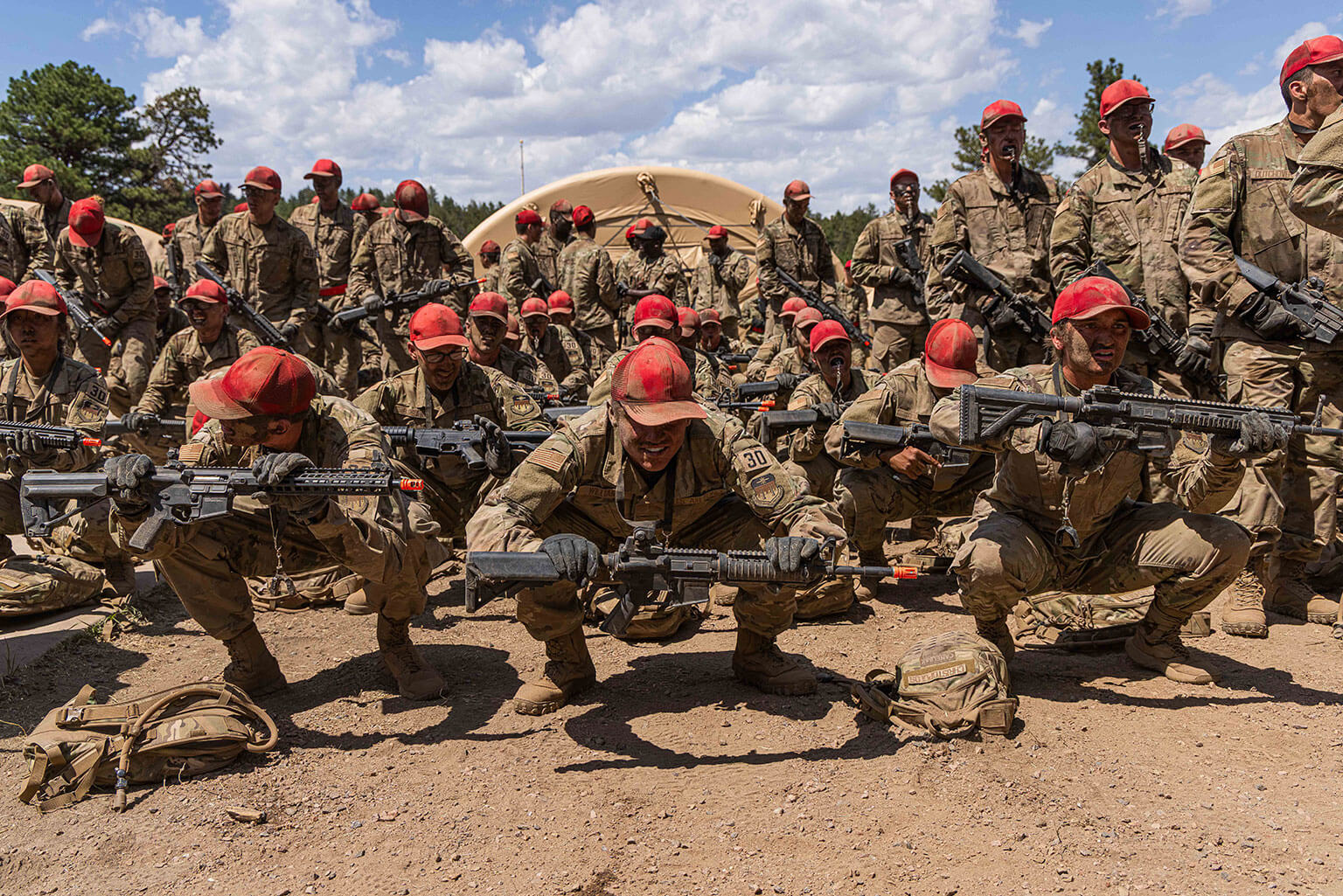
Basic cadets from the Class of 2030 participate in Foundational Expeditionary Skills Training at the U.S. Air Force Academy, Colo., July 16, 2026. The training prepares cadets to protect personnel, secure installations and operate in deployed environments. (U.S. Air Force photo by Trevor Cokley)
By Harry Lundy
U.S. Air Force Academy Strategic Communications
U.S. AIR FORCE ACADEMY, Colo. – At the U.S. Air Force Academy, basic cadets learn expeditionary skills that prepare them to protect personnel, secure installations and operate in tactical environments. Conducted during Basic Cadet Training at Jacks Valley, Foundational Expeditionary Skills Training develops teamwork, readiness and defensive tactics used across air, space and ground environments. Basic cadets learn foundational skills such as tactical formations, land navigation and entry control point procedures.
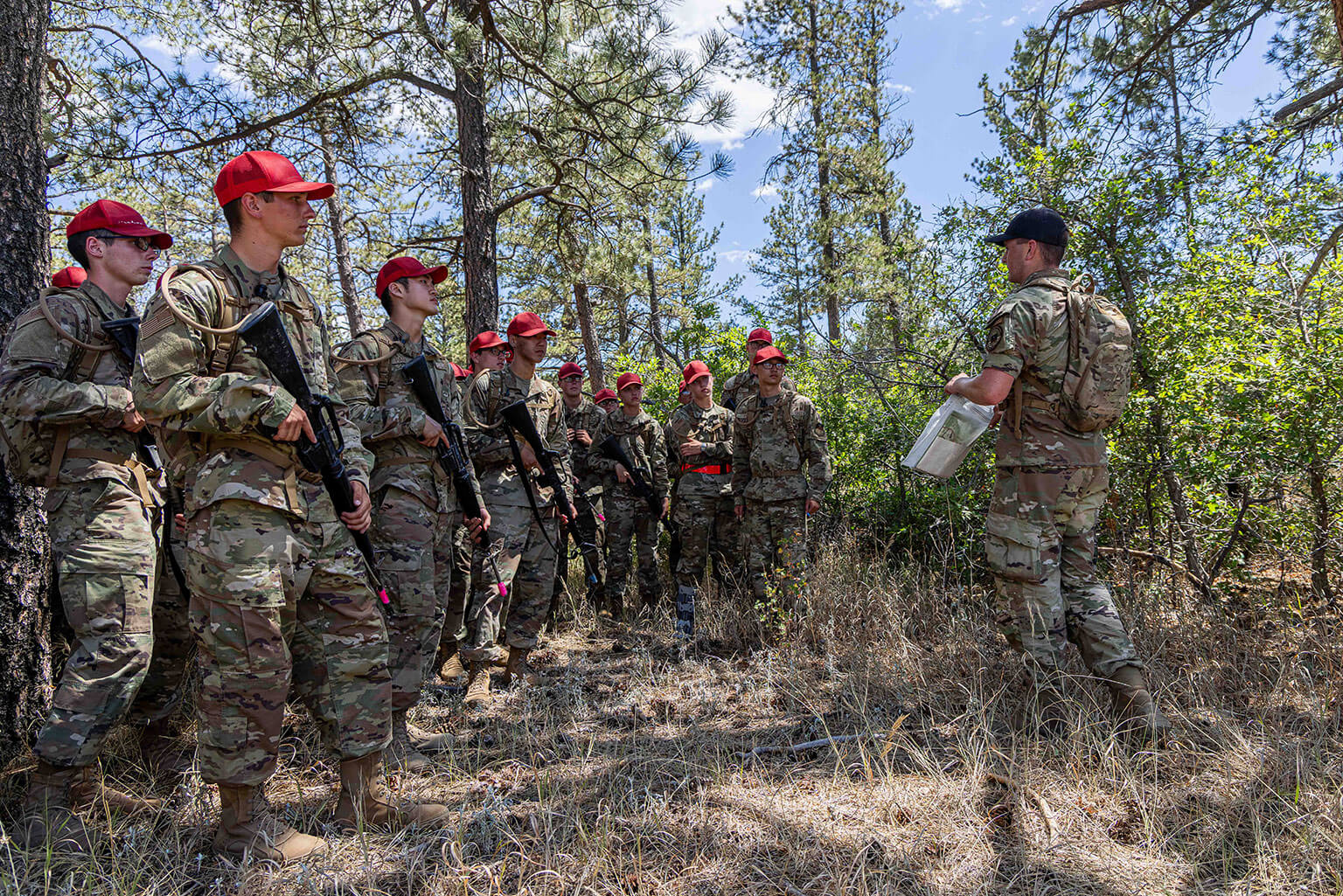
A cadre member briefs basic cadets ahead of Foundational Expeditionary Skills Training at the U.S. Air Force Academy, Colo., July 20, 2026. Cadre brief basic cadets on required equipment and expectations before they enter the field. (U.S. Air Force photo by Trevor Cokley)
Preparing Cadre and Basic Cadets for FEST
Cadre members prepare extensively before they ever step into the field with basic cadets. It starts with mastering the material they will teach.
“On the cadre side, we need to make sure that we are squared away to teach them the skills they are going to need,” Cadet 2nd Class Gavin Ehrich, FEST cadet course commander said. The training also teaches cadets how to assess threat levels and apply challenge procedures.
“They are being introduced to competencies that they will build on throughout their career,” Ehrich said. “So, we need to make sure we teach it correctly.”
Basic cadets also receive instruction before entering the field.
Basic cadets prepare for FEST through classroom instruction during the first half of BCT and a cadre briefing the night before that covers required equipment and expectations. “We give the basics a packing list for the overnight schedule,” Cadet 2nd Class Logan Lehrer, patrol cadre in charge and Biology major, said. “There are mandatory items that must be in their duffel bag, including uniform requirements and field wipes in lieu of a shower for the duration of the course.”
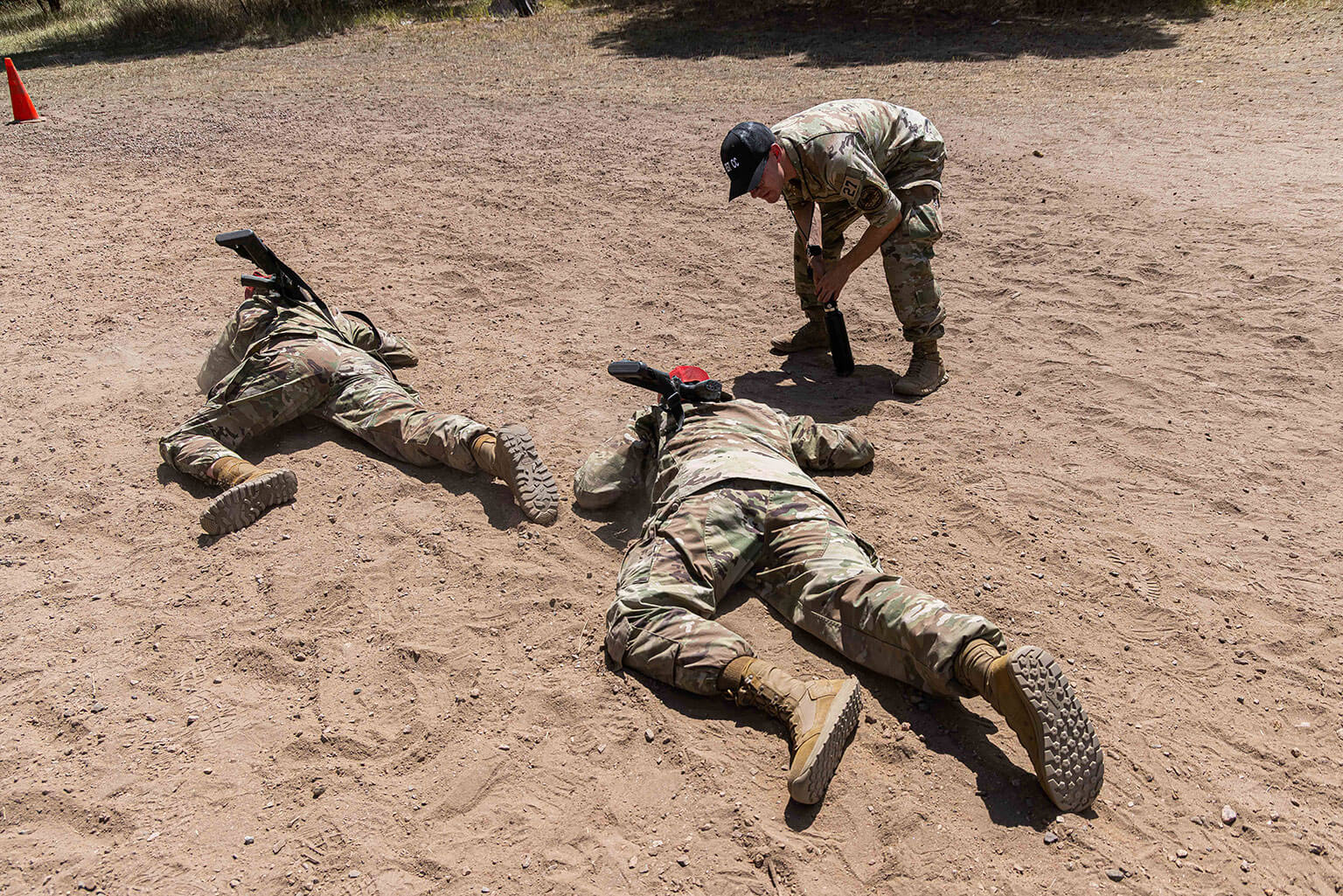
Cadet 2nd Class Gavin Ehrich guides basic cadets through a low-crawl exercise during Foundational Expeditionary Skills Training at the U.S. Air Force Academy, Colo., July 16, 2026. The exercise teaches cadets to move under simulated threats while maintaining control of their rifles. (U.S. Air Force photo by Trevor Cokley)
Building tactical skills
The objective of FEST is to teach basic cadets how to survive and operate in a simulated tactical environment under austere conditions.
“We are a big part of teaching cadets how to set up a base camp and how to secure the area with patrols,” Michael LaBarge, assistant chief of Cadet Wing Training, said.
He said patrolling is one of the most challenging skills for cadets to learn.
“Patrolling is not something you can teach in a classroom,” LaBarge said. “You just have to do it.”
A retired Marine, LaBarge draws on years of operational patrol experience while teaching FEST.
“The blast radius of a grenade is 15 feet,” LaBarge said. “It can be hard to visualize and maintain that distance, and we have always heard there is safety in numbers.”
LaBarge said cadets naturally want to move closer together on patrol, but in combat, bunching together increases the risk that a single grenade or improvised explosive device could injure multiple Airmen.
“I am the one who keeps pushing them, making sure they stay apart for distances up to 50 feet to mitigate the casualties for larger weapons like improvised explosive devices.”
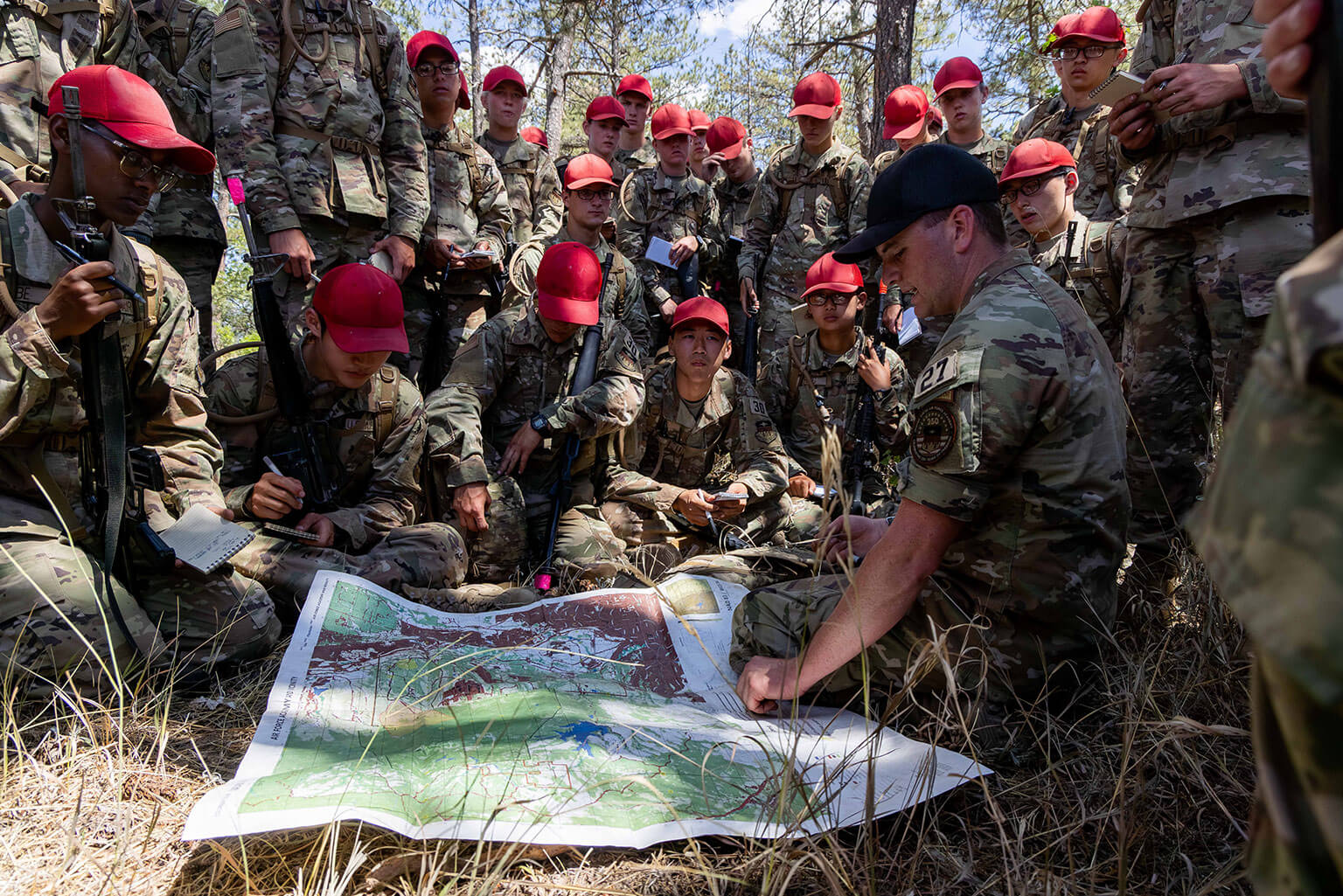
Basic Cadets learn land navigation during Foundational Expeditionary Skills Training at the U.S. Air Force Academy, Colo., July 20, 2026. The training teaches cadets to use a map and compass to navigate between designated points in rural terrain, building skills they may need in deployed environments. (U.S. Air Force photo by Trevor Cokley)
Ensuring a safe training environment
The course is designed with safety measures in place. The greatest day-to-day safety consideration is the summer heat.
“Dehydration and heat exhaustion are my main safety concerns,” Ehrich said. “We make sure the cadets are hydrating often and start doing so early.”
Portable water tanks, known as water buffaloes, are positioned throughout the training area, and medical personnel remain on standby throughout the course. Permanent party members continuously monitor weather conditions throughout training and adjust training when necessary.
“Anything can happen during the summer,” LaBarge said. “We may have cadets go to their tents or shade to get them out of the sun or quickly move them to their tent or lightning shelter when a storm moves in.”
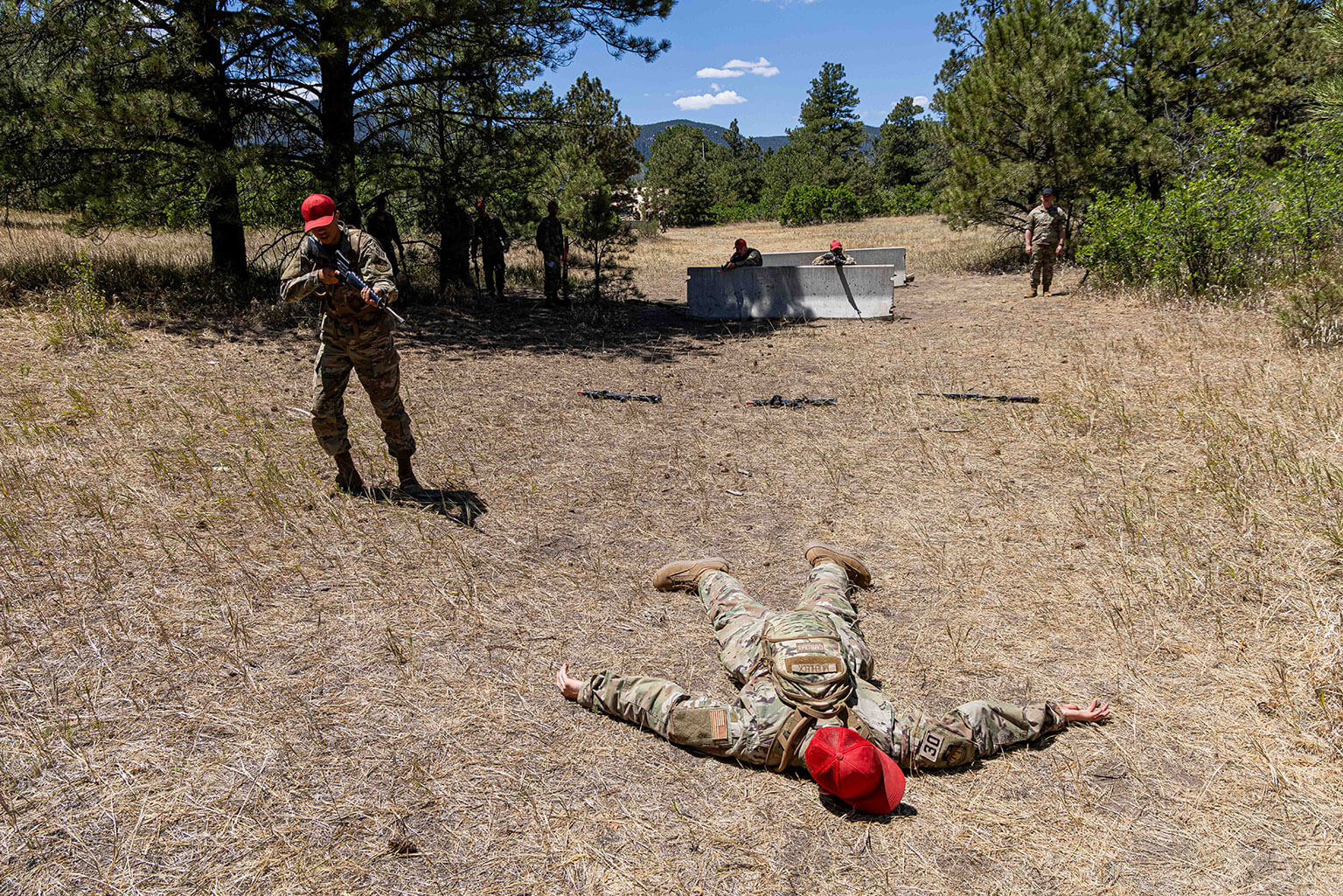
Basic cadets learn entry control point procedures during Foundational Expeditionary Skills Training at the U.S. Air Force Academy, Colo., July 20, 2026. The training teaches cadets to control access, assess potential threats and help secure an installation in a deployed environment. (U.S. Air Force photo by Trevor Cokley)
Meeting the standard
FEST uses a pass-or-fail evaluation system. During the training, cadre and permanent party members evaluate each basic cadet’s performance.
“I want to see that they have the intensity and grit to finish the course,” Ehrich said. “I want to see how they took the academics that we taught and applied them successfully to pass the course.”
“I am ensuring that the basics are maintaining a good attitude and paying attention to the small details in the training manual,” Lehrer said.
To pass the course, basic cadets must successfully complete every evaluated exercise, including entry control point operations, tactical formations and land navigation. Although FEST lasts only 19 hours, it provides a foundation for future military training throughout a cadet’s time at the Academy.
“You are always going to fall back on that basic training,” said LaBarge. “They will always have the knowledge to defend themselves and move tactically if attacked.”
Learn more about FEST on YouTube. See Jacks Valley in the virtual tour.