From cadet to Guardian: The path to Space Force commissioning
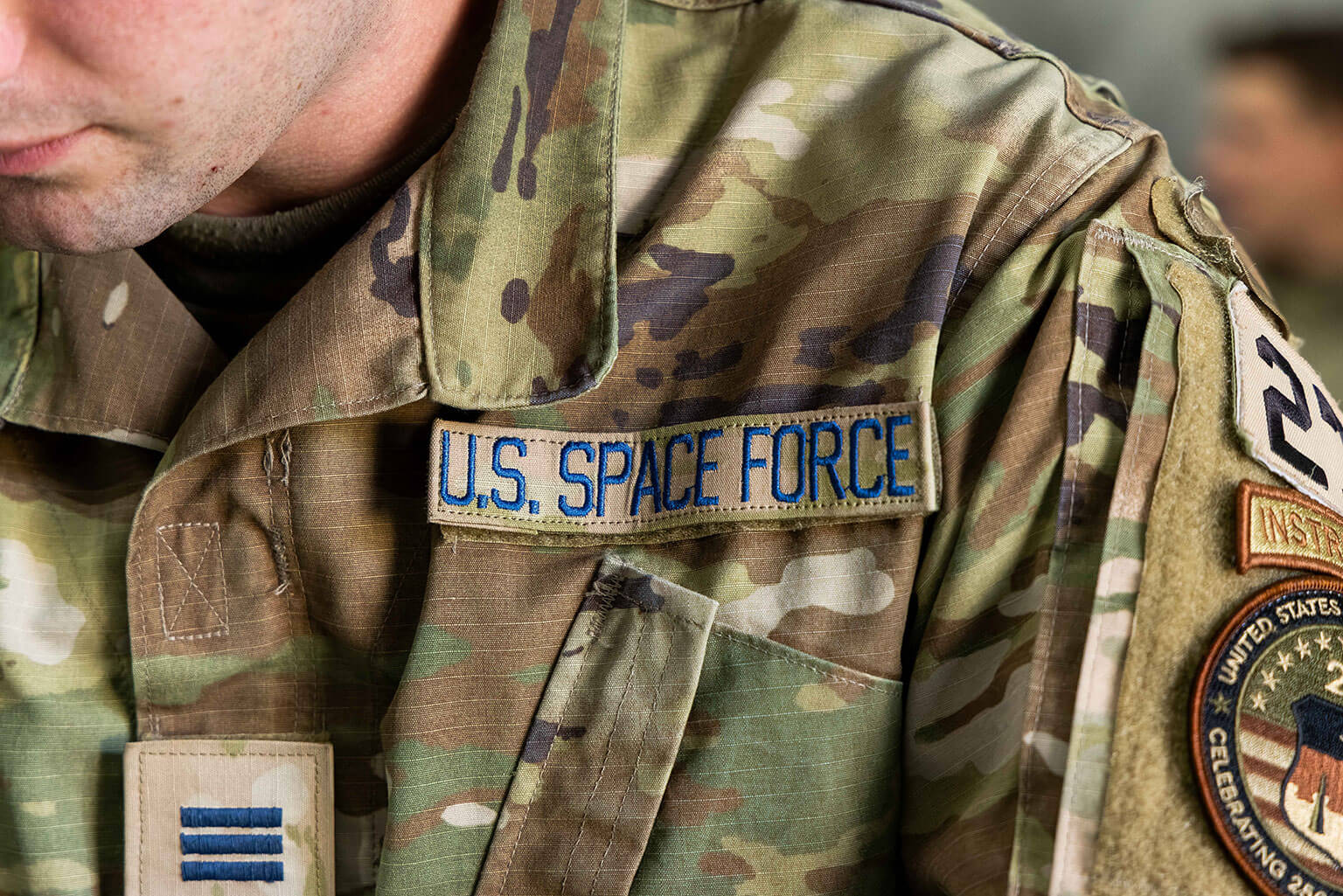
A U.S. Space Force uniform tape is visible during the Validation Exercise at the U.S. Air Force Academy in Colorado Springs, Colo., Sept. 18, 2026. The exercise incorporated air, ground, cyber and space operations, giving cadets opportunities to apply their education and training in a military environment. (U.S. Air Force photo by Trevor Cokley)
By SSgt Brandon Schneider
U.S. Air Force Academy Strategic Communications
U.S. AIR FORCE ACADEMY, Colo. – Cadet 1st Class Skyllar Erikson watched four letters appear on a screen during the Academy’s job drop, when cadets learn their future career assignments. The letters marked a significant milestone in her journey toward becoming a Guardian.
“When I finally stood in front of my squadron and saw ‘USSF’ appear on the screen, I felt an immediate sense of relief and excitement,” Erikson said. “It was the culmination of years of hard work, dedication, and anticipation.”
That moment followed a competitive selection process and years of academic coursework, hands-on training, leadership development and mentorship from serving Guardians that introduce cadets to the Space Force’s mission.
At the U.S. Air Force Academy, those experiences help cadets understand the responsibilities of Space Force officers and prepare for the transition from cadet to Guardian.
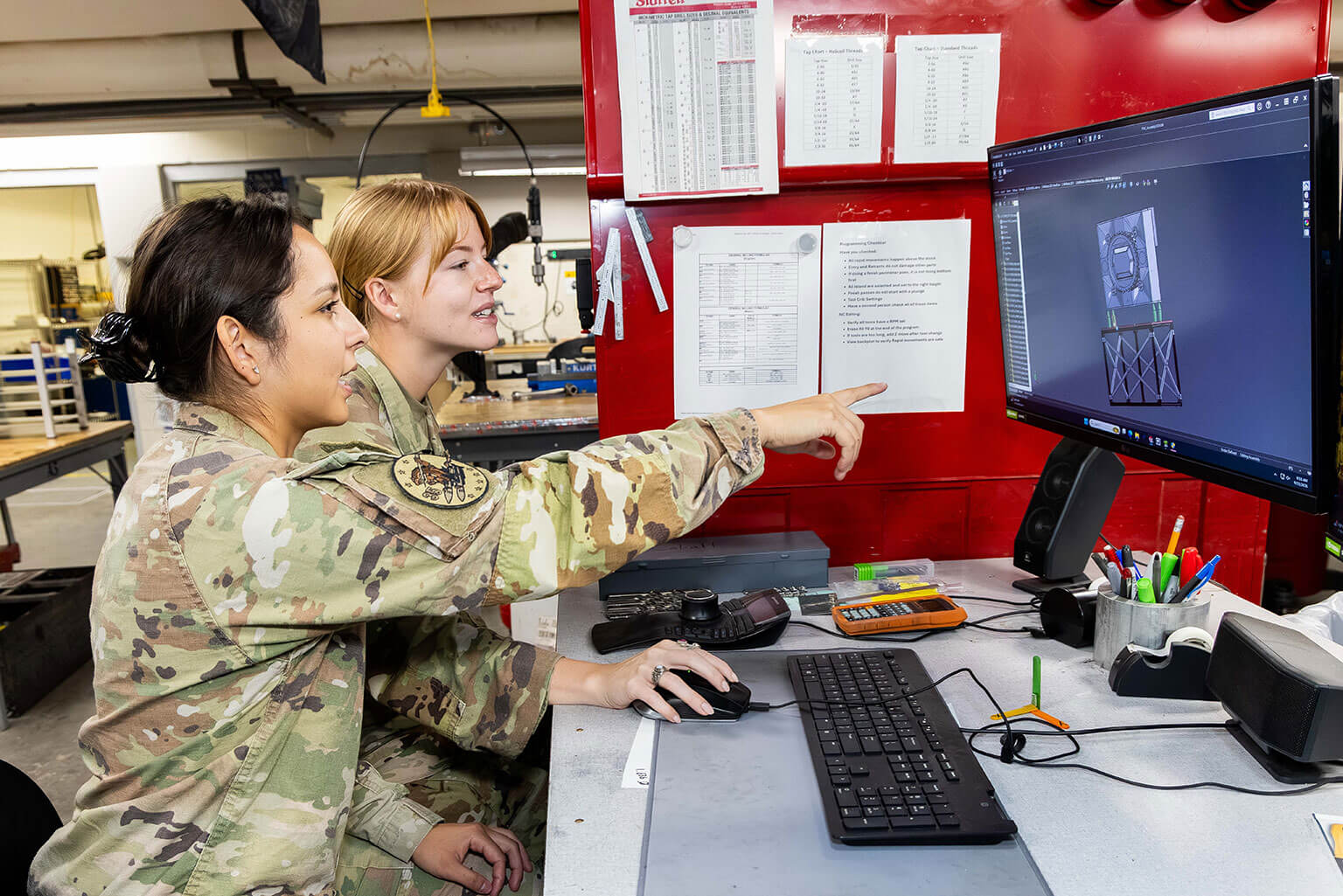
U.S. Air Force Academy cadets collaborate on FalconSAT 11 during a capstone class at the Academy in Colorado Springs, Colo., Sept. 23, 2026. The FalconSAT program provides hands-on experience in satellite design, development, testing and operations, allowing cadets to apply classroom knowledge to real-world space projects. (U.S. Air Force photo by Trevor Cokley)
The path to Space Force selection
Each year, about 10% of U.S. Air Force Academy graduates commission into the Space Force through a competitive selection process that begins during their junior year and includes three steps.
Detachment 1, part of Space Training and Readiness Command’s Space Delta 1, leads the Space Force selection process at the Academy. As the Space Force’s operational presence on campus, the detachment oversees education, training and outreach programs that prepare cadets to become Guardians.
U.S. Space Force Col. Stephanie Silva, commander of Detachment 1, emphasized that selection considers a cadet’s overall performance and potential.
“Becoming a Guardian is a competitive process, and we look at the whole cadet,” Silva said. “Academic performance, military performance, physical fitness, leadership experience and the selection interview all play a role in determining who is selected.”
The first step begins in the spring of junior year, when interested cadets complete a talent questionnaire and career preference survey to formally express their interest in joining the Space Force.
Next, candidates participate in an interview and are evaluated by a Space Force selection board. The board combines interview scores with each cadet’s order of merit and leadership performance in space-related activities.
A cadet’s order of merit reflects grade point average, military performance and physical fitness.
Finally, candidates are ranked based on their overall performance, qualifications and Space Force requirements.
Beyond academic and military performance, understanding the Space Force’s culture and mission helped Cadet 1st Class Nicholas Capannelli prepare for his selection interview.
“My time at USAFA exposed me to the differences between Air Force and Space Force culture, as well as current events affecting the service,” Capannelli said. “That foundation helped me approach the selection interview with a stronger sense of what it means to become a Guardian.”
The Academy’s training opportunities help cadets understand what serving in the Space Force will require.
“Cadets at the Academy get hands-on experience in space operations before they commission,” Silva said. “It’s exciting to see them take on the same kinds of problem sets Guardians solve every day. It gives them a firsthand look at what it means to lead in the Space Force.”
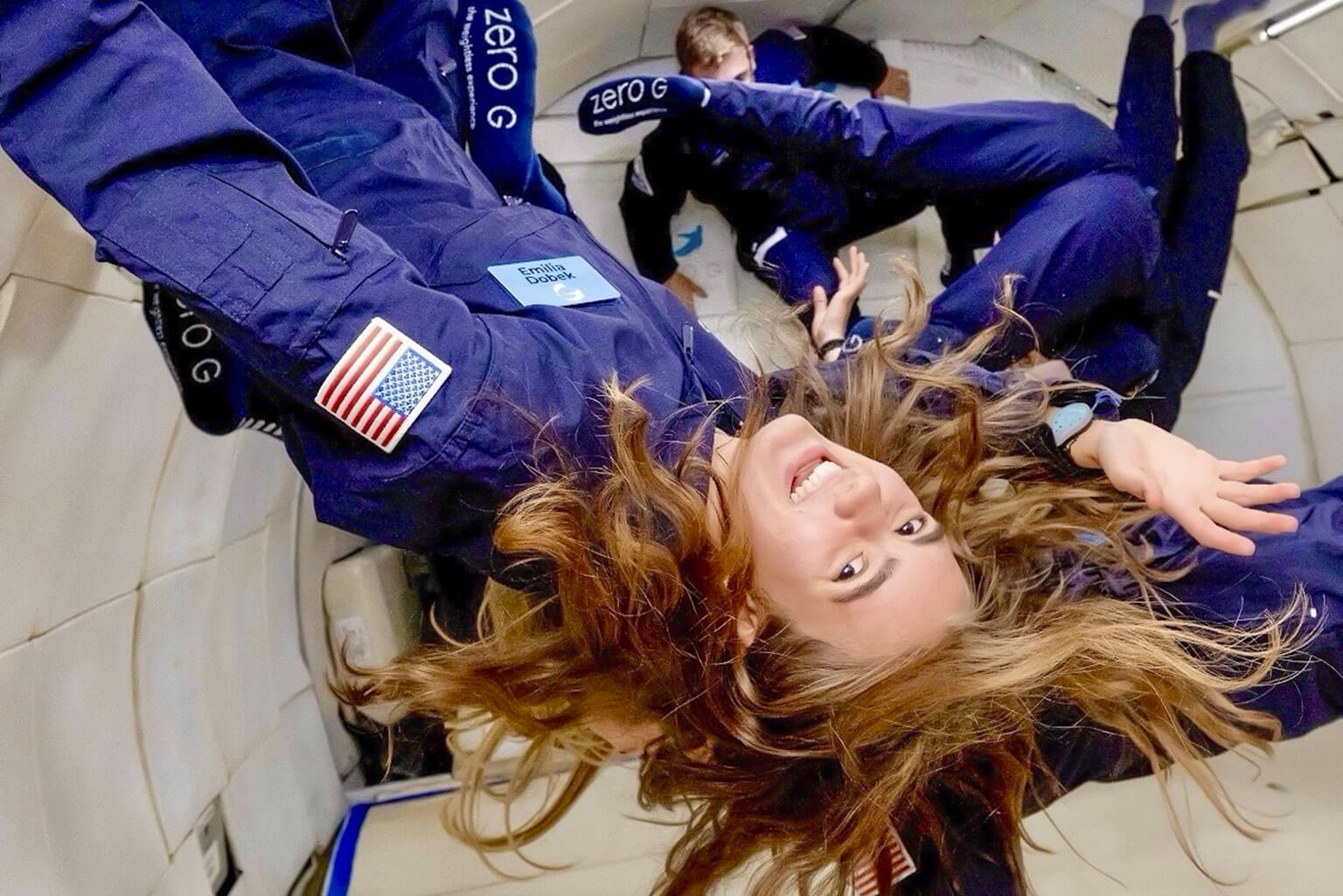
Cadet 1st Class Emilia Dobek, selected for Space Force commissioning, experiences weightlessness aboard a zero-gravity aircraft during a flight that departed from Colorado Springs Airport in Colorado Springs, Colo., June 21, 2024. The experience provided an opportunity to explore weightlessness and gain firsthand exposure to an environment relevant to spaceflight. (Courtesy photo)
Preparing cadets for space operations
Practical training helps cadets connect classroom instruction with the Space Force’s missions and responsibilities.
In the Cadet Space Operations Squadron, cadets gain hands-on experience operating satellites from a ground station on campus. Working alongside certified commanders, they conduct satellite passes and develop the skills needed to manage satellite operations independently.
Through the FalconSAT program, cadets can contribute to satellite design, development, testing and integration, putting academic instruction into practice.
Beyond satellite operations, the Azimuth summer program introduces cadets to Space Force missions through academic instruction, hands-on training and visits to operational units.
“Before Azimuth, I didn’t fully understand what the Space Force did or how it supported the other military branches,” said Cadet 1st Class Nathaniel Burleson. “Seeing the different missions and learning how space operations connect to the joint force sparked my interest in becoming a Guardian.”
Operational exposure can also reinforce an existing interest in the service. Cadet 1st Class Skyllar Erikson, who entered the Academy intending to pursue the Space Force, spent time observing operations at Buckley Space Force Base before her junior year. The visit gave her a firsthand look at the mission and the Guardians carrying it out.
“It was one thing to learn about the space domain in briefs, but seeing how that knowledge translates into real-world applications gave me an entirely new perspective,” Erikson said. “I left that experience even more confident that the Space Force was where I wanted to begin my career.”
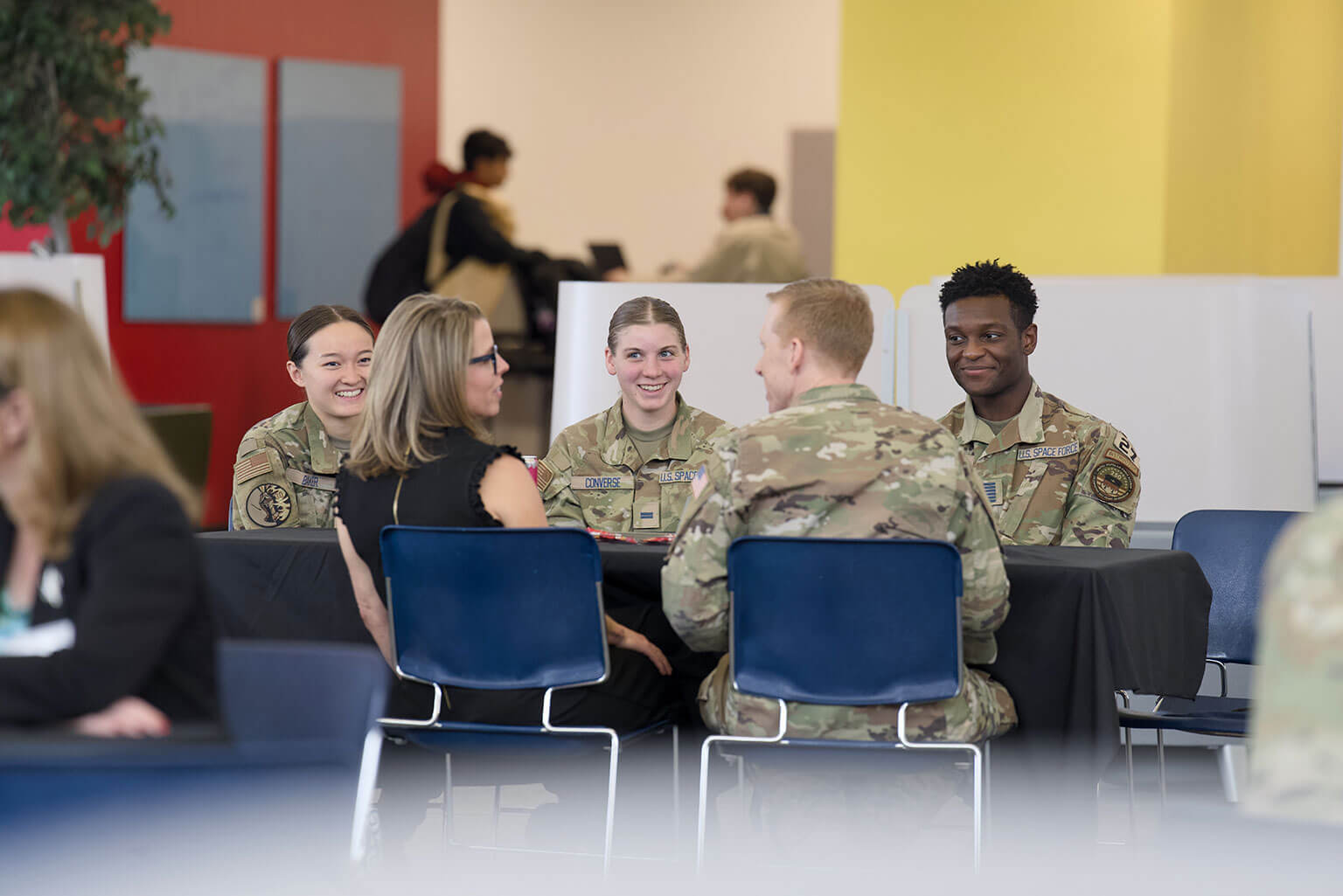
U.S. Air Force Academy cadets engage with U.S. Space Force personnel during a Space Week event at the Academy in Colorado Springs, Colo., Oct. 30, 2026. Opportunities to connect with serving Guardians help cadets explore Space Force missions, career paths and expectations for military leadership. (U.S. Air Force photo by Maj. Anthony Hill)
Developing future Guardians
Understanding space operations is one part of preparing to become a Guardian. Cadets must also build the leadership, communication and decision-making skills needed to apply that knowledge in military operations.
Cadet 1st Class Emilia Dobek applied her academic knowledge to real-world Space Force challenges through research with the Academy’s Institute for Future Conflict. She led a cadet capstone team supporting Space Force S3 at the Pentagon, examining when and to what extent the service should invest in cislunar space, the region between Earth and the moon.
“These experiences have shown me how critical the Space Force is, not just to operations in space, but to the success of the joint force,” Dobek said.
Cadets develop leadership skills by training their peers to become satellite operators, while some Azimuth graduates return as cadre to guide future participants.
Mentorship from serving Guardians provides another perspective on military leadership.
The Academy connects Guardian selects with active-duty Space Force mentors. During the inaugural Blue Tape Ceremony in August 2026, cadets were paired with Guardians who could offer insight into the service and help prepare them for commissioning.
Cadet 1st Class Nathaniel Burleson also credited a military and strategic studies instructor and a former cadet squadron commander with helping him navigate his interest in the service.
“Some of the greatest leaders I have met have come from the Space Force, and they have been my closest advisors,” Burleson said.
The Academy’s goal extends beyond technical familiarity to preparing officers who can lead in complex military environments.
Space Force Maj. Troy Brocato, chief of Space Force Development at the Academy, stressed the importance of integrating space capabilities into joint military operations.
“Success in future conflicts will depend on leaders who understand how space capabilities support operations across every domain,” Brocato said. “Our responsibility is to develop officers who can communicate those capabilities, recognize their limitations and integrate them into the joint fight.”
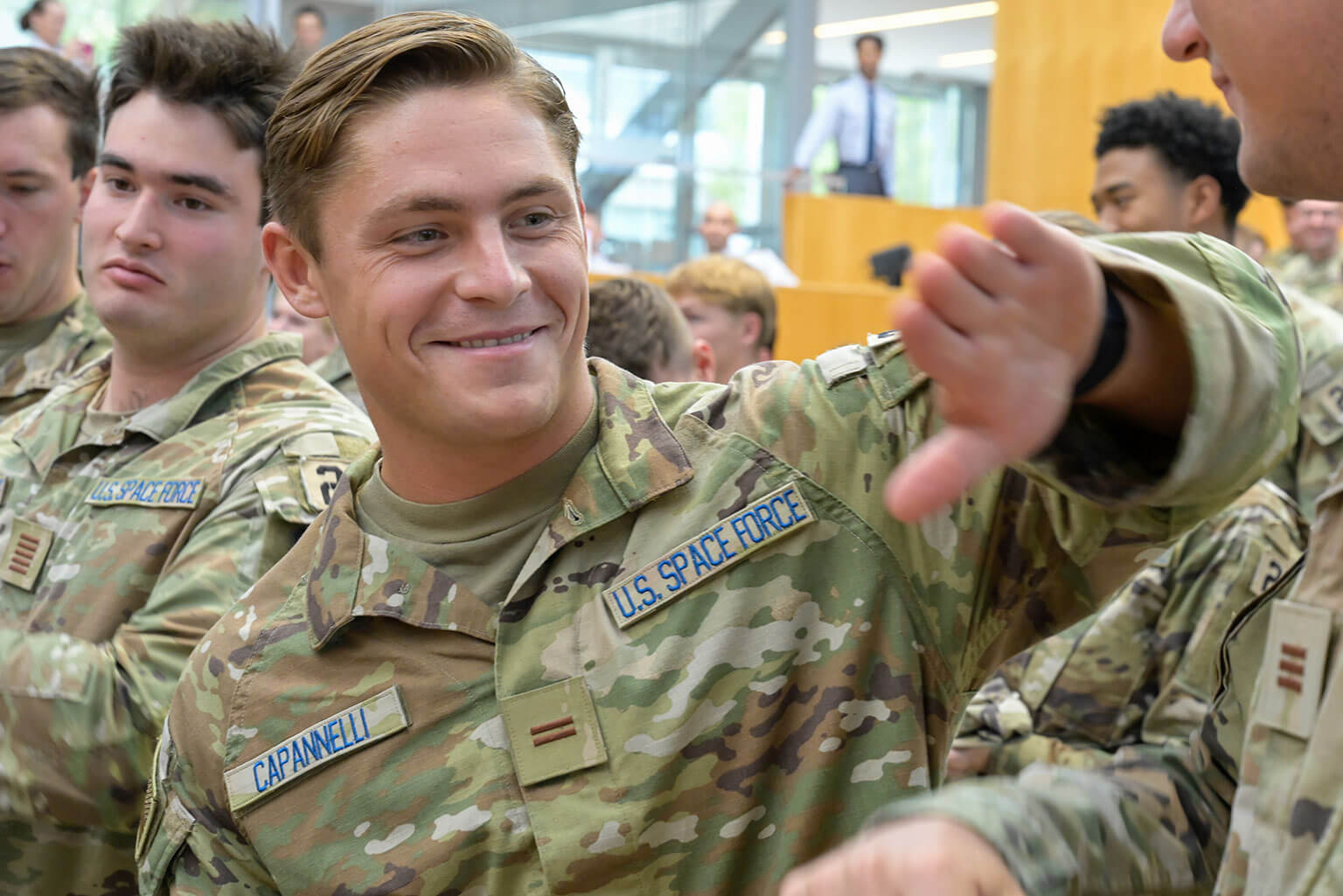
Cadet 1st Class Nicholas Capannelli, selected for Space Force commissioning, reacts during a blue tape ceremony at the Academy in Colorado Springs, Colo., Aug. 17, 2026. The ceremony recognizes cadets selected to commission into the U.S. Space Force upon graduation. (U.S. Air Force photo by Staff Sgt. Michael Ward)
From selection to commissioning
Earning a place in the Space Force is a significant milestone, but selection is only one step toward Space Force commissioning.
Cadets selected for Space Force commissioning complete Guardian Education and Orientation, a course designed to meet Space Training and Readiness Command’s precommissioning education requirements. The course introduces Space Force roles, history, operational concepts, technical foundations and the broader government space enterprise.
During their final spring semester, Guardian selects complete the Officer Launch Program alongside their Air Force counterparts. The program prepares them for the practical responsibilities of active-duty service, covering topics such as military pay, leave, financial planning and professional expectations as newly commissioned officers.
After commissioning, new Guardians attend the Space Force’s Officer Training Course, where they receive foundational instruction in space operations, cyberspace warfare, intelligence and acquisitions before moving on to additional training and operational assignments.
For Capannelli, conversations with Space Force leaders provided a clearer picture of what to expect after graduation.
“Through the Space Detachment, I had the opportunity to speak directly with Space Force leadership about Officer Training Course and expectations after commissioning,” Capannelli said. “Those discussions provided valuable insight into what lies ahead as I transition from cadet to Guardian.”