United States Air Force Academy

Go to home page
Research on human performance and resilience

Facilities

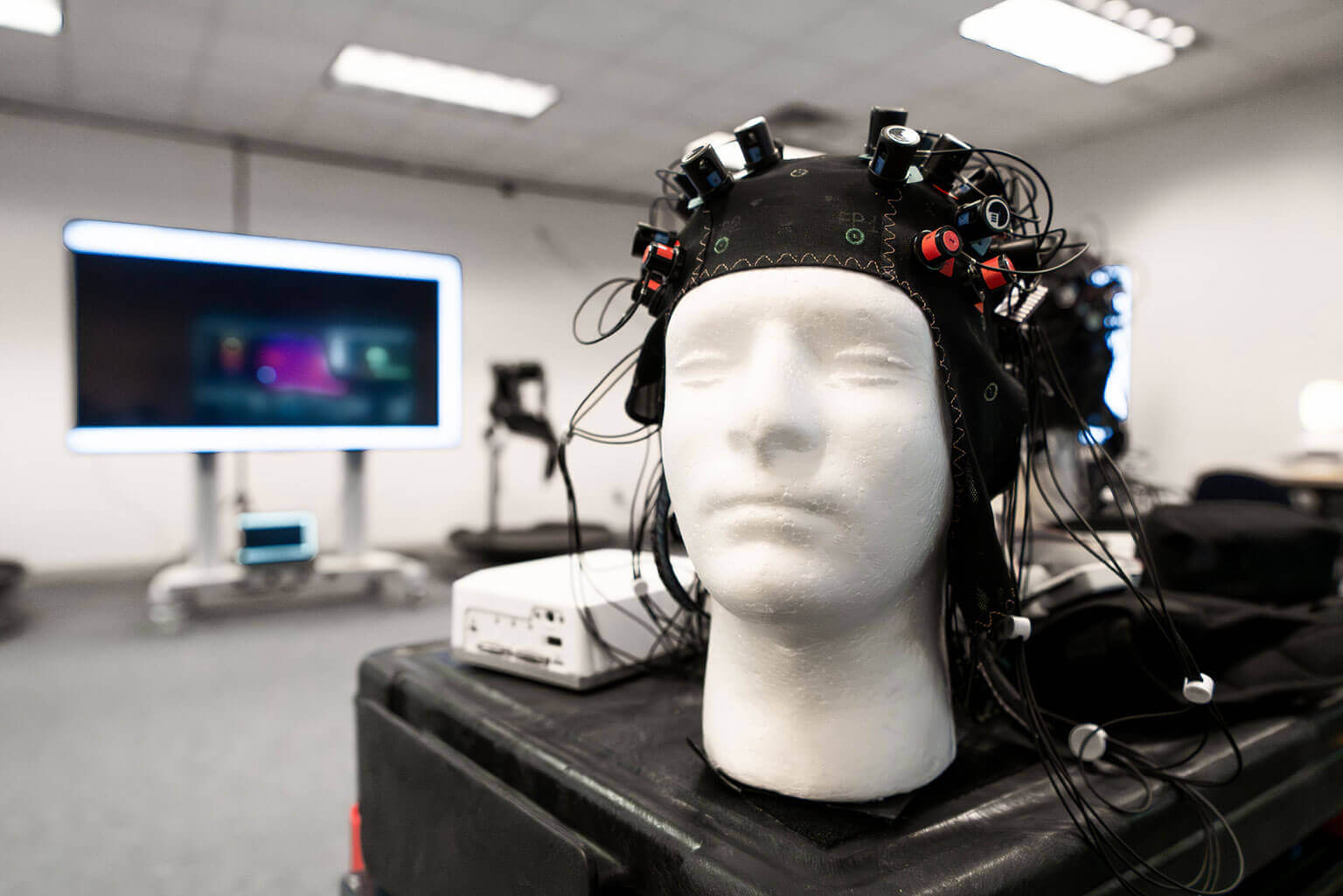
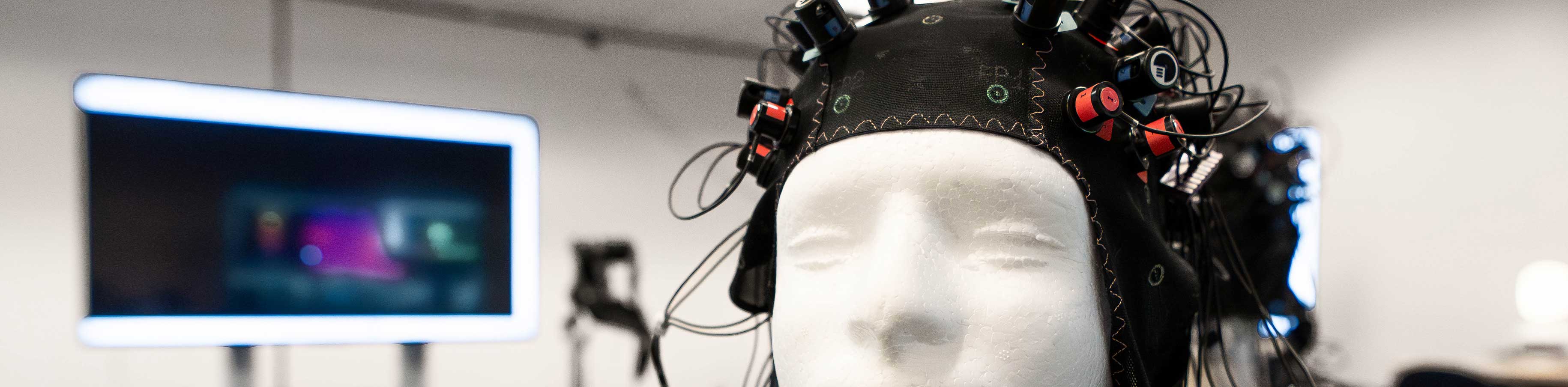
A mannequin head wearing a black EEG cap with wires is in a lab setting. A blurred screen in the background suggests a focus on technology and research.

Digital Influence and Social Simulation Lab (DISL)

The DISL provides a high-performance environment for modeling, experimentation, and cyber/information simulation, enabling researchers and cadets to prototype algorithms, analyze large datasets, and construct realistic wargame scenarios that expose vulnerabilities and test countermeasures. Its 14 high-end Mac and PC computing bays, large collaborative monitors, and specialized licenses for social media analytics and internet emulators make it a unique hub for simulating the information environment and translating data into action.

The DISL enables realistic modeling and experimentation within the information environment, allowing researchers and cadets to identify vulnerabilities, test countermeasures, and translate data-driven insights into operational understanding.


Extended Reality & Artificial Intelligence Lab (XR/AI Lab)

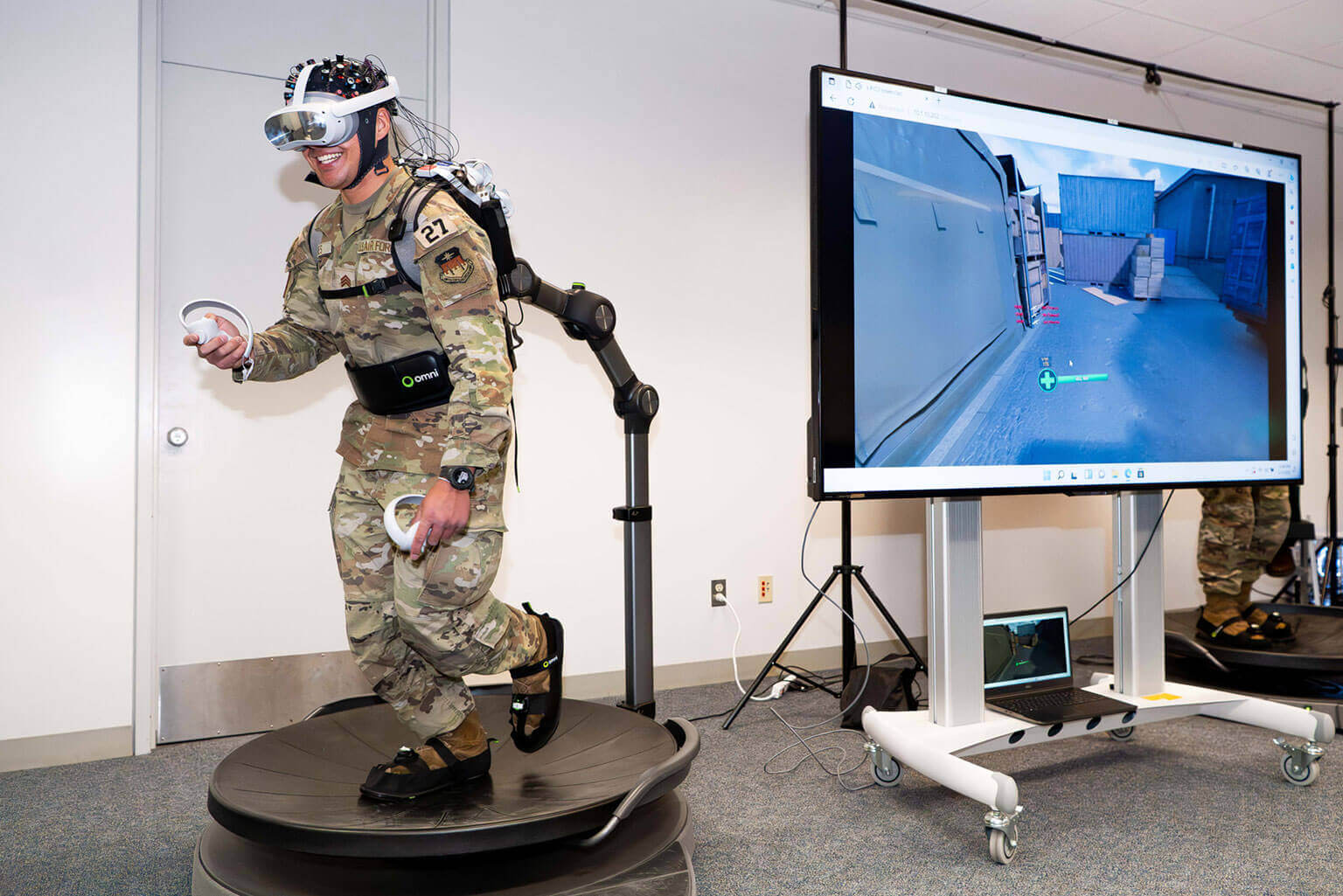
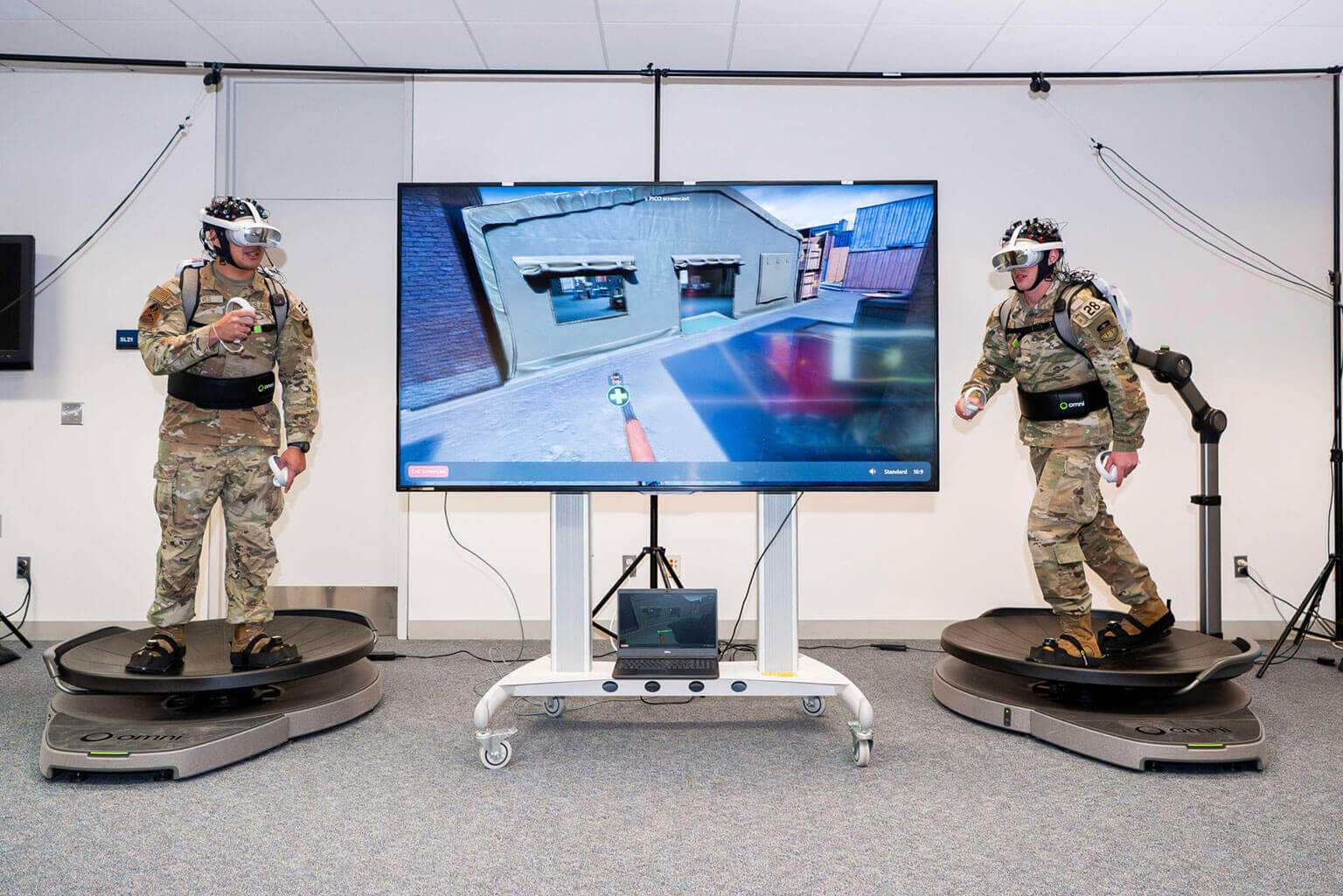
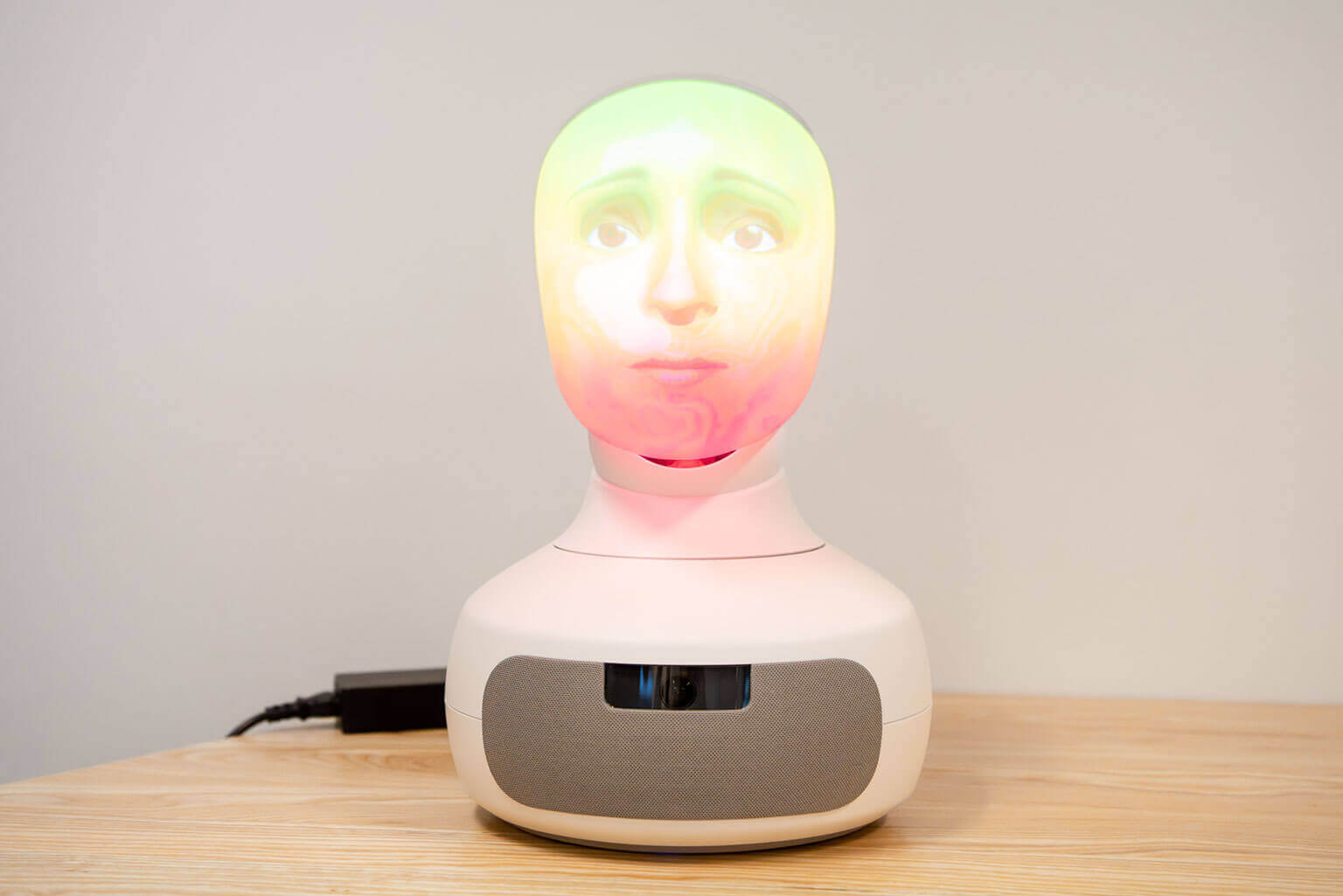
The XR/AI Lab immerses teams in advanced virtual environments to study human–machine teaming and operational decision-making under realistic conditions. Equipped with state-of-the-art VR systems such as the Varjo XR-4 and Virtuix Omni treadmill, alongside socially intelligent Furhat robots and AI-driven simulations, the lab combines embodiment, adaptive agents, and ecological fidelity to explore contested command-and-control, ethical dilemmas, and coalition coordination.

The XR/AI Lab provides immersive, high-fidelity environments to study decision-making, ethics, and coordination in human–machine teams under realistic and contested operational conditions.
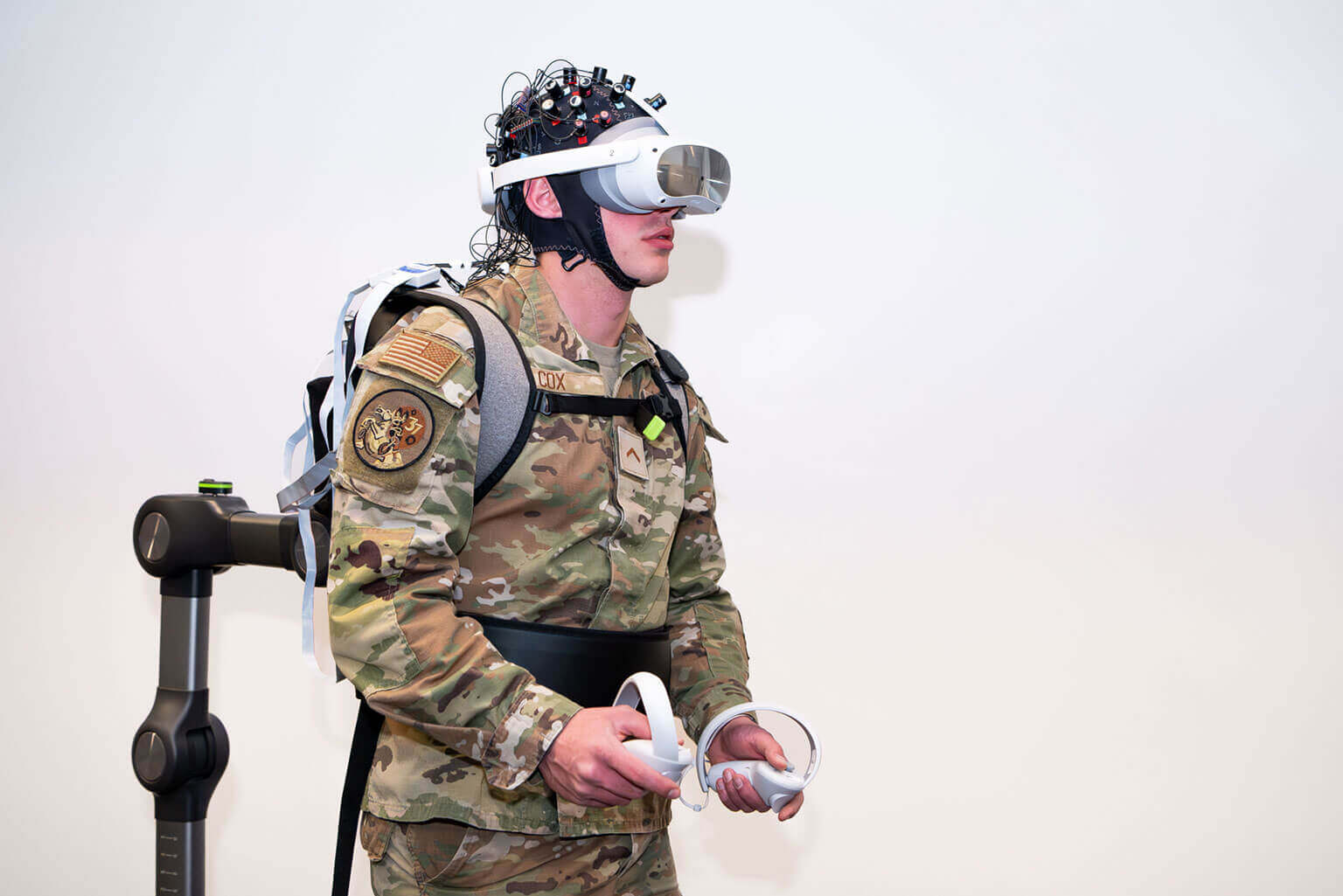
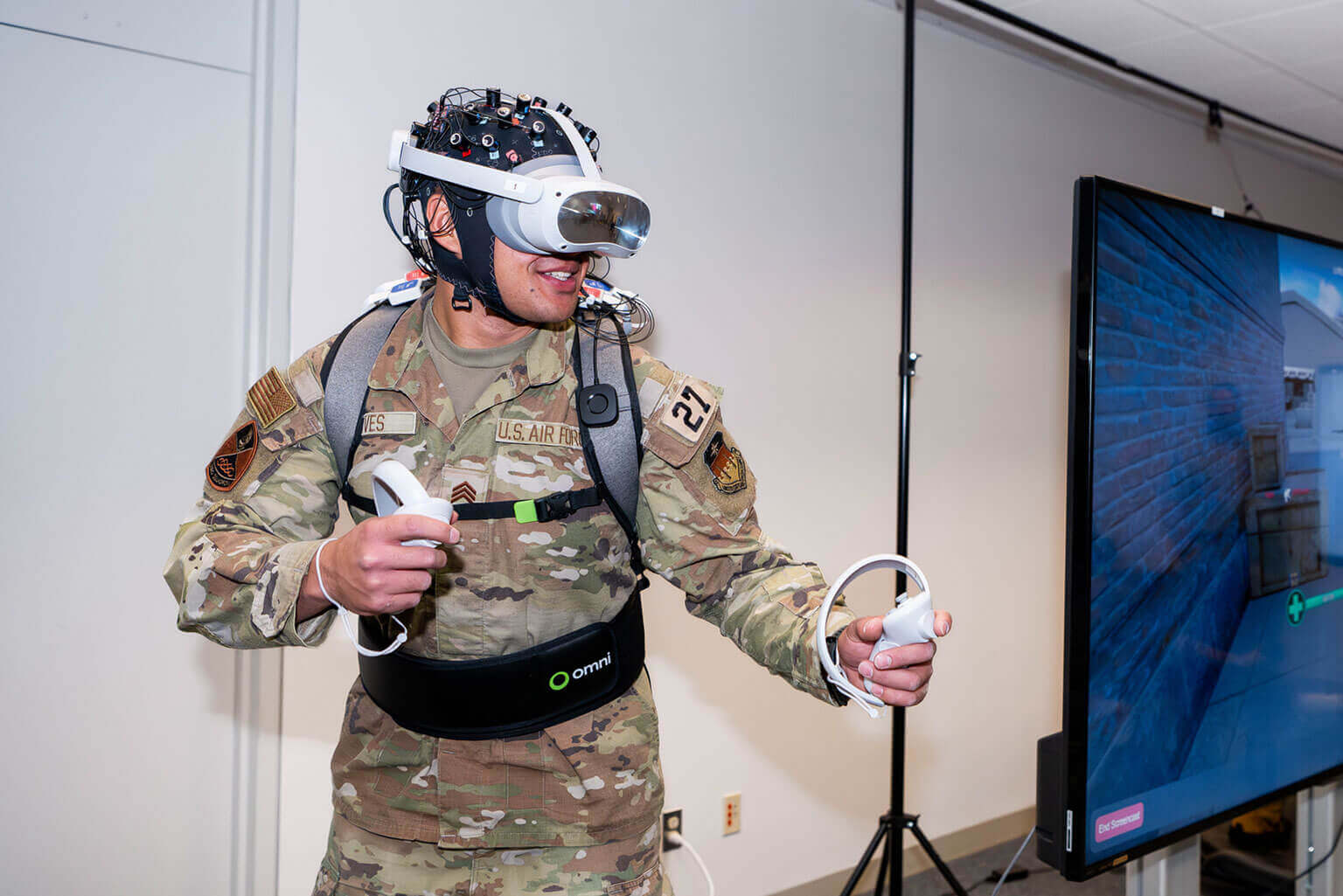
A cadet wears a VR headset with sensors and holds controllers, participating in a virtual reality training exercise.
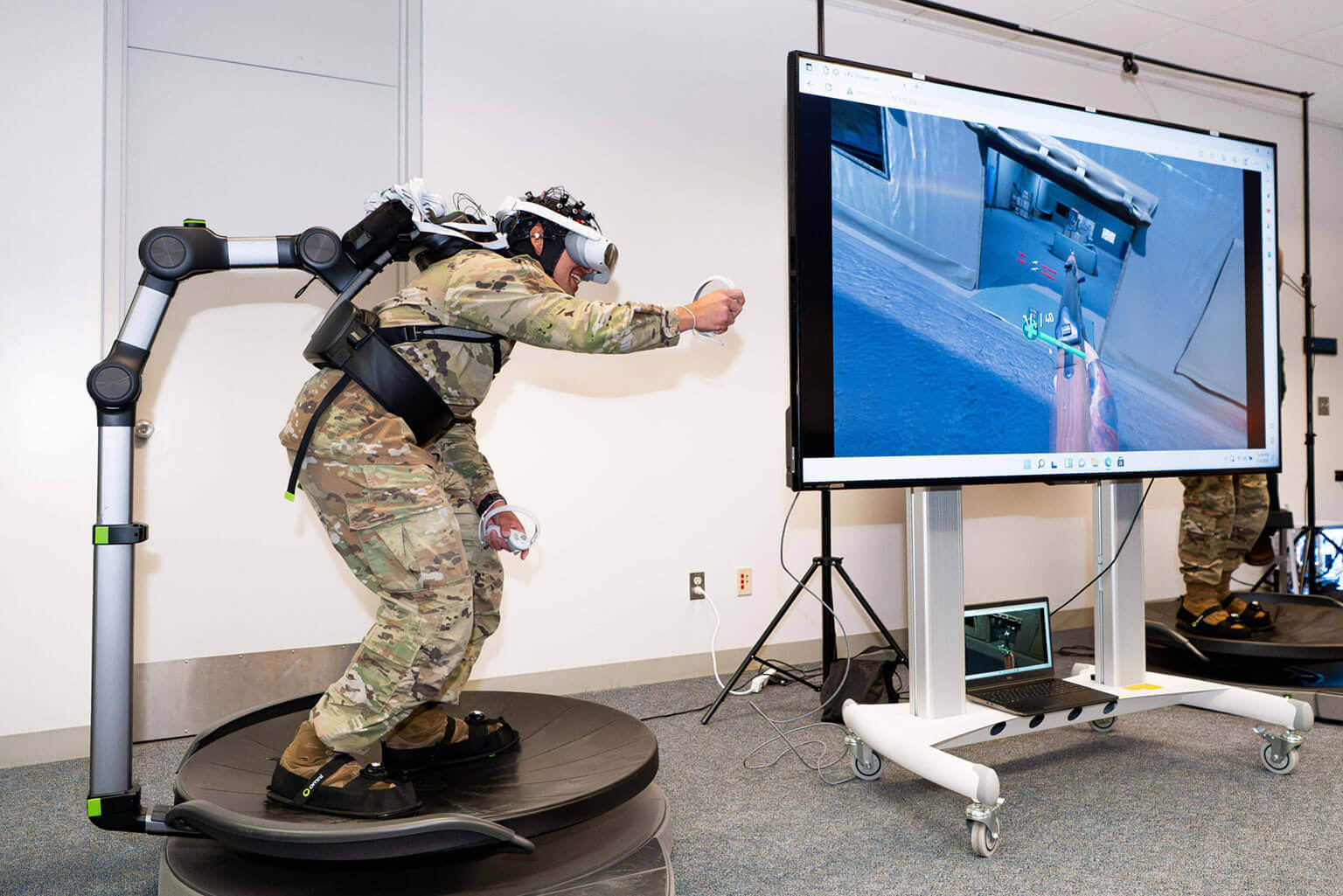
A cadet uses a VR headset and handheld controllers, standing on a motion platform, with a large screen displaying a virtual environment nearby.
A cadet wearing a VR headset and uniform operates a virtual reality treadmill. A large screen displays a training simulation scene beside him.
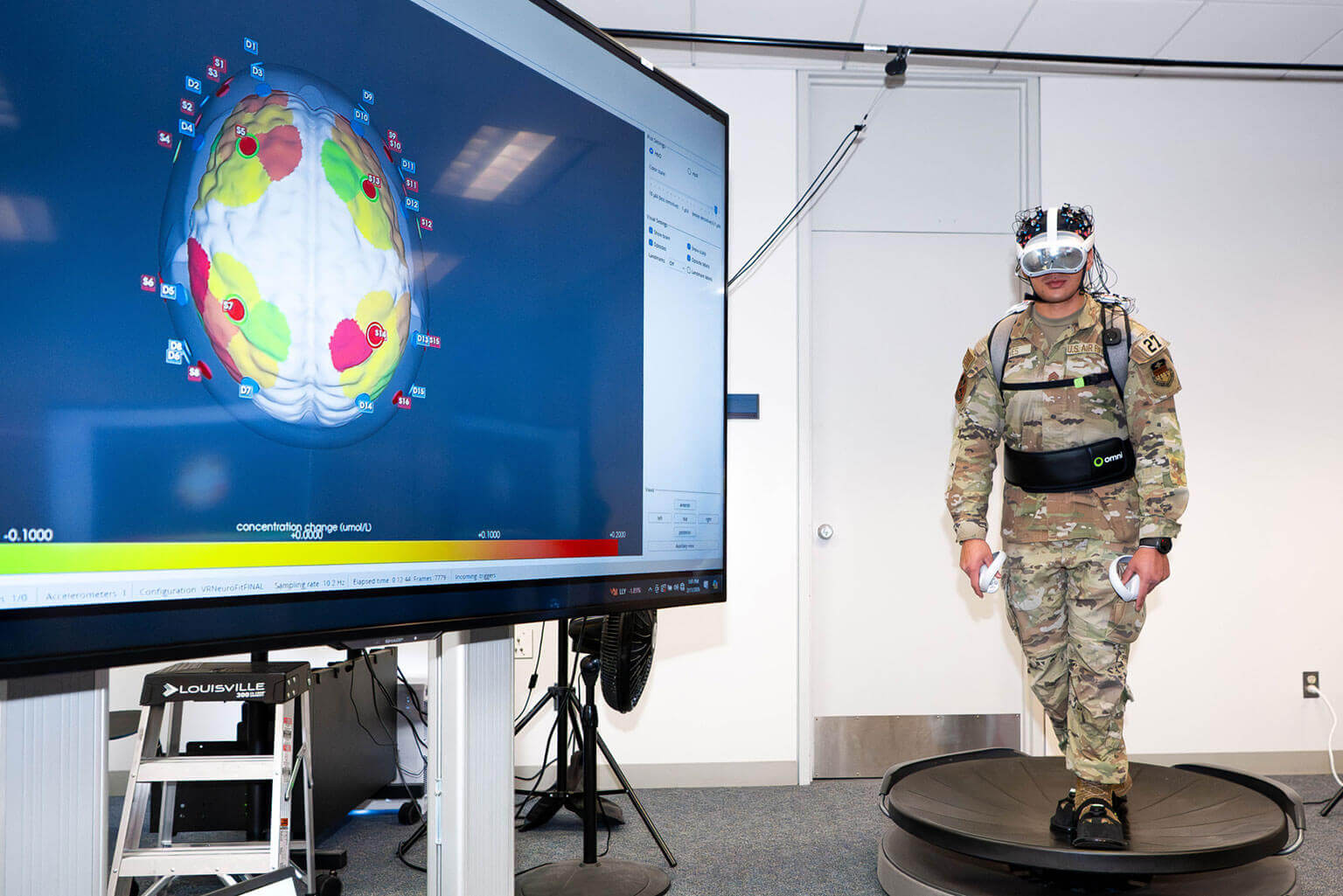
A cadet in camouflage and VR gear stands on a rotating platform. Nearby, a large screen displays a colorful, detailed brain scan. The setting is high-tech and experimental.
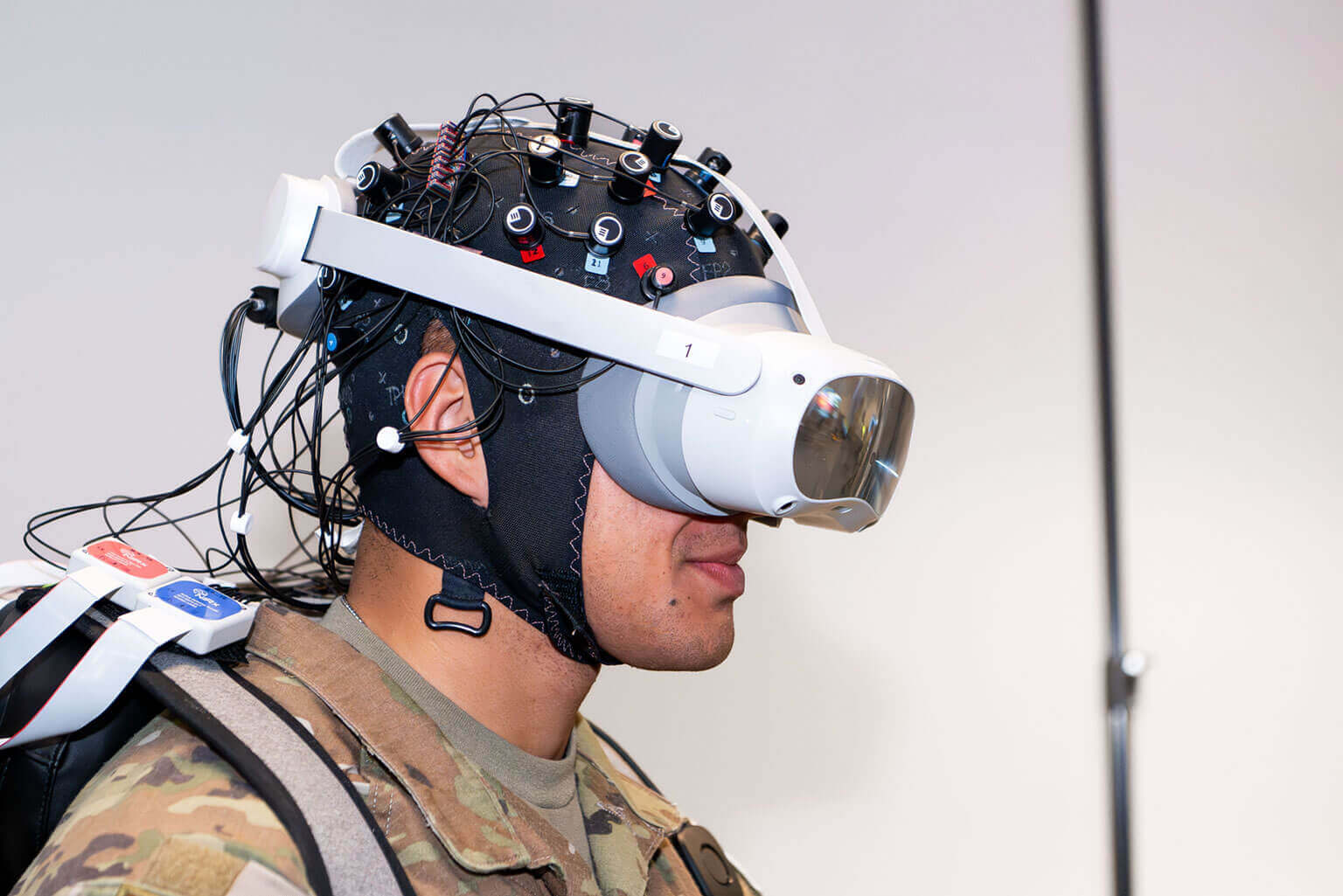
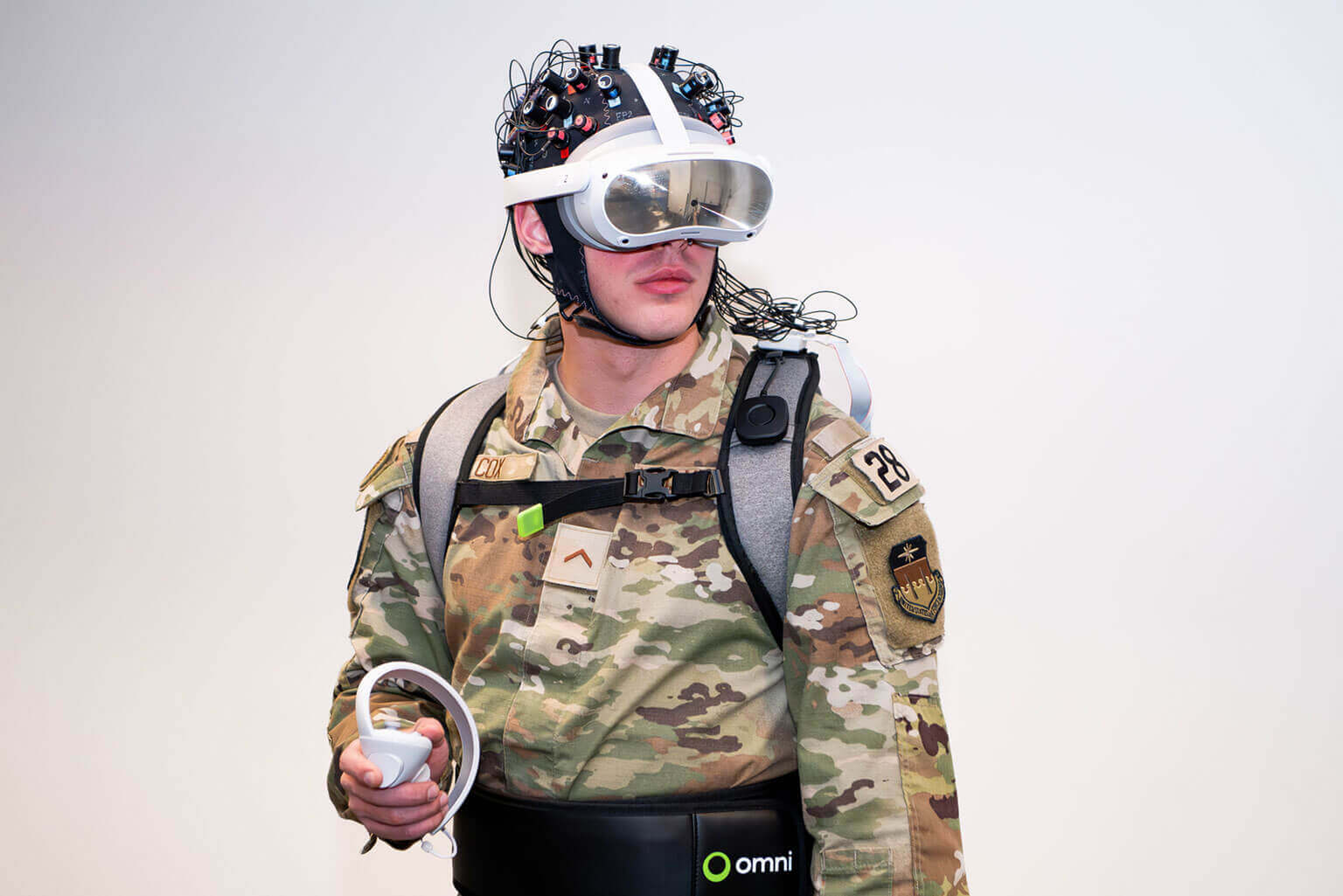
A cadet wearing a VR headset and a sensor-laden cap with wires. They are dressed in a military uniform, conveying a tech-focused atmosphere.
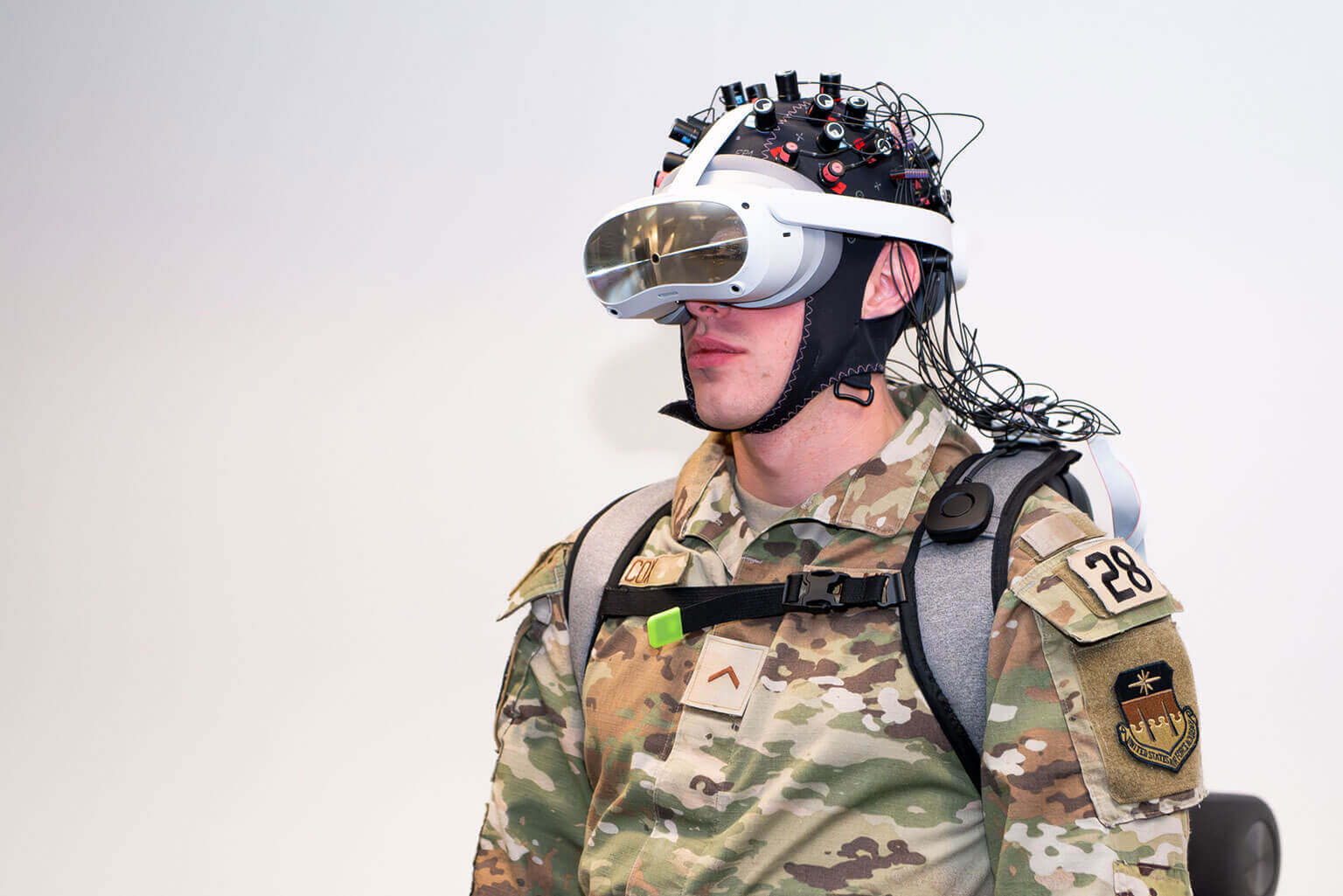
A cadet in camouflage military uniform wears a high-tech virtual reality headset with an attached neural sensor array, conveying a futuristic, focused look.
Two cadets in uniform use VR equipment and treadmills, engaging with a combat simulation displayed on a large screen. The atmosphere is focused.
A cadet in a helmet holds a remote control, focused and ready for action in a military setting.
A cadet in a virtual reality headset, immersed in a training environment within a room.

Neuroimaging and Data Analysis Core

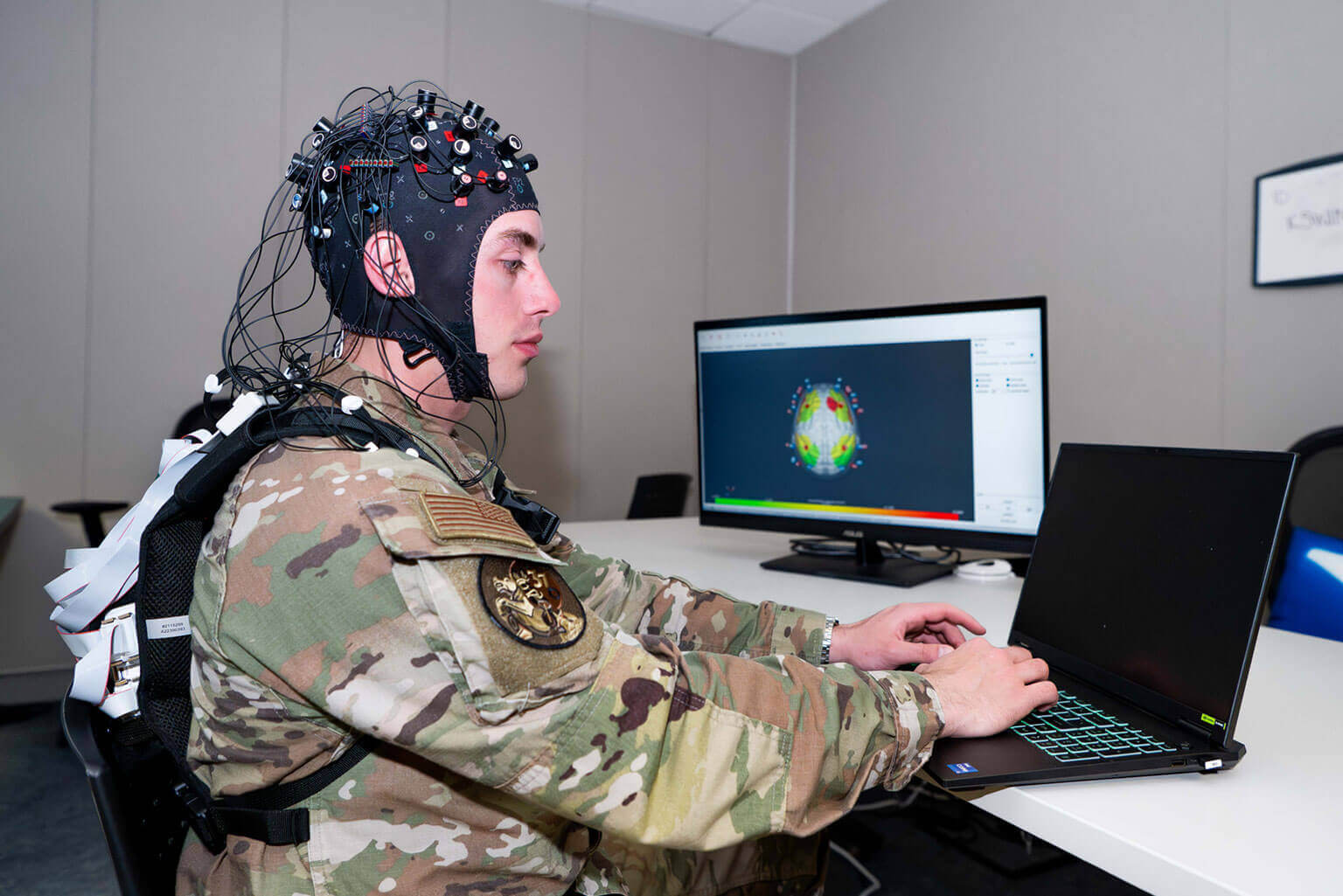
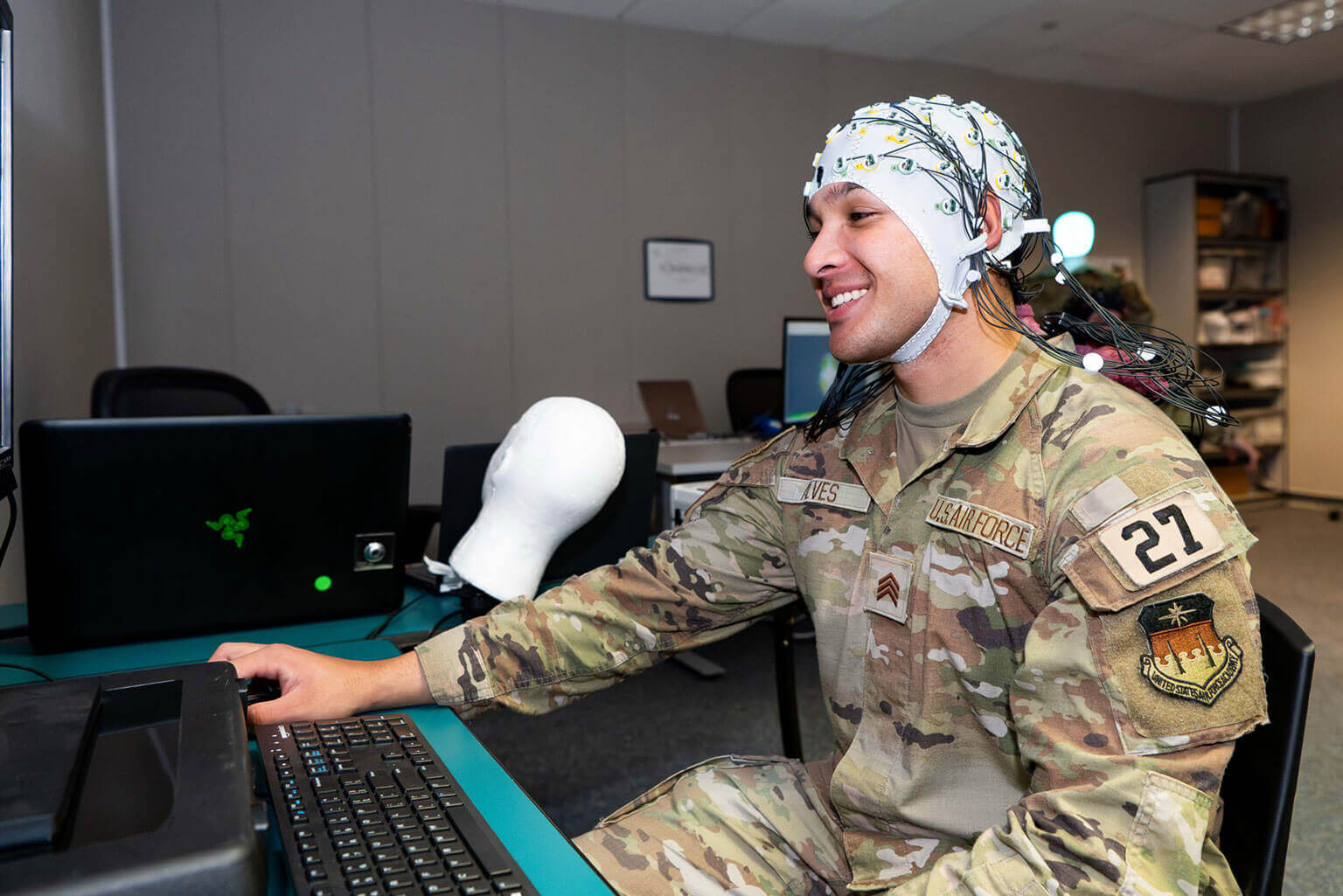
This core facility captures the neural and physiological mechanisms that shape human performance, decision-making, and resilience. Portable EEG and fNIRS systems allow high-density brain recordings, while advanced peripheral sensors track heart rate, respiration, oxygenation, and galvanic responses, producing synchronized multimodal data streams that reveal how minds and bodies adapt under stress and in team contexts.

This core facility reveals how neural and physiological processes underpin performance, stress, and resilience, enabling precise measurement of how individuals and teams adapt under operational demands.
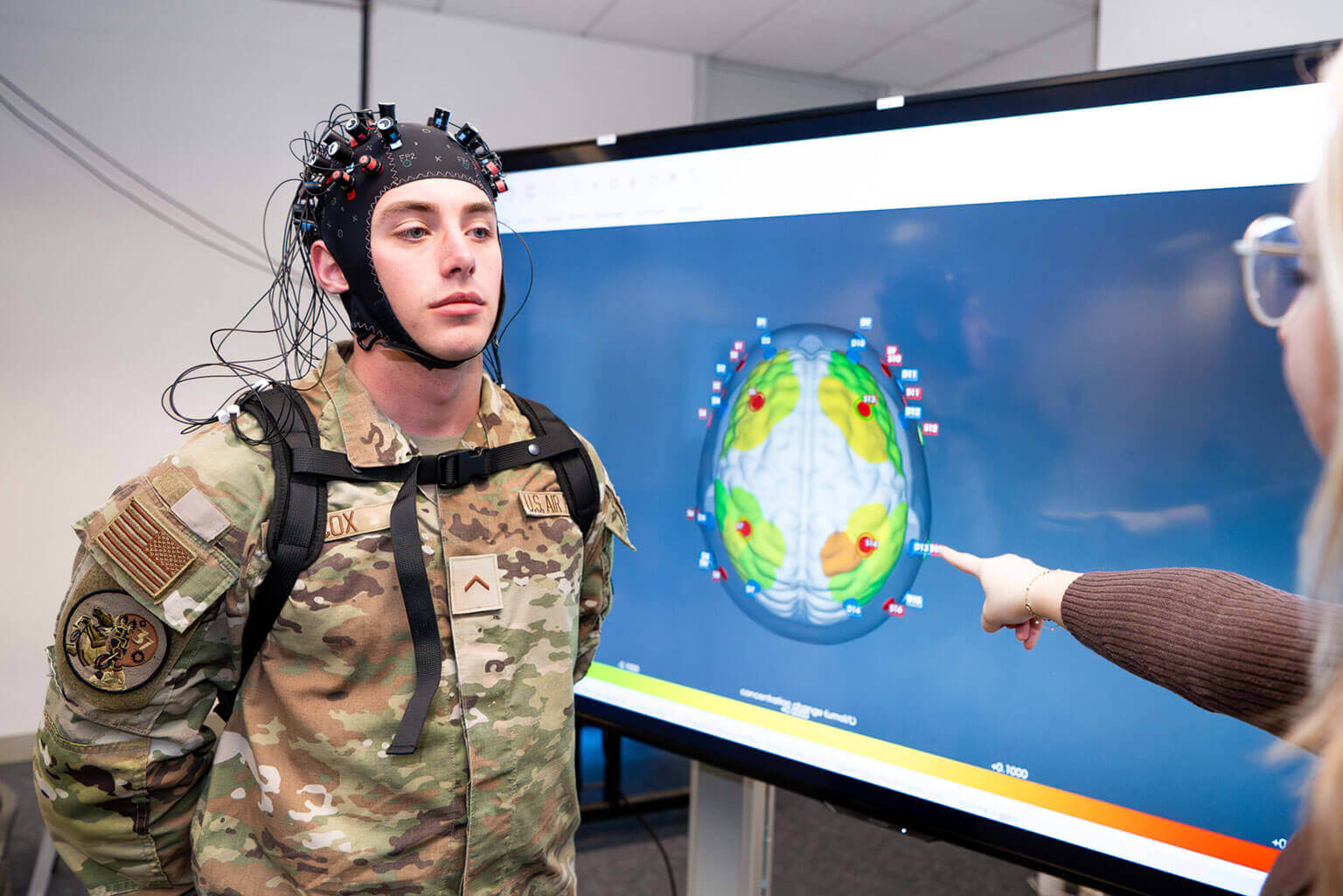
A cadet wearing a brain-monitoring cap stands beside a screen showing a colorful brain scan. A person points to the scan, indicating analysis.
A cadet in military uniform smiles while using a computer. They're wearing an EEG cap connected to monitoring wires in a lab setting, indicating research or testing.
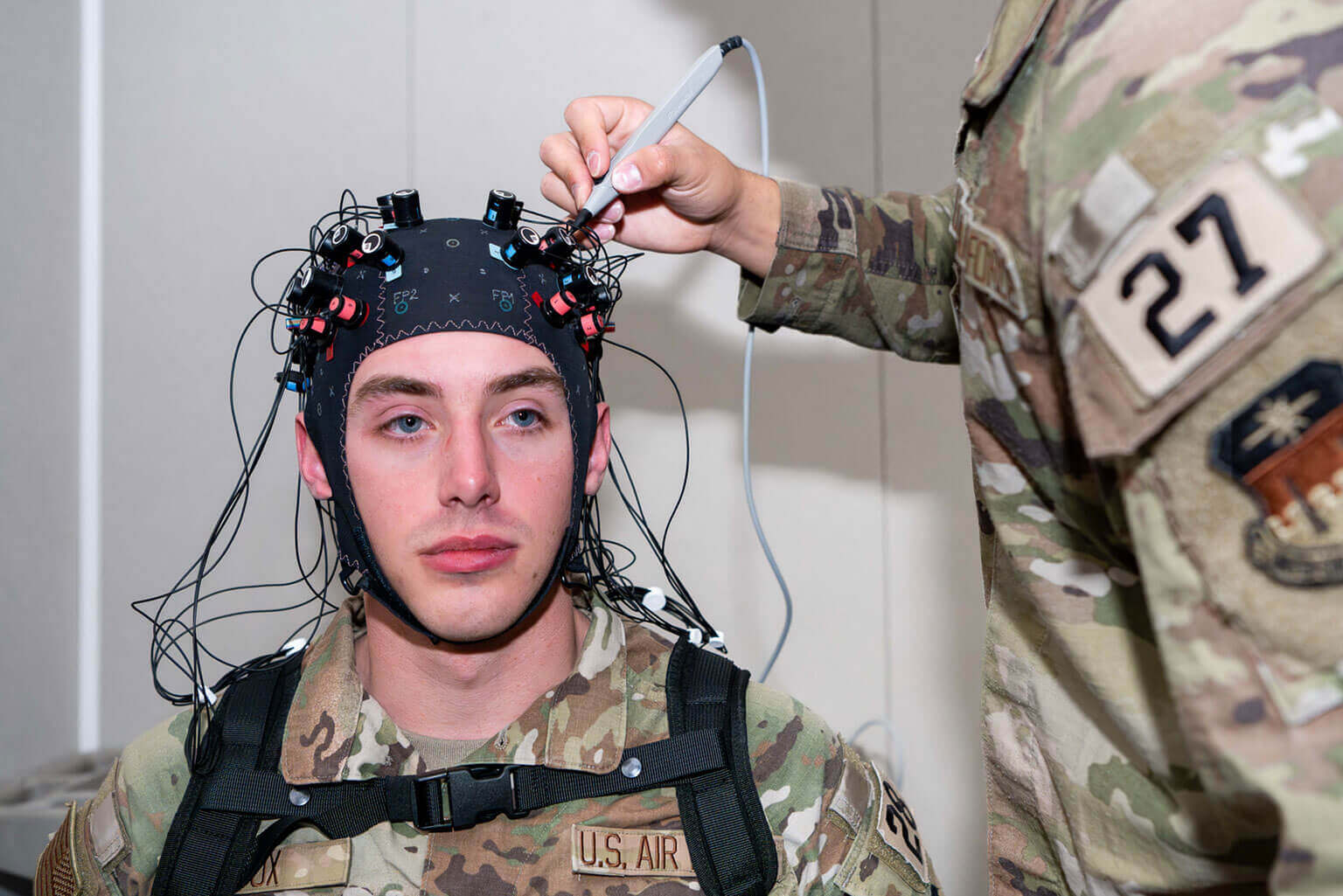
US Air Force Academy cadet in camouflage undergoes a brain scan, wearing a cap with electrodes. Another person adjusts equipment. Serious, focused atmosphere.
A cadet wearing a brain-monitoring EEG cap works on a laptop. A screen in the background displays brain activity data. The setting is a tech lab.
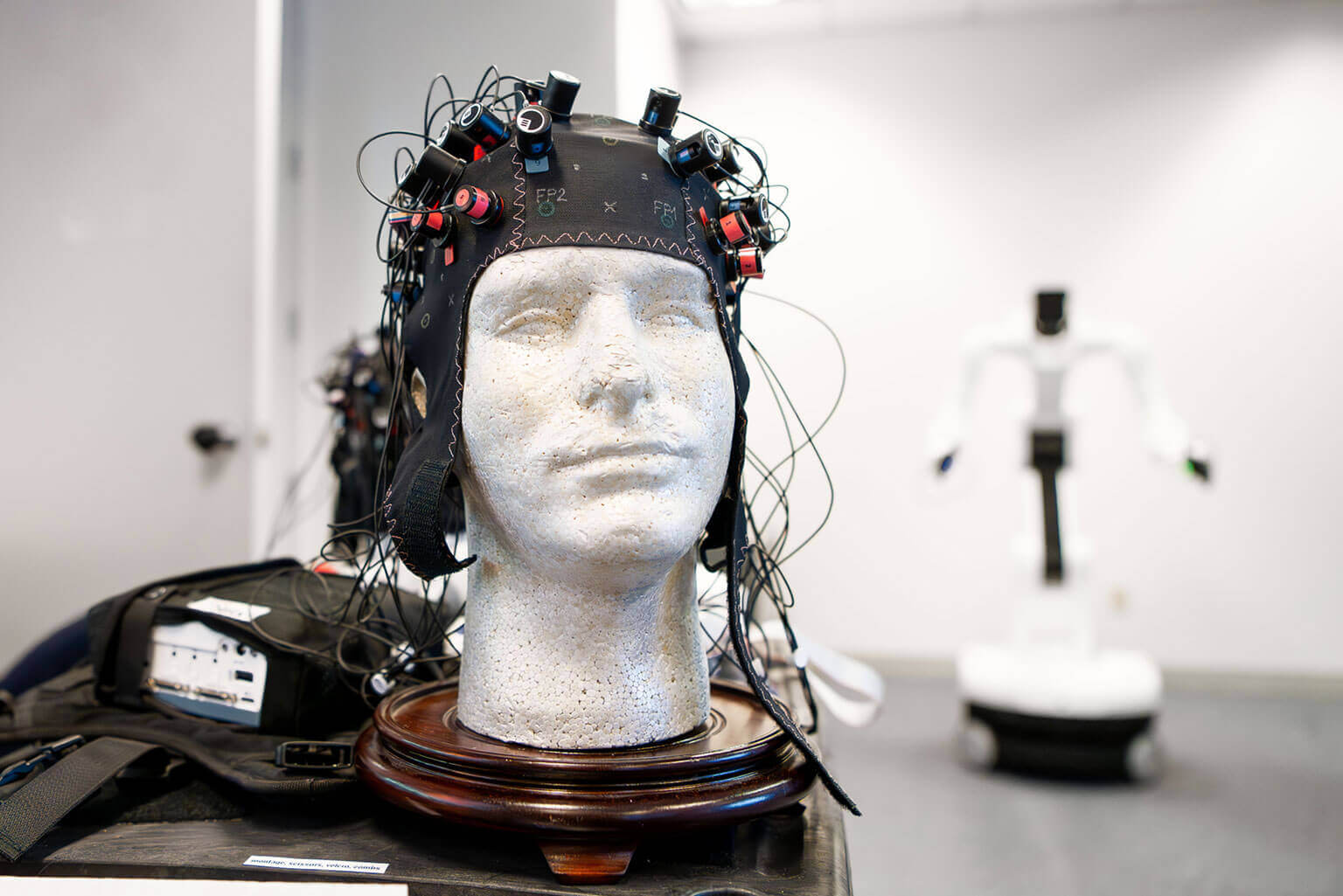
A mannequin head is fitted with a high-tech, sensor-laden cap, focusing on brain research. A humanoid robot is blurred in the background of a lab setting.
A mannequin head wearing an EEG cap with attached wires sits in the foreground of a tech lab. A large digital screen is blurred in the background.
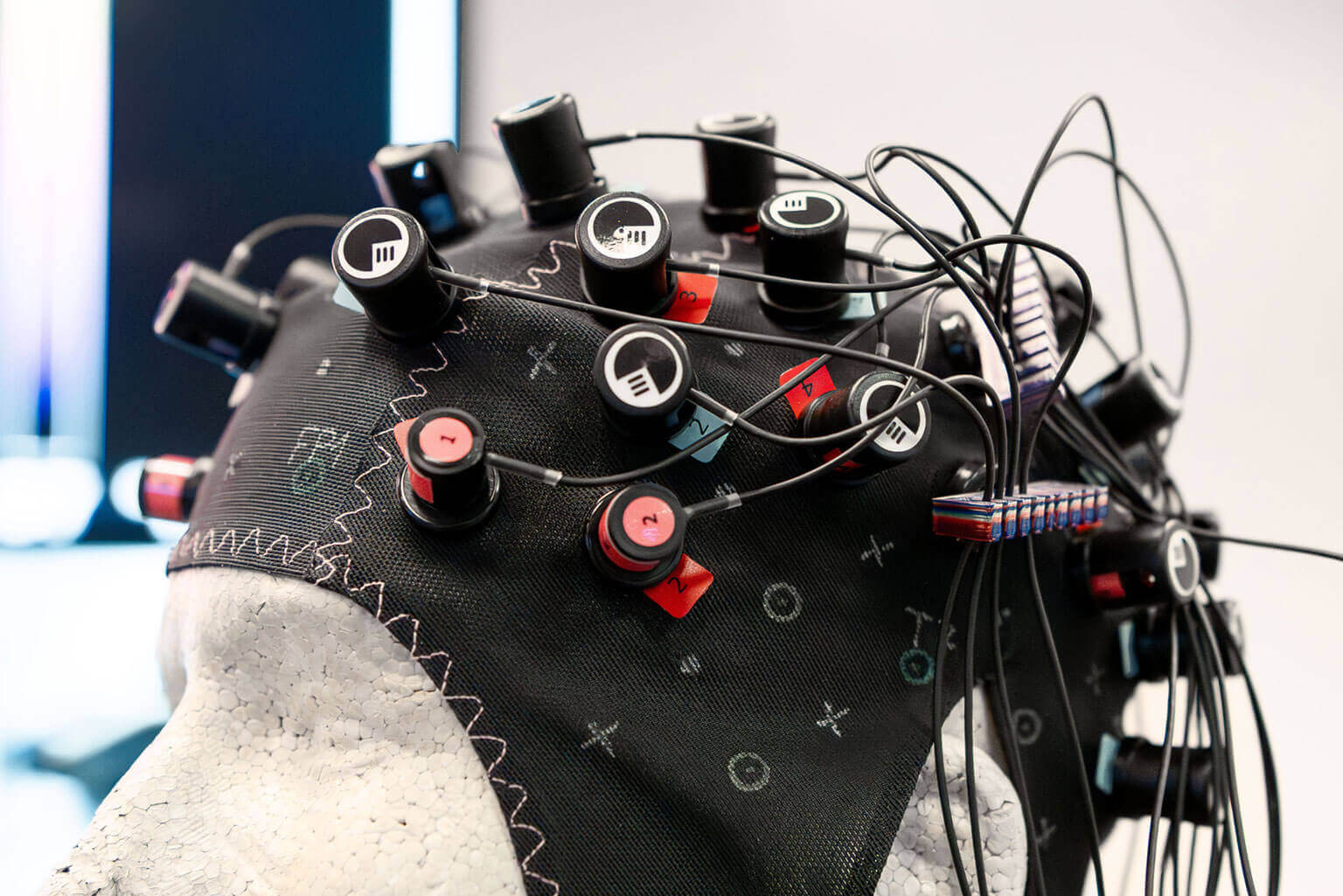
Close-up of a mannequin head wearing an EEG cap with sensors and wires for brainwave monitoring. The scene conveys a high-tech, scientific feel.

Multi-Form Robotics Lab (MFRL)

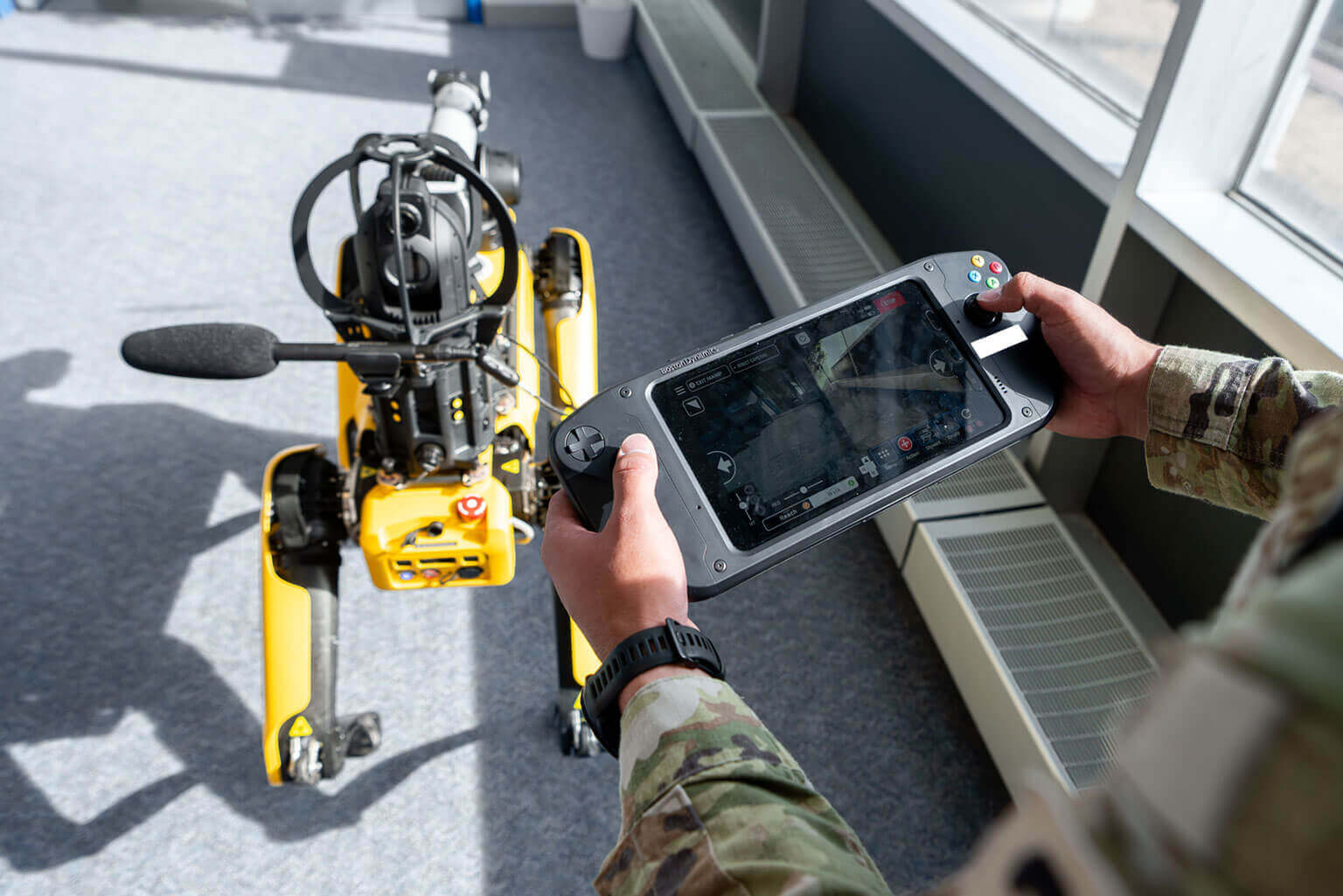
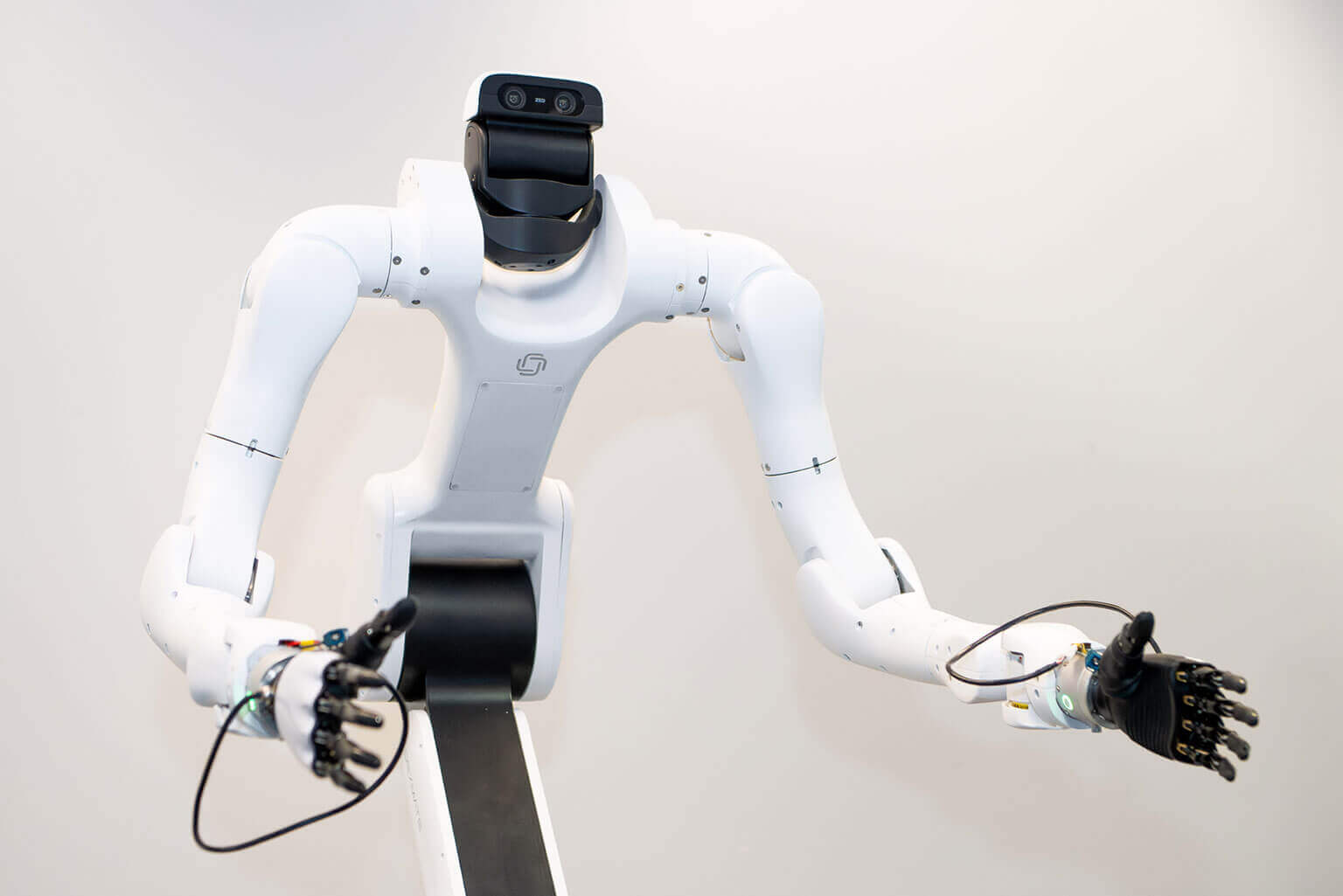
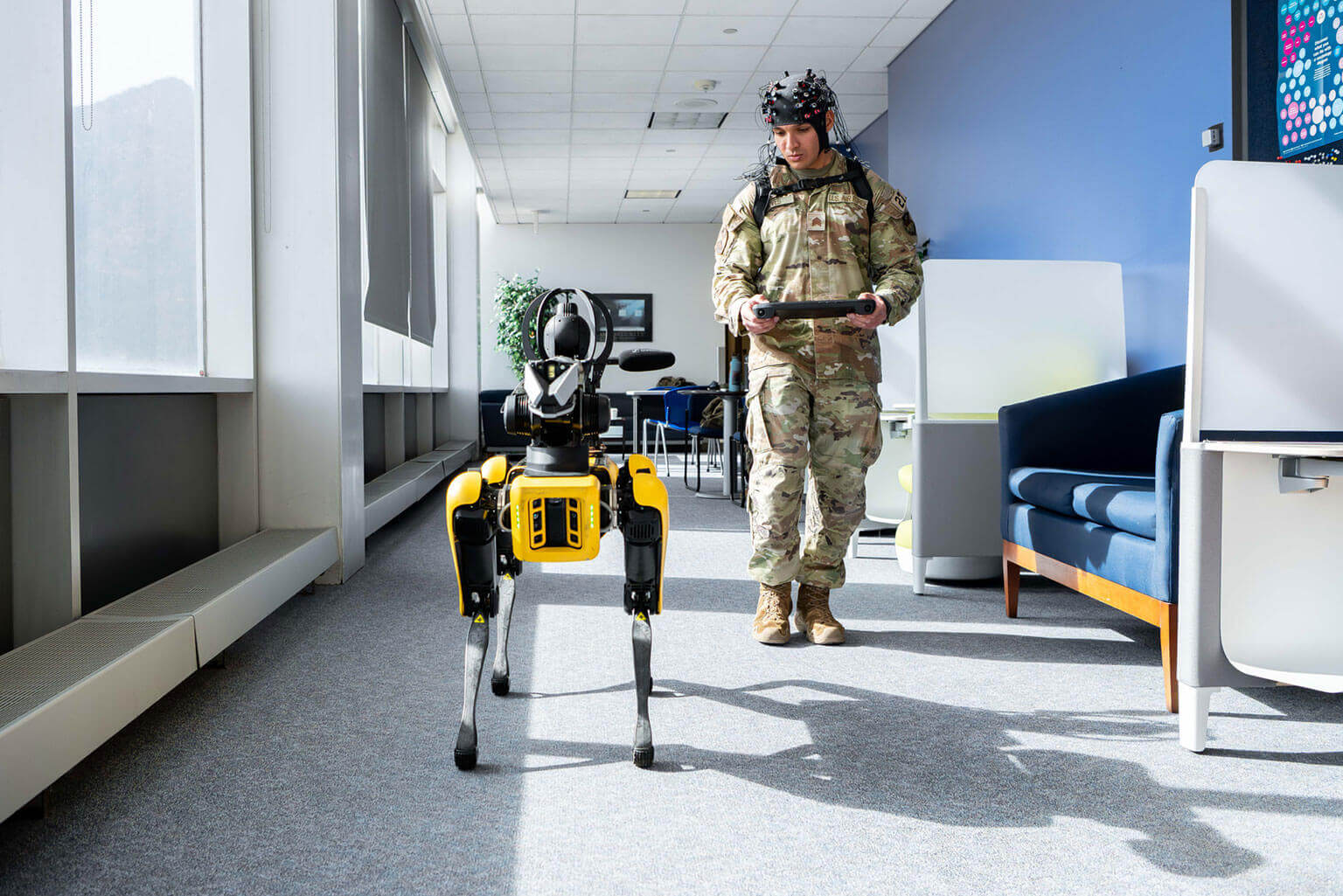
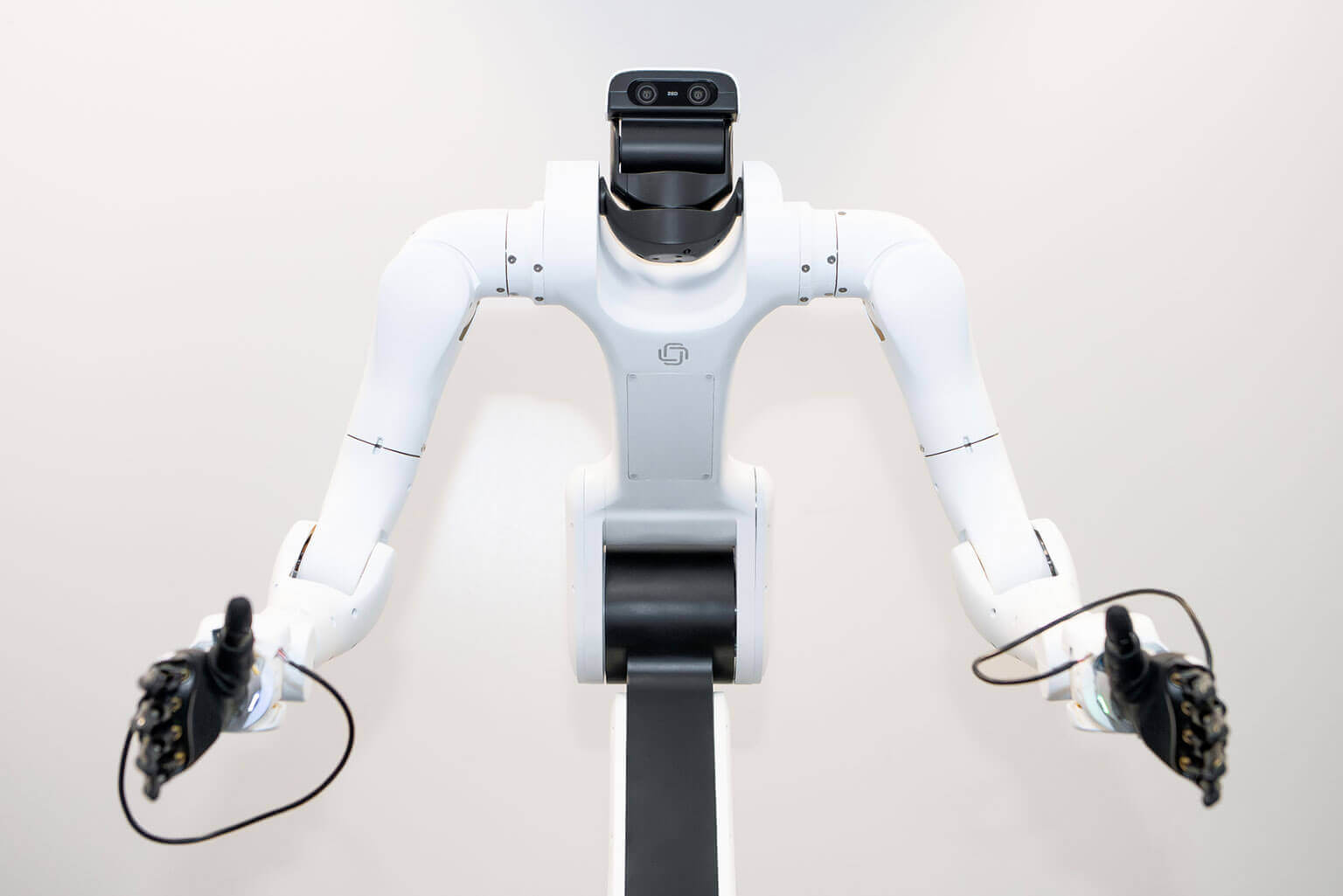
The MFRL advances research on human–machine teaming across land, air, and humanoid domains, linking robotic embodiment to trust, adaptability, and resilience. Featuring Boston Dynamics’ Spot, Ghost Robotics’ Vision 60, the Vega humanoid, and a fleet of aerial drones, the lab enables studies of autonomy under stress, swarm coordination, and embodied interaction—often integrated with WERC’s neuroimaging and XR cores to test brain–computer interfaces and real-time workload monitoring.

The MFRL allows researchers to examine how robotic embodiment across land, air, and humanoid platforms shapes trust, adaptability, and coordination within human–machine teams.
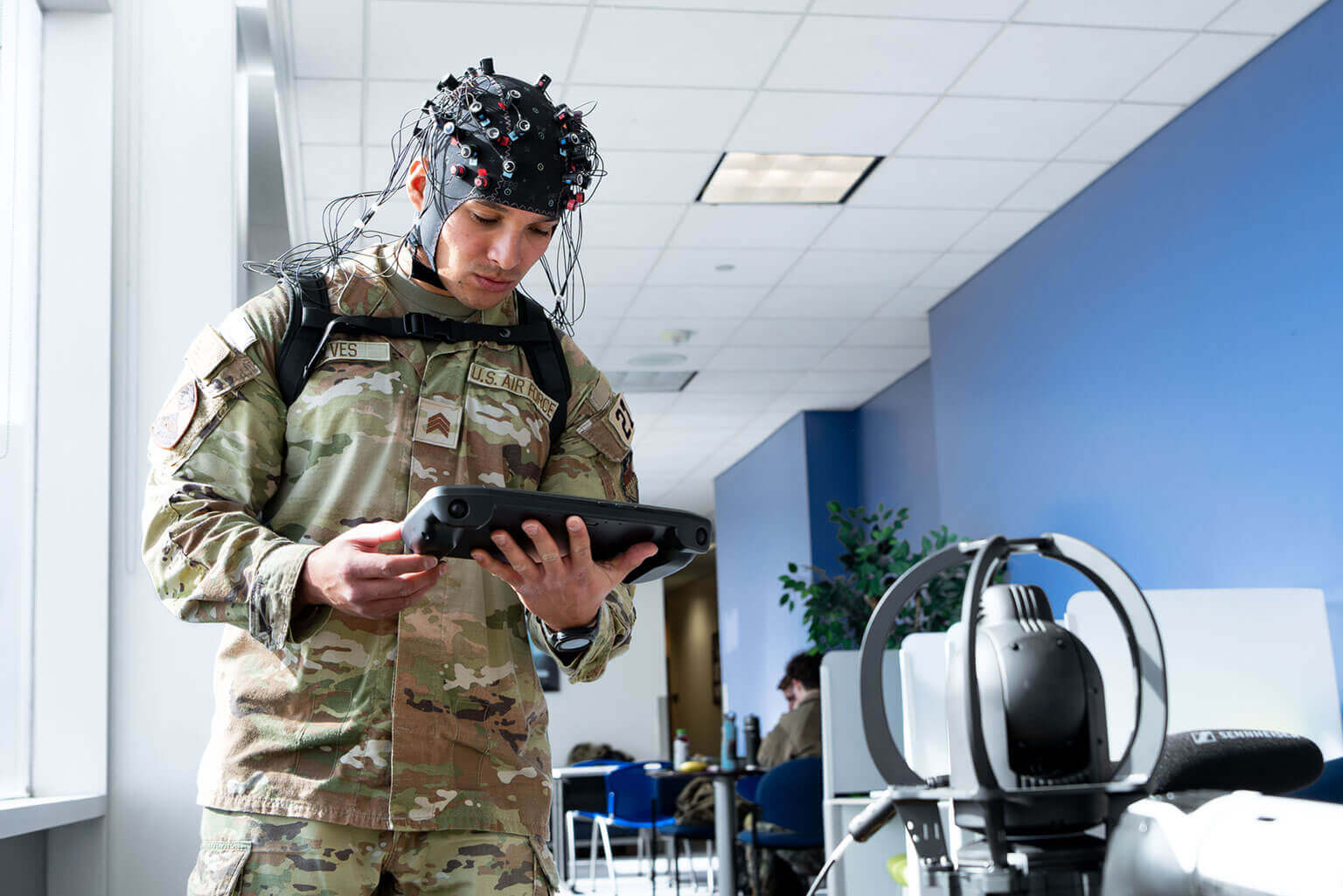
A cadet in military uniform wearing an EEG cap operates a tablet in a bright room, suggesting a focus on technology and research. Neutral tone.
A white robotic arm with dual articulated limbs and cameras at the top, resembles an advanced, humanoid assistant against a neutral background.
Cadet in camouflage remotely operates a yellow robotic dog using a handheld controller, indoors near large windows. The scene feels high-tech and controlled.
A white, humanoid robot with cameras for eyes and articulated arms extends its hands forward. The setting is minimalistic, conveying a futuristic tone.
A futuristic robot with a glowing, colorful face displaying a serene expression is placed on a wooden table. The setting is minimalistic and modern.
A cadet in military uniform operates a robotic dog using a remote control in a brightly lit room, suggesting advanced technology and innovation.
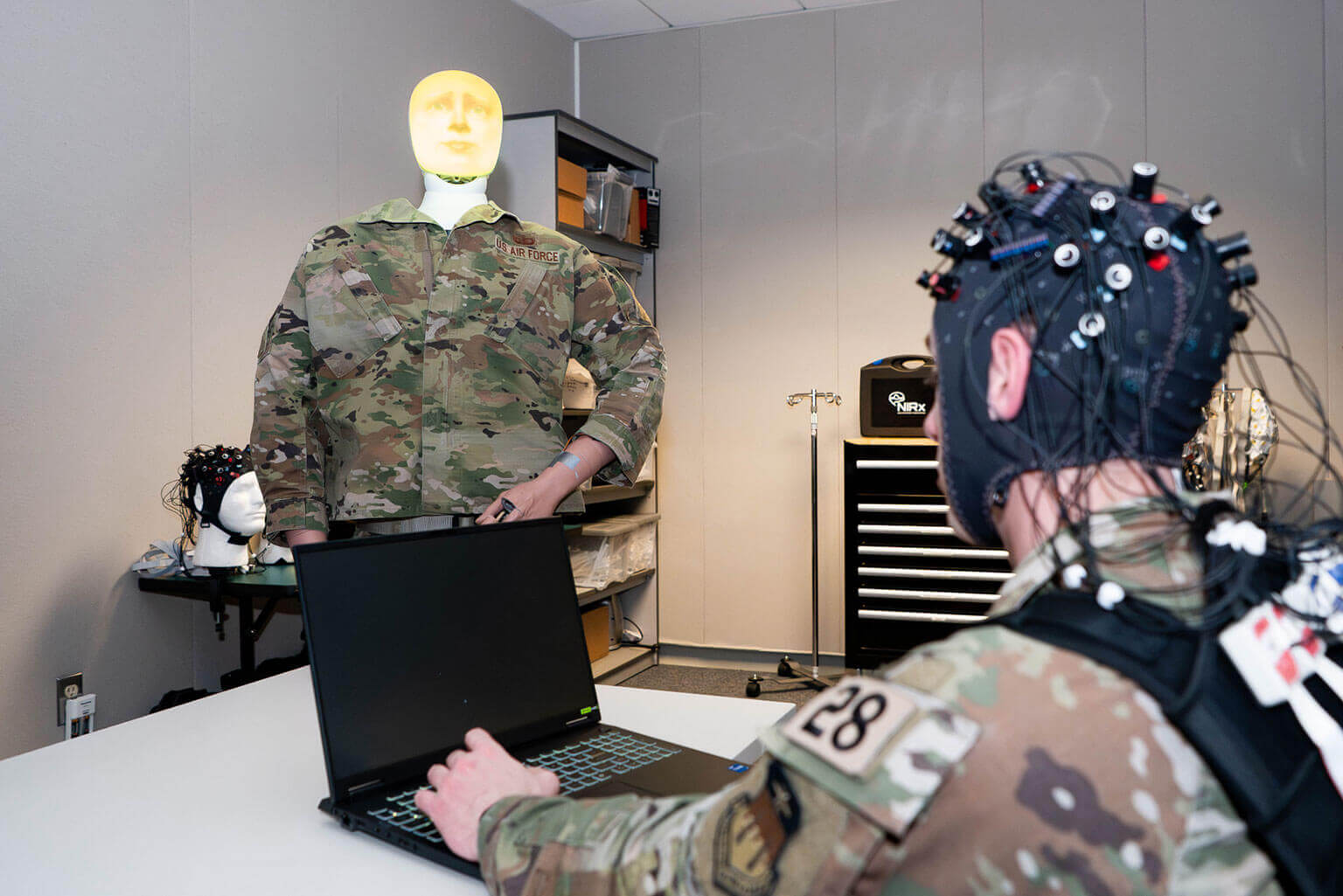
A cadet wearing brain-monitoring equipment sits at a desk with a laptop. A mannequin in camouflage stands nearby. The setting is a tech-filled lab.