Water resources field operations develop engineering judgment
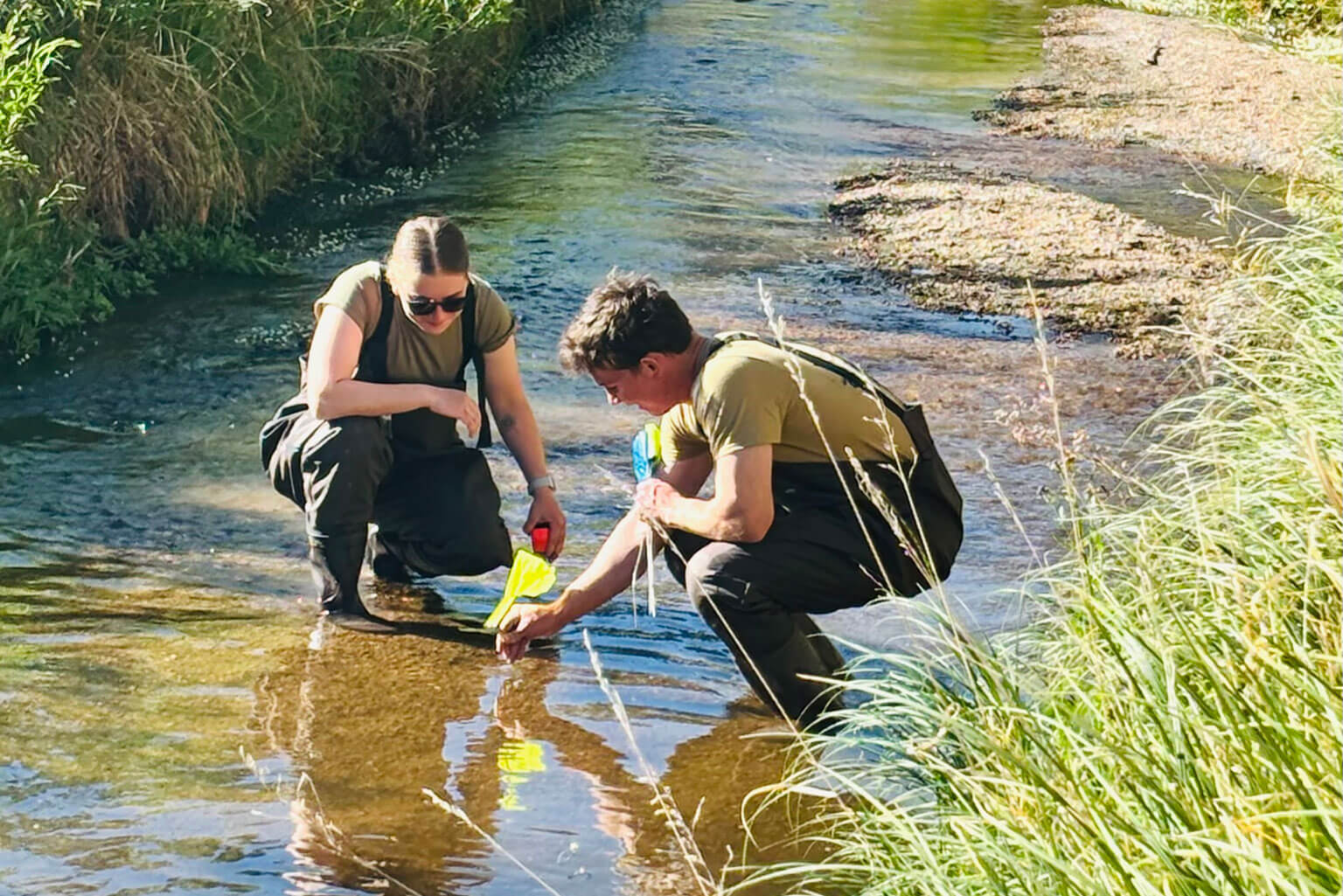
Cadet 2nd Class Abby Kuzio (left) and Cadet 2nd Class Mike McCarvill (right) collect field measurements during a CE 351 Civil Engineering Practices exercise at the U.S. Air Force Academy, June 16, 2026. As part of water resources field operations, cadets track the movement of water through a natural stream to develop the engineering judgment needed to evaluate hydraulic systems, assess environmental conditions and solve complex infrastructure challenges. (Courtesy photo by Lt. Col. Kathleen Smits)
By Tali Burress
U.S. Air Force Academy Strategic Communications
U.S. AIR FORCE ACADEMY, Colo. – Cadets in the U.S. Air Force Academy’s CivEngr 351 Civil Engineering Practices course traded classrooms for streams and watersheds as they applied engineering principles in real-world environments.
Through hands-on fieldwork at the Academy’s Field Engineering and Readiness Laboratory, cadets learned how water moves through natural and engineered systems while developing the technical expertise and practical judgment needed to support future military operations, installation resilience and infrastructure decision-making.
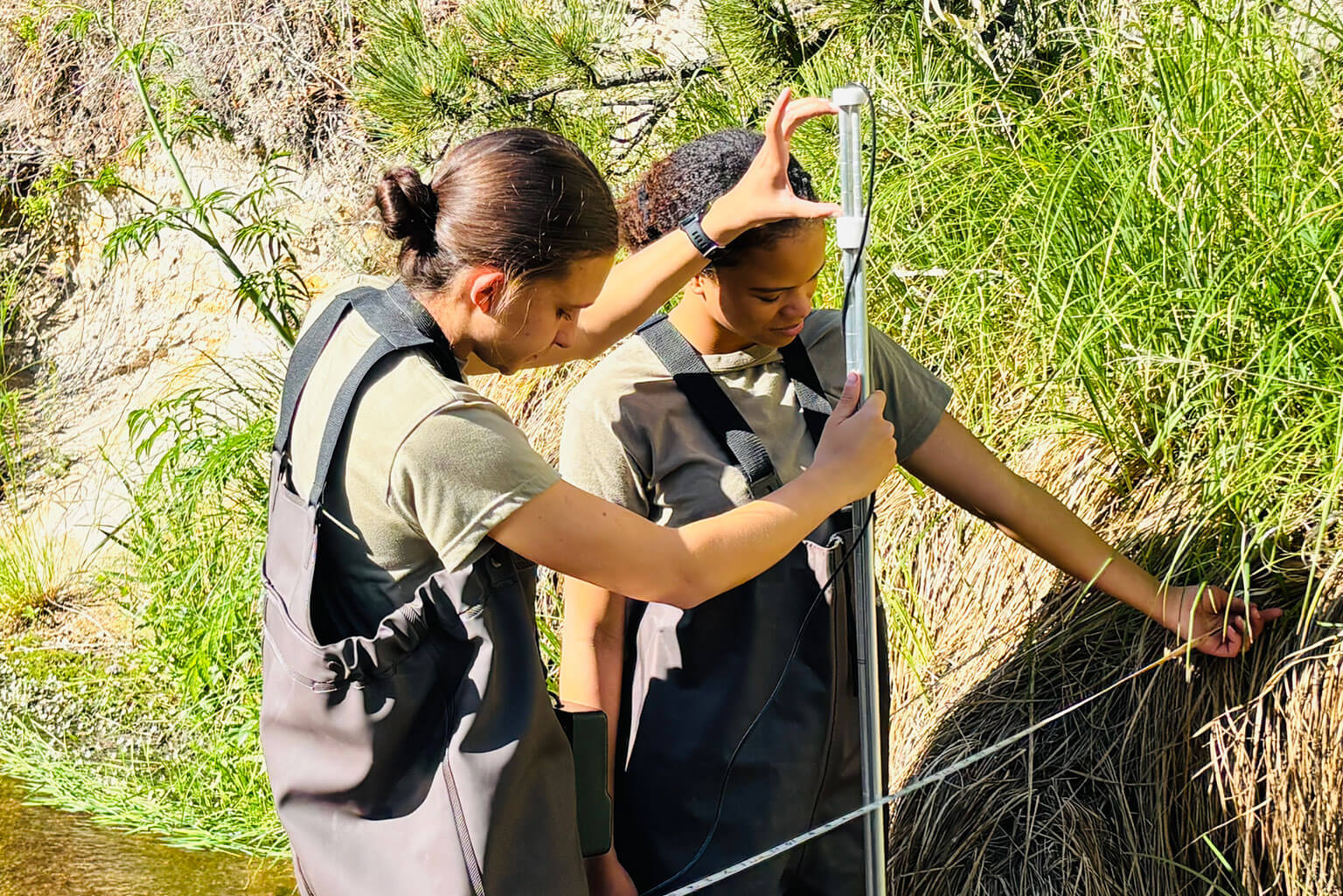
Cadet 2nd Class Kimberly Cahoon (left) and Cadet 2nd Class Soeul Cody (right) conduct stream monitoring along Monument Creek at the U.S. Air Force Academy, June 16, 2026. As part of water resources field operations, cadets collect field data and develop the engineering judgment needed to assess water resources, infrastructure performance and environmental conditions. (Courtesy photo by Lt. Col. Kathleen Smits)
Understanding water in motion
The final phase of the three-week course immersed cadets in the challenges of understanding, predicting and managing the movement of water, a mission-critical capability for military installations, deployed operations and the communities they support.
Working in streams and watersheds, cadets moved beyond the classroom to collect and analyze the same measurements engineers use to understand how water behaves in the real world. They examined how flow changes across a watershed, how energy moves water through natural and engineered systems and how contaminants travel through the environment.
By gathering and interpreting their own data, cadets gained firsthand insight into the principles behind hydraulic models and the real-world decisions those models inform.
Cadet 2nd Class Benjamin Fricke, a Civil Engineering major with a minor in Spanish, said the field experience provided valuable context for concepts he had previously encountered only in the classroom.
“The experiences in the field provided an example of how water is managed in real-world operations, which makes it easier to relate to classroom work in the future by already having a base-level understanding,” Fricke said. “We saw some models of open-channel flow as well as industrial processes like the Colorado Springs Utilities plants, which gave me a new appreciation for the scale and scope of civil engineering.”
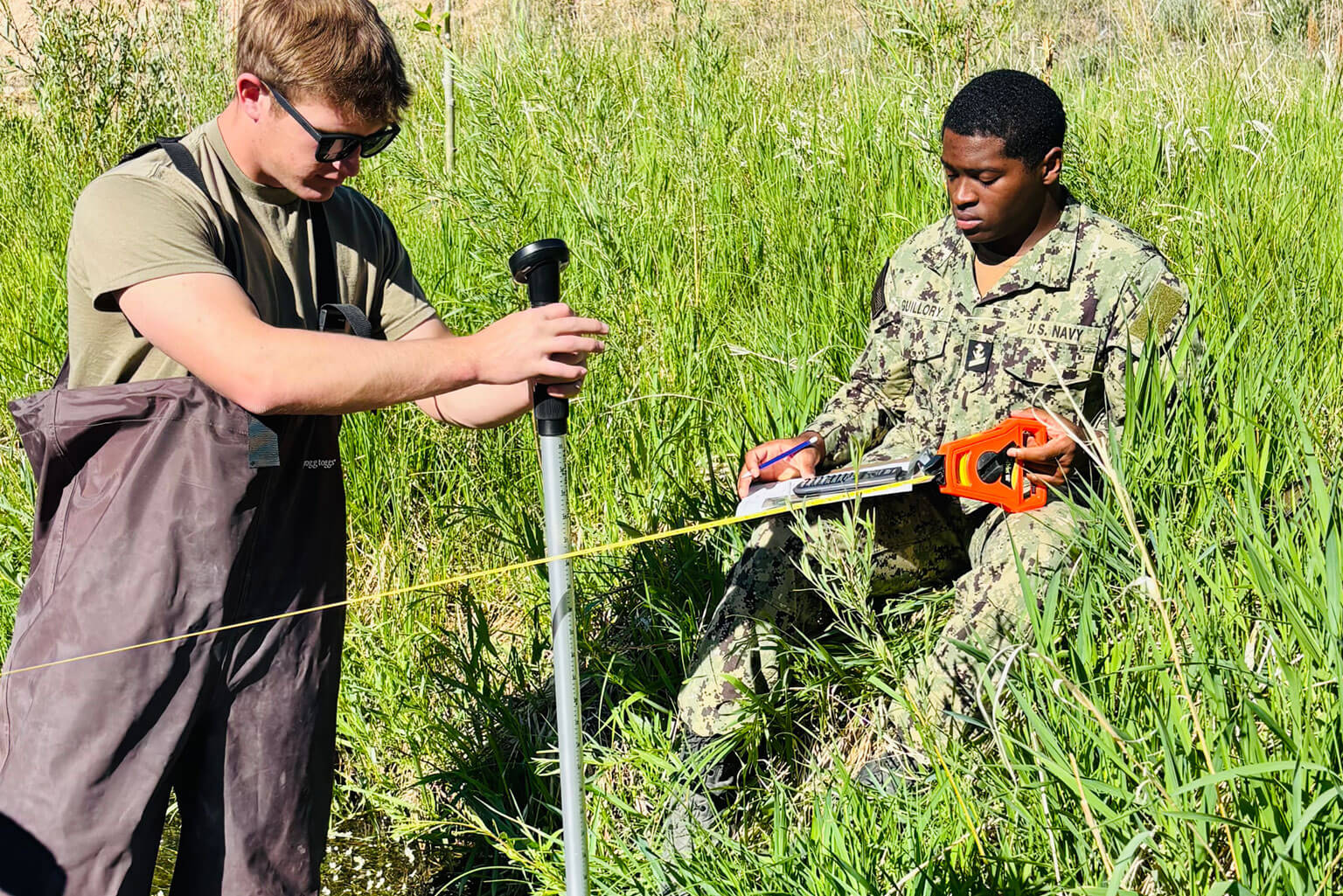
Cadet 2nd Class Jonah Meyer measures stream velocity while Midshipmen Peyton Guilory records field data during a CivEngr 351 Civil Engineering Practices exercise at the U.S. Air Force Academy, June 16, 2026. As part of water resources field operations, cadets collect and analyze hydraulic measurements in a natural stream to develop the engineering judgment needed to assess water resources, infrastructure performance and environmental conditions. (Courtesy photo by Lt. Col. Kathleen Smits)
Learning through experience
For many cadets, the fieldwork transformed classroom concepts into real-world environments where solutions are not always obvious.
Cadet 2nd Class Isabella Abbott, a Civil Engineering major, said the experience brought classroom lessons into focus by linking them to a familiar challenge: managing water resources in drought-prone regions.
“Growing up in California, where droughts are common, and communities are dependent on an aqueduct to transport water throughout the state, I was able to connect what I observed in the field to the infrastructure that supports California’s water needs,” Abbott said.
Abbott’s experience reflects a broader goal of FERL: developing officers who can apply technical knowledge in dynamic operational environments.
“That’s the essence of what makes FERL special,” said Lt. Col. Monica Pickenpaugh, acting head of the Academy’s Department of Civil and Environmental Engineering. “It’s about developing the judgment needed to support operational readiness, installation resilience and infrastructure decision-making. Very few undergraduate programs in the country can provide this type of experience at this scale.”
The field experience also reinforces one of the core objectives of the Academy’s civil engineering program: developing officers who can collect and analyze data, apply critical thinking and make informed decisions in complex environments.
The experience reflects a hallmark of the Academy’s approach to engineering education: learning through direct engagement with the physical world. While many engineering students study hydraulic systems through lectures, simulations and laboratory demonstrations, CivEngr 351 places cadets inside those systems, allowing them to observe conditions, collect measurements and evaluate results firsthand.
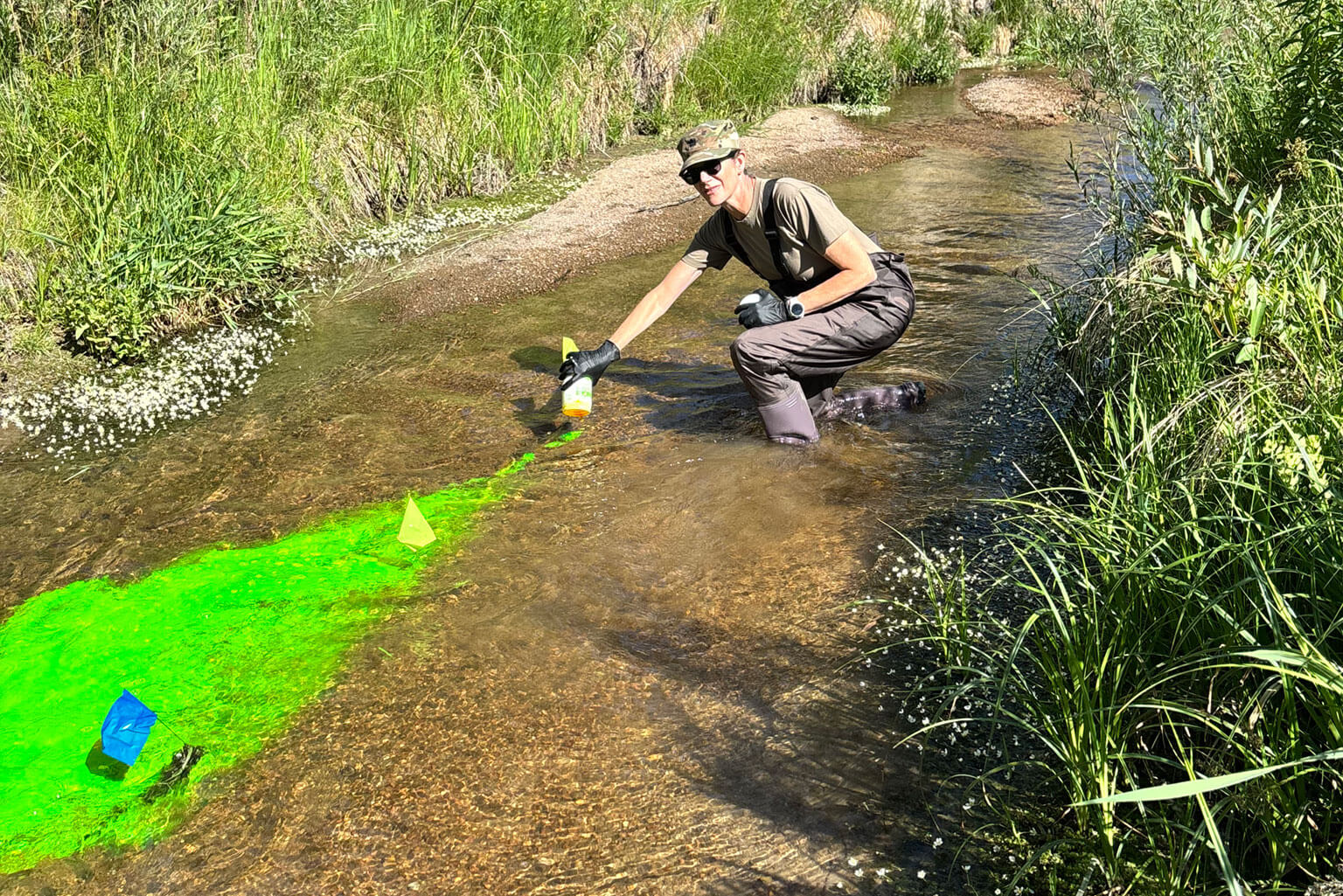
Lt. Col. Kathleen Smits, U.S. Air Force Reserve professor assigned to the U.S. Air Force Academy, releases fluorescent tracer dye into a stream during a CivEngr 351 Civil Engineering Practices exercise at the U.S. Air Force Academy, June 16, 2026. As part of water resources field operations, cadets track how the dye moves and disperses through the waterway to investigate the transport processes engineers use to understand contaminant movement, evaluate water quality and assess the behavior of natural water systems. (Courtesy photo by Cadet 2nd Class Abby Kuzio)
Engineering for mission success
Future Air Force and Space Force officers may be called upon to restore infrastructure after natural disasters, assess flood risks to military installations, protect critical water resources or support operations in austere environments. These are the types of complex challenges civil engineers solve every day, balancing technical requirements with mission needs, public safety and environmental considerations.
“FERL is built around teamwork, requiring us to communicate effectively, think critically and work together to solve problems,” Abbott said. “As we worked on activities, things did not always go as planned. Sometimes our original designs didn’t work, or we were limited in resources. Those experiences taught us to remain flexible, consider different perspectives and make decisions in a time-constrained environment. Working through those challenges in the field helped prepare me for the demands of leadership in the Air Force.”
Fricke and Abbott also credited enlisted mentors from across the Air Force civil engineering community with helping cadets better understand the responsibilities of an officer and the importance of learning from those around them.
“Getting to spend so much time with the enlisted mentors provided a great picture of what role the civil engineering career field plays in the operational Air Force,” Fricke said. “By working alongside the mentors and stepping into the ‘doing’ side of civil engineering, I believe I am more prepared to lead because I have a basic understanding of the responsibilities of civil engineering and will be better able to connect with my team in the future.”
Through CivEngr 351, cadets develop the technical expertise and practical experience needed to evaluate complex systems, make informed decisions and solve problems where mission success depends on getting it right. Those skills will serve them whether supporting installation infrastructure, responding to disasters or helping sustain operations around the globe.
See photos of the Field Engineering and Readiness Laboratory on Flickr.