Special Warfare Orientation Course Prepares Future Officers

Cadets ruck march during a Special Warfare Orientation Course (SWOC) physical training session at the U.S. Air Force Academy, Colo., June 12, 2026. SWOC is a two-week course that introduces Academy and ROTC cadets to the skill set of Air Force Special Warfare operators such as leadership, teamwork and communication under pressure. (U.S. Air Force photo by Ray Bahner)
By Tech. Sgt. Zach Vaughn
U.S. Air Force Academy Strategic Communications
U.S. AIR FORCE ACADEMY, Colo. – The Special Warfare Orientation Course (SWOC) at the U.S. Air Force Academy immersed cadets in two weeks of physically and mentally demanding training June 6-20, providing firsthand exposure to Air Force Special Warfare (AFSPECWAR) career fields while preparing future officers for demanding operational environments.
SWOC gave Academy and ROTC cadets a realistic introduction to the demands of AFSPECWAR career fields. By exposing cadets to operational challenges early, the course helped participants better understand and prepare for the profession.
AFSPECWAR is a premier Air Force capability that provides commanders offensive options at the onset of hostilities. These forces ensure the Department of the Air Force is better prepared to meet a wide range of mission requirements, in a variety of threat densities, providing options to achieve Air Component objectives for a Joint Force Commander, according to Col. John Graver, Headquarters Air Force, Special Warfare Division.
“SWOC offers a level of realism for cadets about how to prepare for a career in AFSPECWAR,” said Graver. “It also gives them insight on how they can better prepare for our initial screening and selection process. Our AFSCs are the only ones in the Air Force that require a rigorous week-long pre-commissioning screening called Phase II, and thus proper preparation is crucial.”
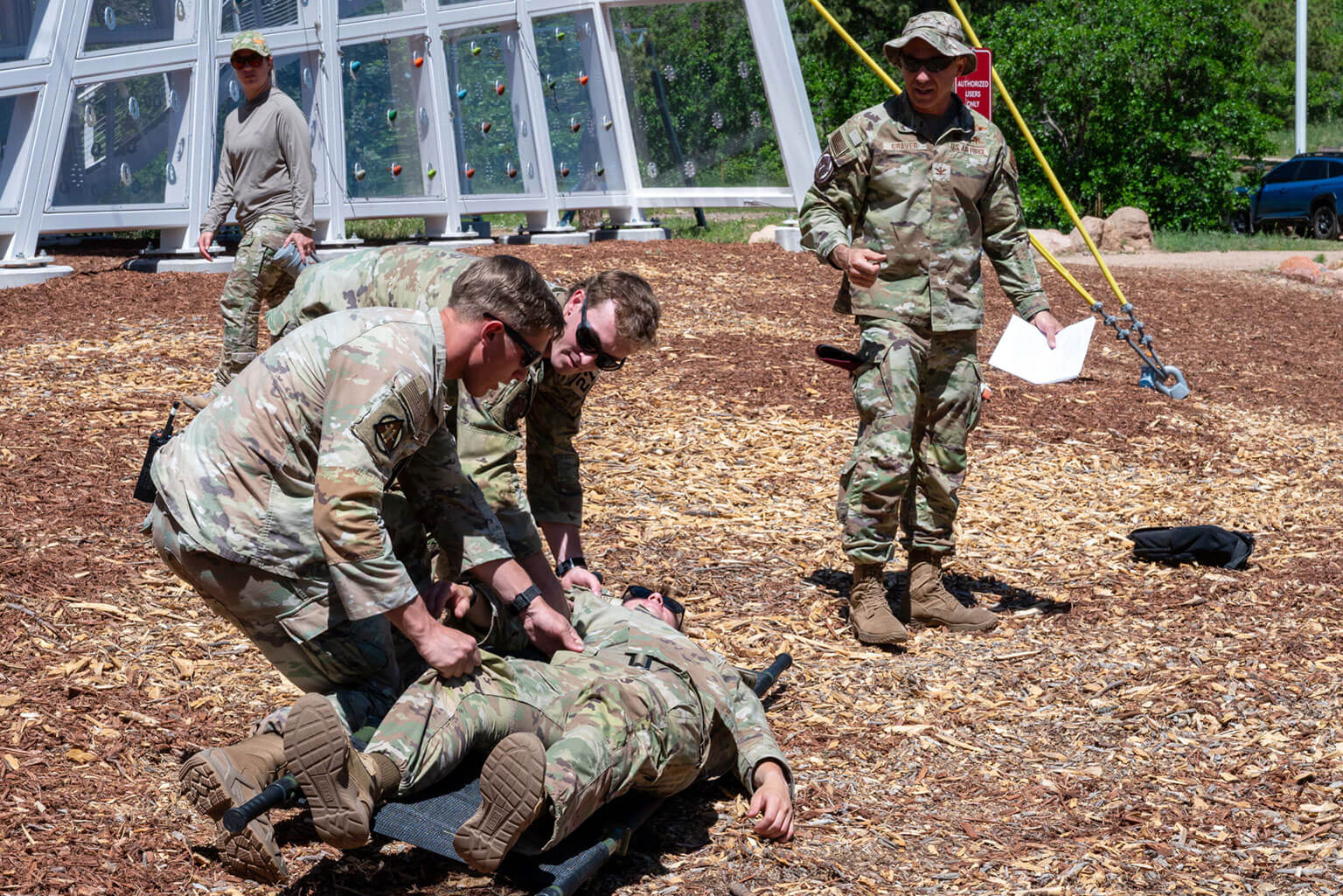
Col. John Graver (right), Headquarters Air Force, Special Warfare Division, oversees cadre demonstrating a litter carry during a Special Warfare Orientation Course (SWOC) Tactical Combat Casualty Care session at the U.S. Air Force Academy, Colo., June 11, 2026. SWOC is a two-week course that gives Academy and ROTC cadets firsthand exposure to Air Force Special Warfare career fields. (U.S. Air Force photo by Tech. Sgt. Zach Vaughn)
Operating under pressure
Cadets spent two weeks experiencing many of the physical and mental demands associated with the Special Warfare pipeline.
The course consisted of an introduction to land and water fitness, small-unit tactics, land-navigation courses and academic instruction in troop leading procedures, interviews, real-world mission reviews, decision-making, and Tactical Combat Casualty Care.
“We’re looking for driven leaders who do not quit,” said Graver. “We are the department’s edge force, specially trained to sustain airpower and thus require leaders with drive, problem-solving, communication skills, high physical fitness and a willingness to work with and learn from their team.”
Cadet cadre advised participants throughout the training, which also included academic and practical classes in global access, such as securing, surveying, and establishing airfields; precision strike, to include directing fire for land and air assets; and personnel recovery to save lives and manage incident sites.
“The candidates are definitely feeling the pressure,” said Cadet 1st Class Joe Neal, SWOC Commander and a Management major at the Academy. “It’s a wakeup call for a lot of them because they really can’t find this level of exposure to special warfare anywhere else.”
Neal, who completed SWOC in 2024, said that the course has enabled immense growth for him as he led this year’s iteration of cadets.
“Stress tolerance was a big piece that I had to work on,” Neal said. “These situations make you stressed out on purpose so the instructors can see how you react. Because throughout the pipeline and in the operational environment, you have to keep your composure.”
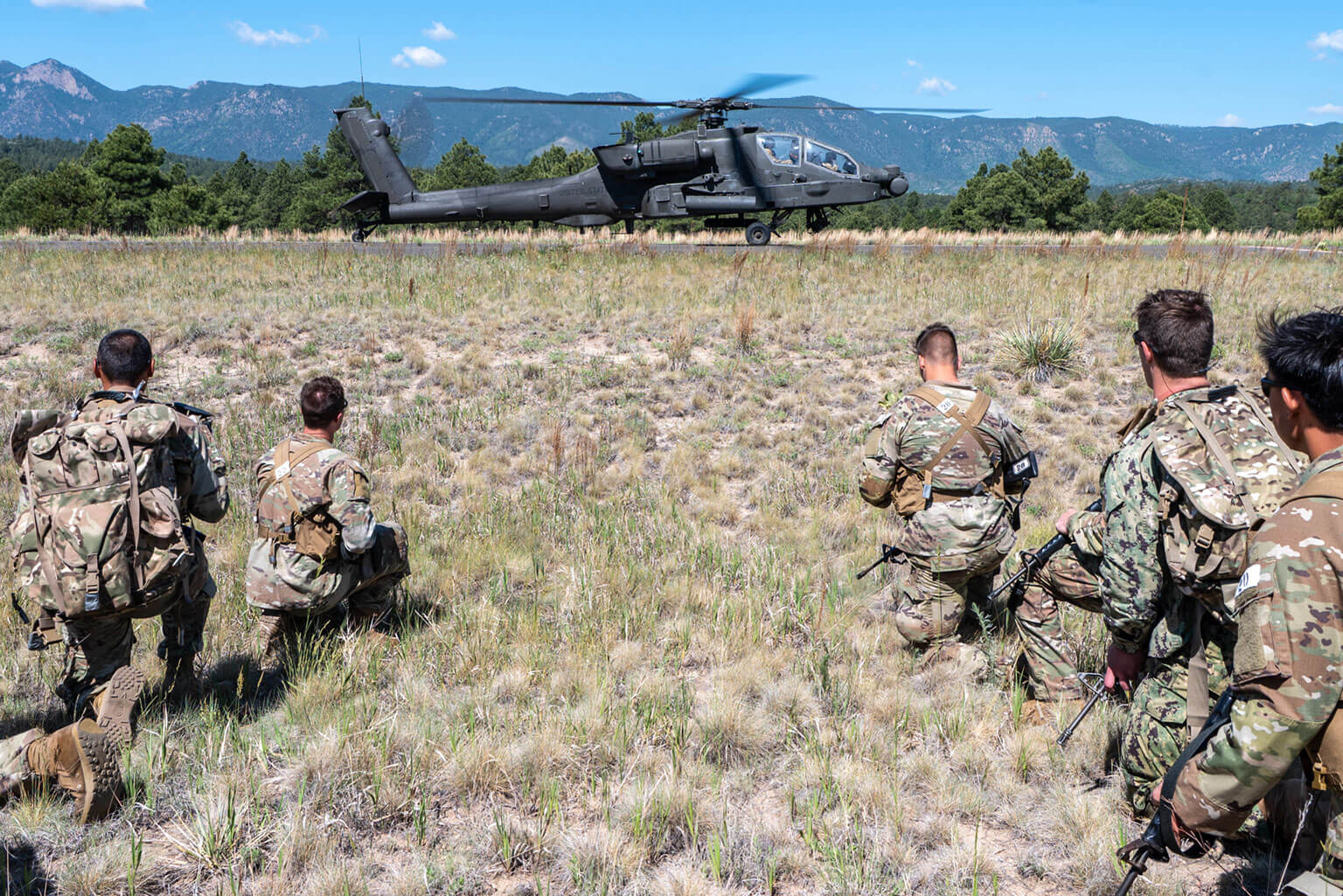
Cadets observe a U.S. Army AH-64 Apache helicopter during a Special Warfare Orientation Course (SWOC) full mission profile at the U.S. Air Force Academy, Colo., June 15, 2026. During SWOC’s second week, Academy and ROTC cadets participated in full mission profiles to gain insight into the preparation and execution of missions within Air Force Special Warfare career fields. (U.S. Air Force photo by Jonathan Suni)
Full mission profiles
After completing foundational physical and leadership training, cadets progressed to increasingly complex mission scenarios.
During the second week, instructors focused on conducting full mission profiles that exposed cadets to the types of missions conducted by combat rescue officers, special tactics officers and tactical air control party officers.
“Communication and teamwork have really enabled our team to make it through these missions,” said Cadet 3rd Class Daniel Lam, SWOC student and Foreign Area Studies major. “Nothing you do here is about yourself as an individual because we’re always working as a team. Learning how to communicate and being a good team member is what SWOC has helped me to prepare for and hopefully carry on into the pipeline.”
“With our full mission profiles, they get to experience what it’s like to be an operator doing a mission,” said Graver. “We want them to make an informed decision on whether or not Special Warfare is something they want to do because after attending SWOC, they know what it’s like to prepare, train and actually do the missions.”
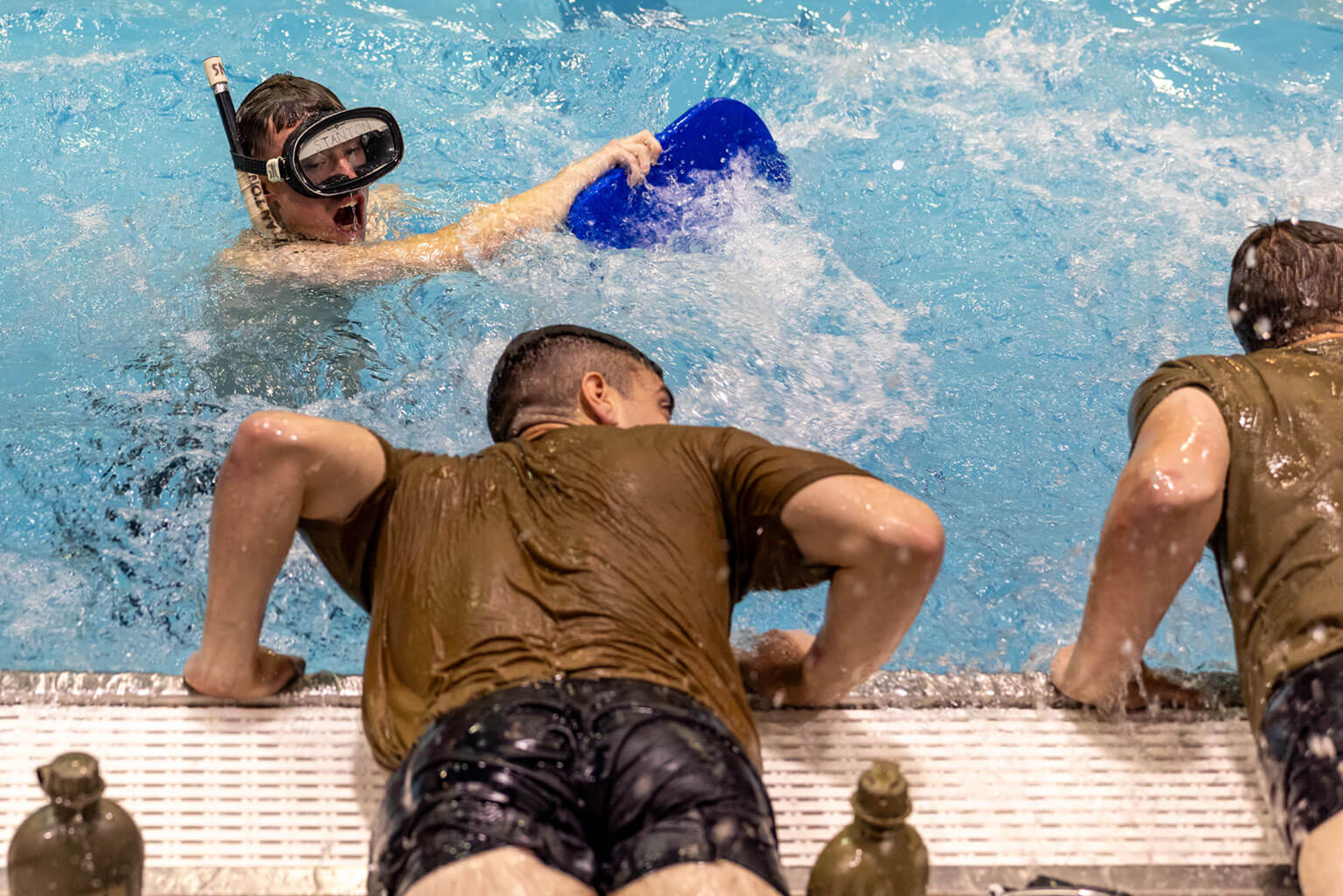
A cadet douses a fellow cadet with water during a Special Warfare Orientation Course (SWOC) physical training session at the U.S. Air Force Academy, Colo., June 13, 2026. SWOC provides Academy and ROTC cadets with first-hand insight on the demands of Air Force Special Warfare while enabling them to develop leadership, teamwork and communication skills under pressure. (U.S. Air Force photo by Jonathan Suni)
Preparing for the pipeline
While the course prepares cadets for the rigors of selection, participants say the lessons learned during SWOC have already begun shaping them into more capable leaders and teammates.
“SWOC and the Special Warfare Club are some of the most valuable programs that I’ve ever been a part of,” said Lam. “I’ve grown so much. SWOC has given me a great foundation and more confidence as I hope to enter the Special Warfare pipeline in a few years.”
Now in its sixth year, SWOC has contributed to roughly a 20% increase in Special Warfare officer selectees, according to Graver.
“Our annual Program Guidance Letter from the Air Force’s manpower and personnel office is 55,” Graver said. “Both USAFA and AFROTC can struggle to meet these numbers and I believe, thanks in large part to our formalized academic year and summer programs like SWOC, we’re expecting to finally meet that number.”
After SWOC, cadets must graduate and commission before progressing through AFSPECWAR’s Phase I and Phase II screening process. Candidates must then complete the assessment and selection process at Joint Base San Antonio-Lackland before earning the opportunity to serve as Special Warfare officers.
See more photos of SWOC on Flickr.