Quantum Technologies minor equips cadets for emerging technologies
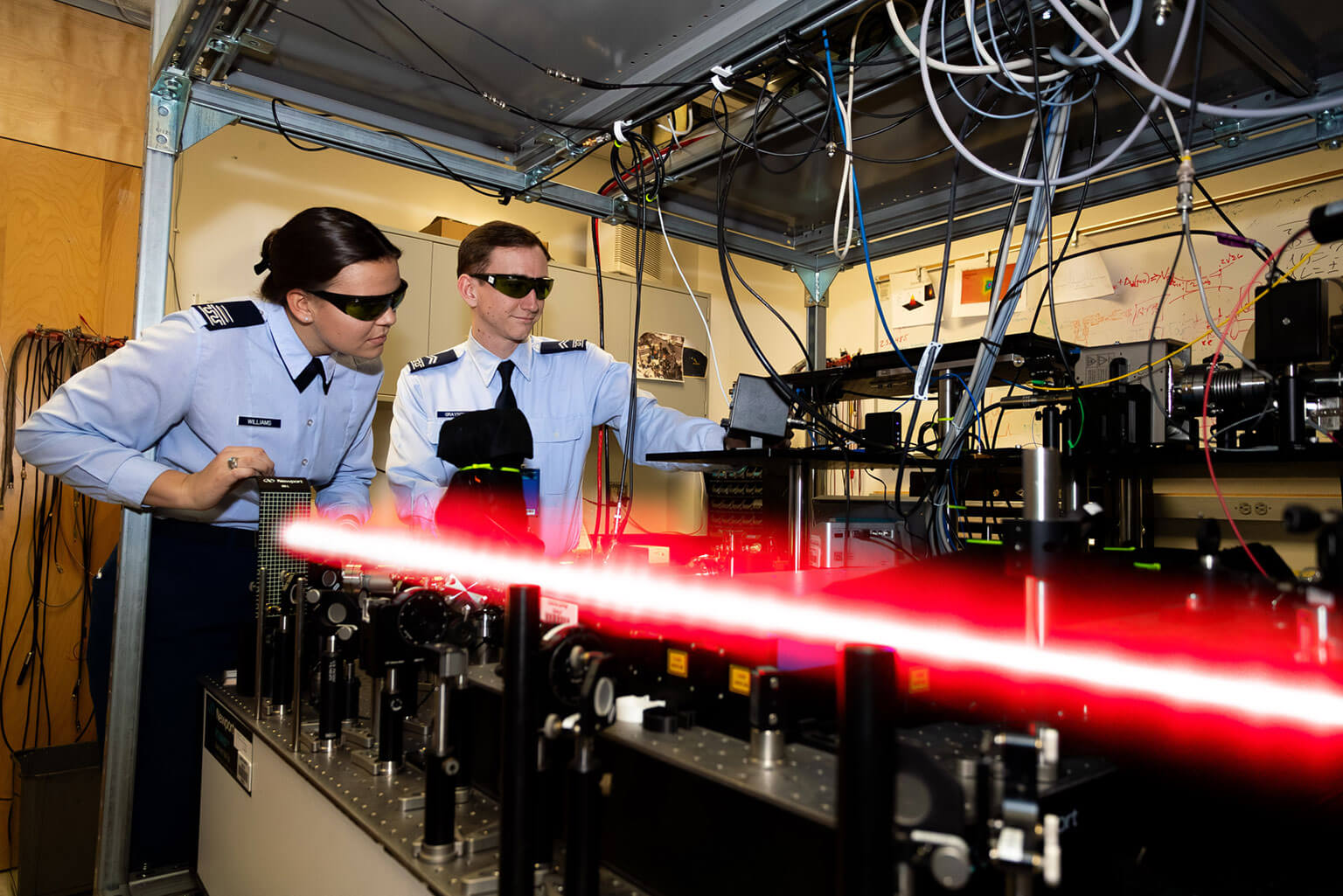
Cadet 1st Class Emma Williams and Cadet 2nd Class Jacob Grayson align an optical track to maximize laser power at the Laser and Optics Research Center, U.S. Air Force Academy, Colo., Jan. 13, 2026. The Quantum Technologies minor integrates physics, computer science and engineering to prepare cadets for future operational and technical leadership roles. (U.S. Air Force photo by Ray Bahner)
By SSgt Michael Ward
U.S. Air Force Academy Strategic Communications
U.S. AIR FORCE ACADEMY, Colo. – Quantum information science is a new field at the intersection of physics, computing and engineering, rapidly shaping the future of warfare, communication and intelligence. The Quantum Technologies minor prepares cadets to lead in this emerging domain, ensuring the Air Force and Space Force remain on the forefront of technological innovation.
Designed for cadets from any academic major, this interdisciplinary program provides foundational knowledge across quantum computing, sensing, networking and timing. These capabilities will revolutionize the way the Department of War executes missions, manages information and maintains its competitive advantage.
“Quantum technologies will make significant impacts in timing, sensors, communication and computers in the very near future,” said Dr. Monte Anderson, assistant professor of physics and co-developer of the Quantum Technologies minor. “We want to teach fundamentals in a way that’s accessible to students so we can train quantum leaders for the Air Force and Space Force.”
A cross-disciplinary academic foundation
To achieve its mission, the Quantum Technologies minor integrates physics, computer science and engineering into a single program of study. Cadets complete a structured sequence of core coursework, with most courses taken in residence and applied exclusively to the minor.
Core coursework introduces cadets to both theoretical and applied quantum concepts through:
- Foundational physics courses with laboratory experience
- Introductory and applied courses in quantum technologies
- Quantum computing coursework within the computer science curriculum
- An additional track course tailored to each cadet’s academic focus
To promote interdisciplinary learning, the program draws coursework from multiple academic departments.
According to Anderson, the interdisciplinary approach directly supports Air Force and Space Force needs. Quantum technologies will touch every domain, from computer systems to sensors on aircraft and spacecraft, so future leaders must understand the fundamentals to make informed operational decisions.
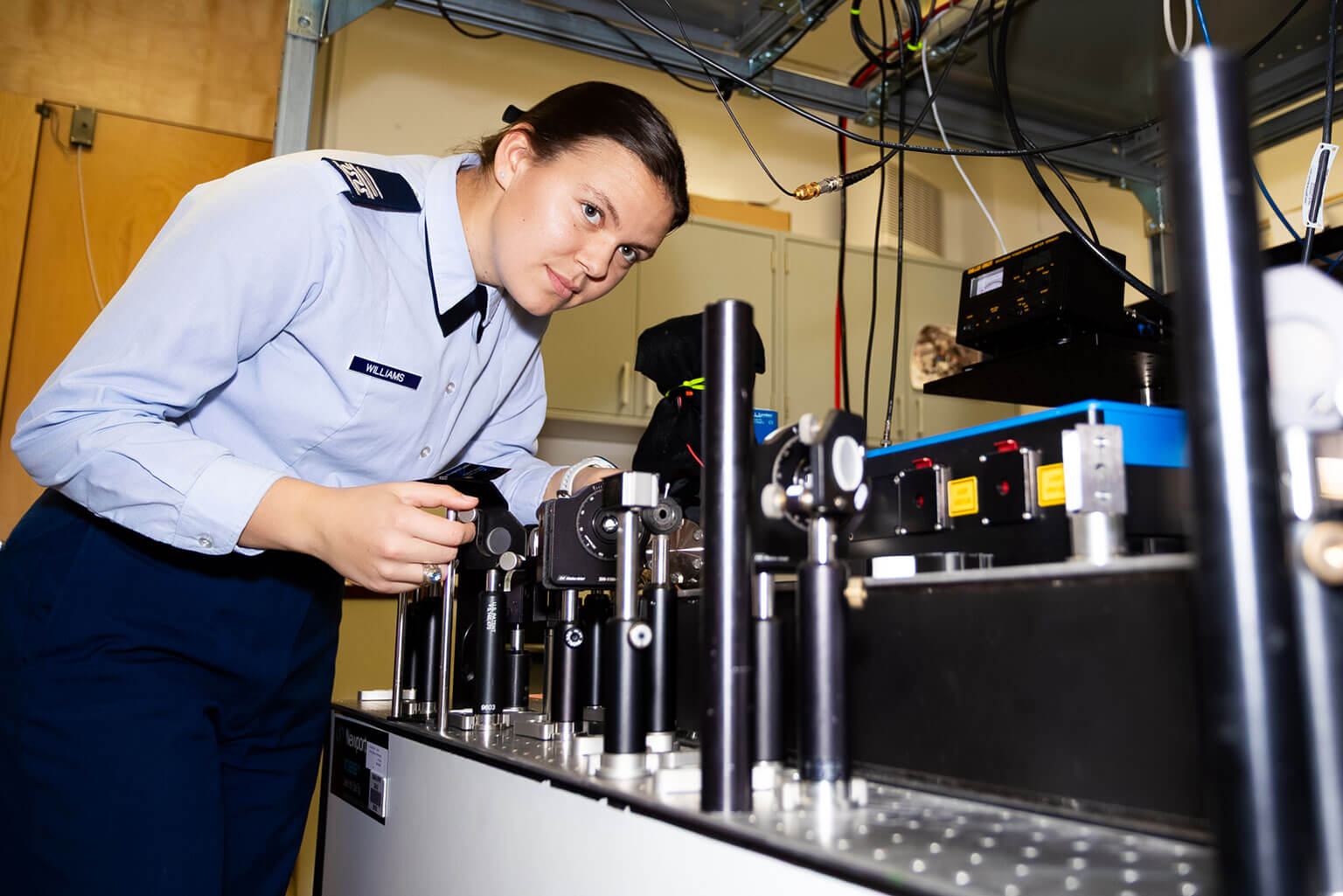
Cadet 1st Class Emma Williams, a Physics major, aligns an optical train at the Laser and Optics Research Center, U.S. Air Force Academy, Colo., Jan. 13, 2026. The Quantum Technologies minor integrates physics, computer science and engineering to prepare cadets for future operational and technical leadership roles. (U.S. Air Force photo by Ray Bahner)
Academic relevance and future applications
The Quantum Technologies minor gives cadets the knowledge and technical foundation needed to lead in quantum research, development and acquisition. Coursework introduces them to quantum sensors, networks and computing architectures expected to shape the next generation of secure communications, advanced navigation and precision timing systems.
Cadets can tailor their studies through focus areas connecting quantum technologies to academic and professional interests, including foundations of quantum mechanics, cyber applications, engineering systems and strategic impact.
For Cadet 1st Class Gracelynn Olinger, a Physics major who has taken multiple quantum courses, the appeal lies in the operational advantage the technology provides.
“Being able to harness quantum technologies like faster computing and secure communications will give us a leg up against our adversaries,” Olinger said. “Understanding even the basics helps future officers make better decisions in an increasingly technical battlespace.”
Anderson emphasized that quantum education challenges cadets to rethink how they approach complex problems.
“Quantum mechanics is counterintuitive and requires deliberate effort to develop intuition,” Anderson said. “By introducing rigorous quantum concepts earlier, cadets are able to engage in meaningful research across science, engineering and strategic disciplines.”
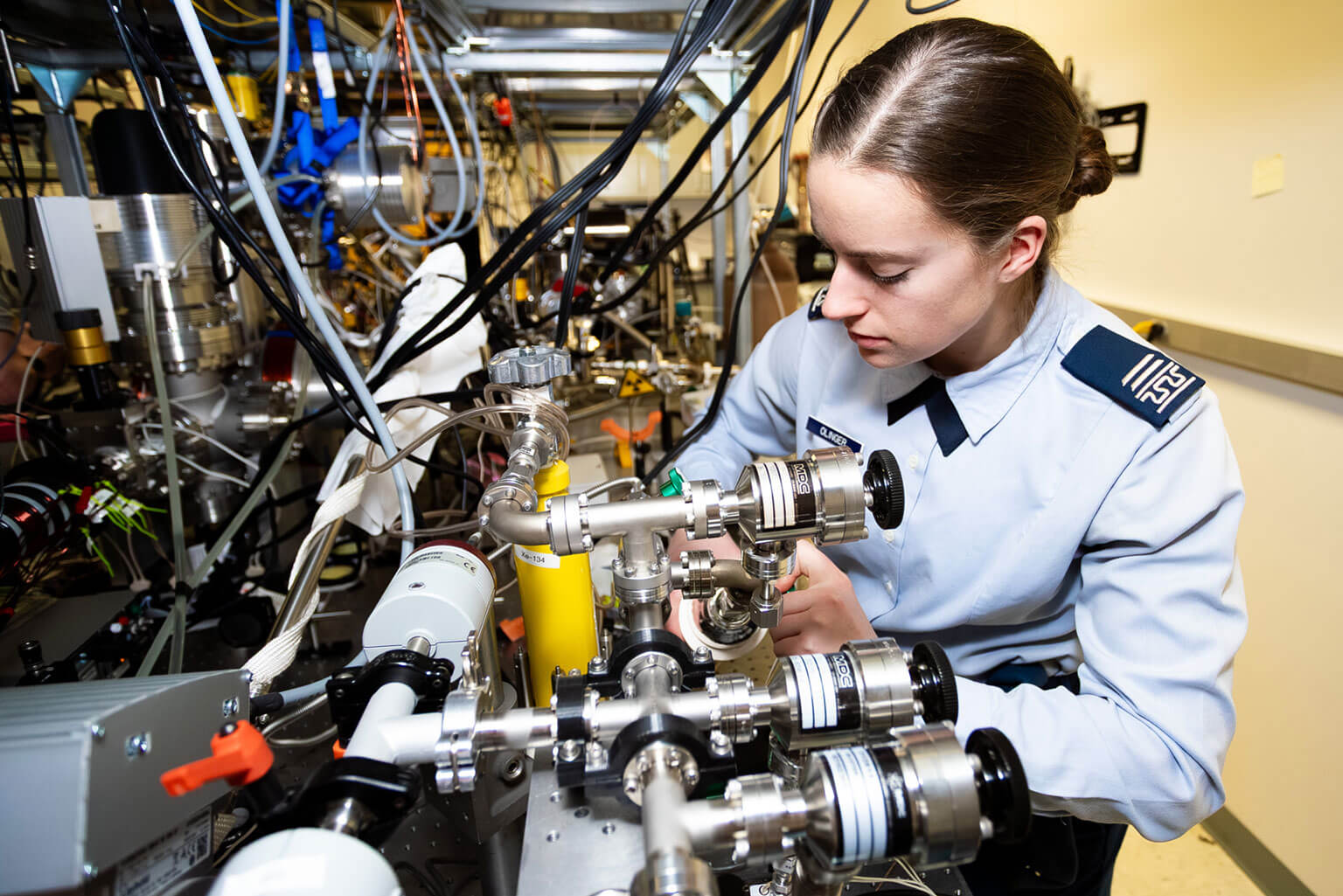
Cadet 1st Class Gracelynn Olinger, a Physics major, condenses the radioactive test sample from the Atom Trap Trace Analysis system in the Lasers and Optics Research Center, U.S. Air Force Academy, Colo., Jan. 13, 2026. The Quantum Technologies minor prepares cadets from all majors to understand emerging quantum capabilities relevant to Air and Space Force missions. (U.S. Air Force photo by Ray Bahner)
Preparing tomorrow’s quantum leaders
Graduates of the Quantum Technologies minor will be among the first generation of quantum-proficient officers ready to guide the Air Force and Space Force into the next technological era. They will be prepared to lead multidisciplinary teams, support acquisition programs and evaluate emerging quantum systems for operational use.
Cadet 1st Class Emma Williams said the program has strengthened her critical thinking and her ability to manage complex challenges.
“This program challenged me to develop critical thinking and decision-making skills that directly translate to leadership,” Williams said. “Understanding quantum technologies now helps prepare me to serve more effectively as an Air Force officer in the future.”
Hands-on research is a key component of the program. Cadets participate in laboratory research and external programs at national laboratories and operational units.
Cadet 2nd Class Jacob Grayson, a Physics major, said the rigor of the minor is what makes it valuable.
“The difficulty is part of what makes this program so rewarding,” Grayson said. “It pushes you to build resilience, find mentorship and gain hands-on experience with cutting-edge technology.”
As the United States builds a quantum-proficient workforce, the Quantum Technologies minor prepares Academy graduates to meet that national mandate, equipping them with both technical understanding and strategic insight.
See more photos of the Quantum Technologies Lab. Learn more about how the Academy is shaping our future officers.
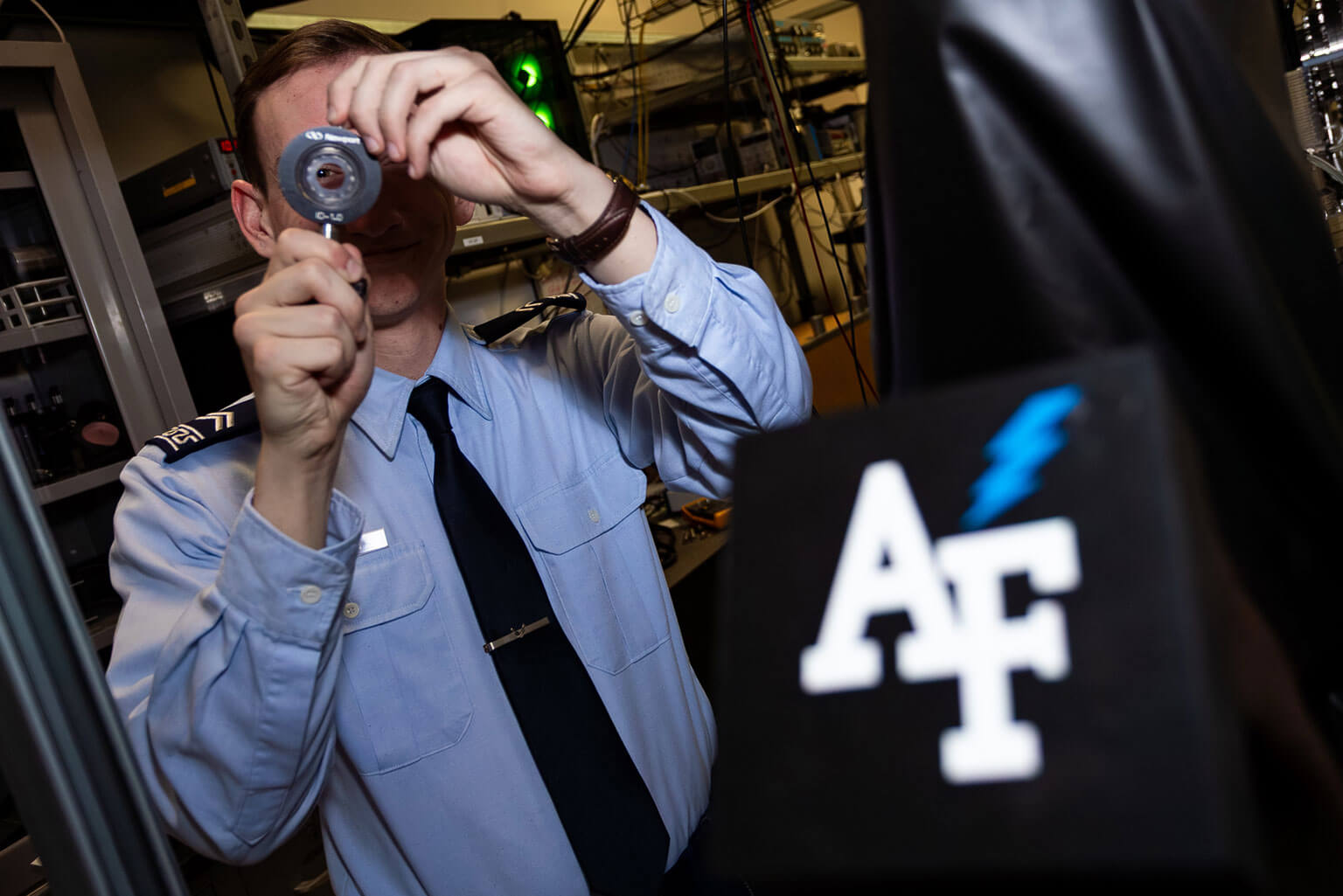
Cadet 2nd Class Jacob Grayson, a Physics major, adjusts an optical device at the U.S. Air Force Academy, Colo., Jan. 13, 2026. The Quantum Technologies minor provides cadets hands on experience with emerging quantum computing, sensing, and communications technologies. (U.S. Air Force photo by Ray Bahner)