Cadet Military Education Training streamlines four-class development

Cadet 2nd Class Sophie Kent, left, mentors Cadet 3rd Class Charles Arquette in the Multi-Domain Laboratory, at the U.S. Air Force Academy, Colo., Jan. 14, 2026. The Cadet Military Education Training Plan requires cadets to mentor underclassmen as part of their leadership development. (U.S. Air Force photo by Ray Bahner)
By Harry Lundy
U.S. Air Force Academy Strategic Communications
U.S. AIR FORCE ACADEMY, Colo. – At the U.S. Air Force Academy, cadets progress through a structured four-class system throughout their 47-month journey. This development is supported by updated training under the Cadet Military Education and Training Plan. Permanent party and cadets say the approach provides a clear and progressive roadmap for developing Air Force and Space Force officers by emphasizing responsibility, mentorship and the purpose behind their training.

Cadet 1st Class Parker Fitzgerald reviews an exercise scenario in the Multi-Domain Laboratory, at the U.S. Air Force Academy, Colo., Jan. 14, 2026. The Cadet Military Education Training Plan requires first-class cadets to lead units in executing training missions. (U.S. Air Force photo by Ray Bahner)
Leadership development across the four-class system
The four-class system allows cadets to develop their skills each year. During their fourth-class year, cadets are introduced to the profession of arms through Basic Cadet Training. They serve as followers, focused on learning and adapting to military life.
In their third-class year, cadets develop interpersonal leadership skills and supervise fourth-class cadets.
As second-class cadets, they serve as cadre for BCT, instruct airmanship programs and become proficient in drill and ceremony. They act as team leaders responsible for the two classes below them.
As first-class cadets, they serve as unit leaders and take on command roles within Cadet Wing leadership.
Cadet 1st Class Parker Fitzgerald serves as the chief of staff for Cadet Group Two. He is responsible for overseeing daily operations and ensuring the implementation of the group commander’s policies.
“The cadet four-class system really gives you an understanding of expectations for each year you are here,” said Fitzgerald, a management major. “It allows us to hold each other accountable, regardless of class.”
As cadets take on more responsibility each year, they build on previous experience, refining their military skills in preparation for commissioning.
“The four-class system is great,” Fitzgerald said. “You watch and learn from upperclassmen, and as you advance, you become a better mentor to underclassmen because you’ve shared the same experience.”
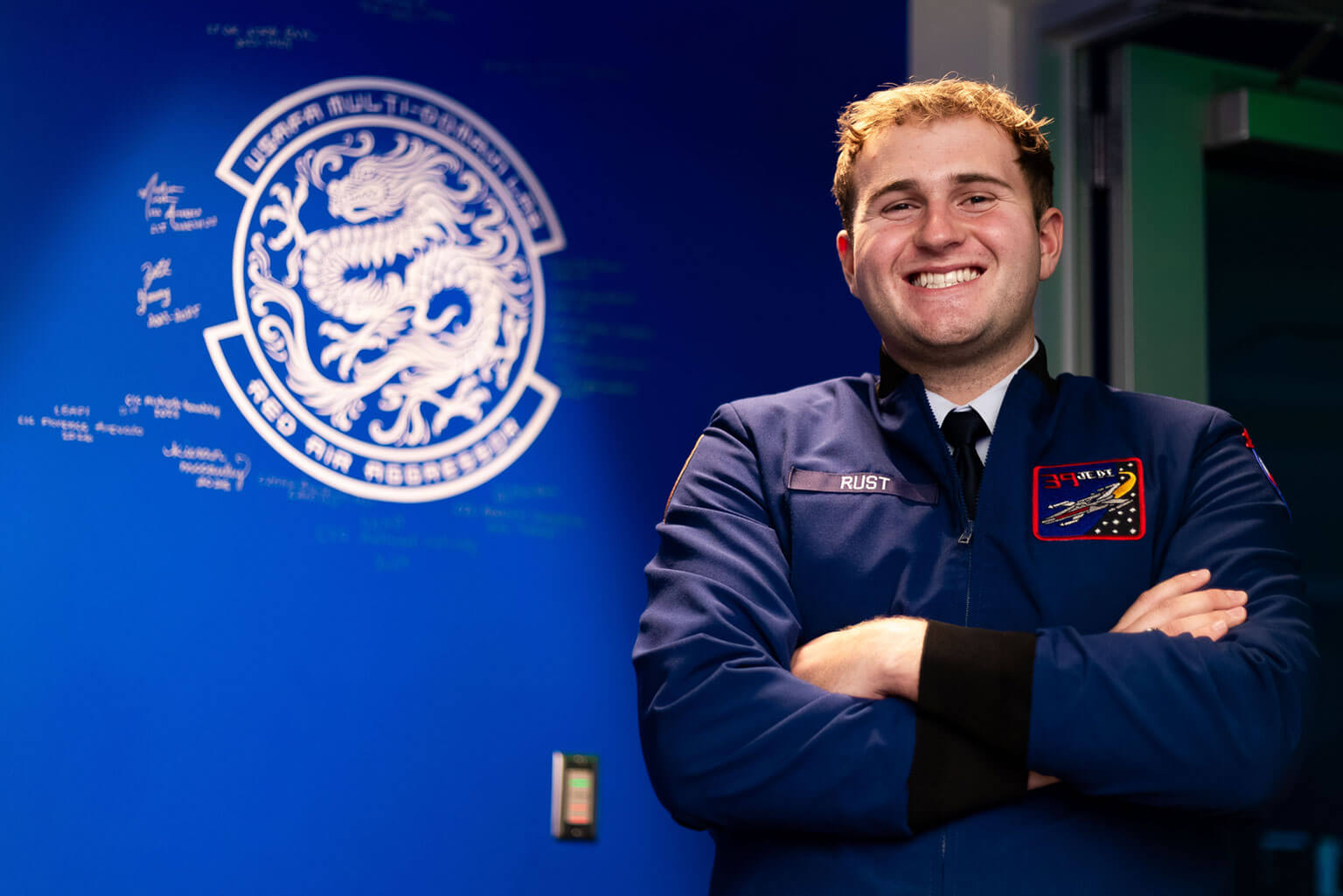
Cadet 1st Class John Rust is pictured in Multi-Domain Laboratory, at the U.S. Air Force Academy, Colo., Jan. 14, 2026. Rust said the Cadet Military Education Training Plan has prepared him for his Air Force career. (U.S. Air Force photo by Ray Bahner)
Daily routines strengthen discipline and accountability
In addition to integrating military training into academics, athletics, airmanship and character development, daily tasks reinforce discipline and standards.
Cadet 1st Class John Rust serves as the wing information technology lead and is responsible for supervising IT missions, working to resolve technology issues and coordinating updates in the Cadet Wing.
“We are responsible for setting the standards for the wing,” said Rust, an electrical and computer engineering major. “At the same time, we mentor second-class cadets to be successful in our positions after we graduate.”
Rust, who will enter undergraduate pilot training after graduation, said the CMETP has prepared him for that next step.
During his time at the Academy, Rust completed all three airmanship programs, received coaching from instructors in the powered flight program and learned directly from upperclassmen.
Jim George, course director and instructor pilot for powered flight training, said he encourages cadets to master the fundamentals now so they can handle greater responsibilities later.
“Today, the mistakes they make cost nothing,” George said. “The habits they build here are the same ones they will carry into the cockpit and into command.”
“This has been so helpful,” Rust said. “I will take the value of mentorship with me to UPT as I work toward becoming a pilot and later share that with new officers.”
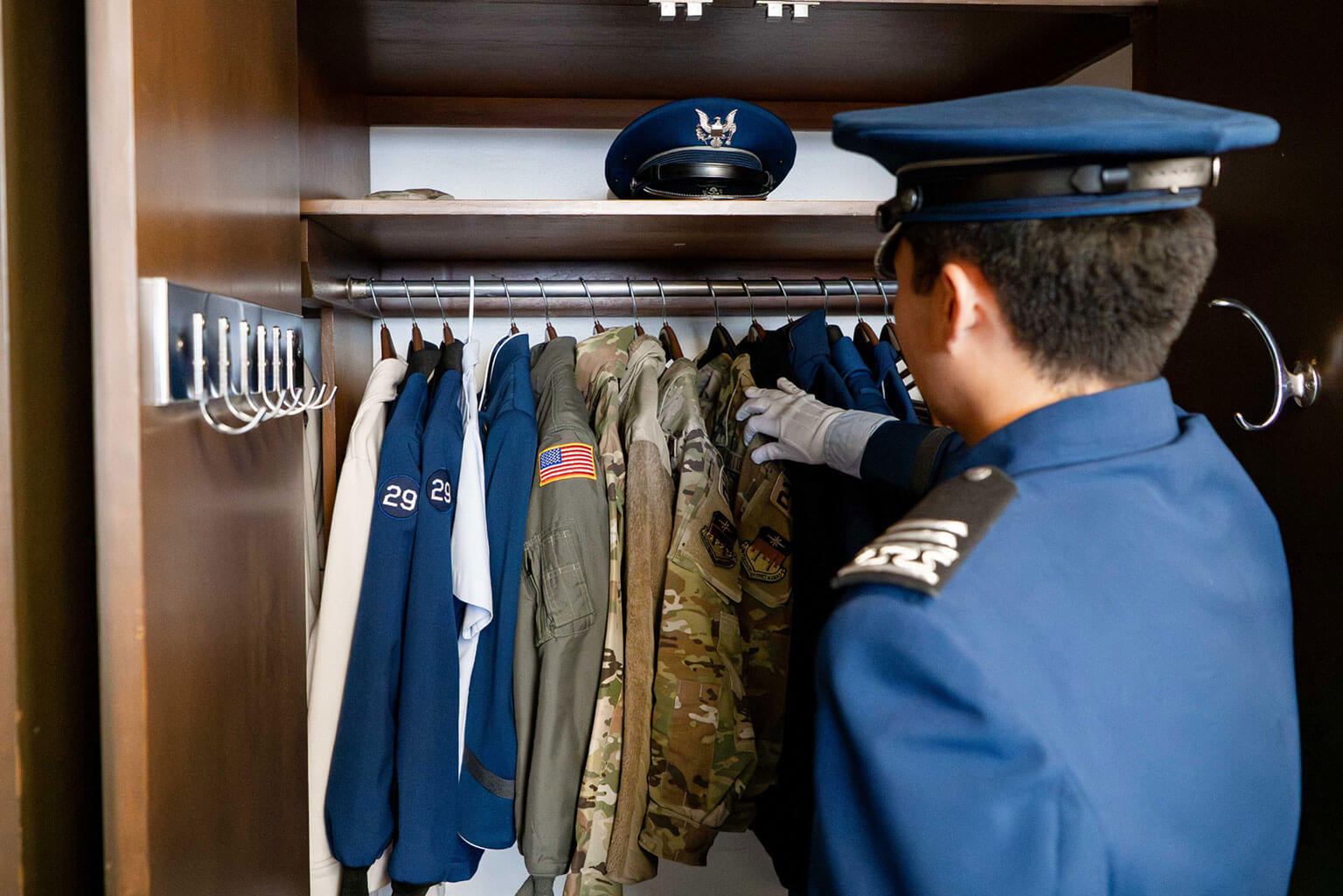
A cadet performs a Saturday A.M. Inspection inside Vandenburg Hall at the U.S. Air Force Academy, Colo., March 3, 2026. These assessments reinforce the discipline and responsibility essential to leadership roles. (U.S. Air Force photo by Dylan Smith)
Learning leadership through responsibility
As a second-class cadet, Sophie Kent is the senior enlisted leader for Cadet Group Two. She ensures accountability standards are maintained for approximately 1,000 cadets and leads them by following orders and interpreting the commander’s intent established by first-class cadet leaders.
At this level, cadets receive objectives from upperclassmen and must develop and execute a plan to achieve them—often in dynamic environments.
Kent’s responsibilities range from developing ideas for training underclassmen to conducting inspections to managing team performance during field exercises, classroom simulations and SAMI activities. Each task requires balancing accountability, initiative and adaptability while ensuring her teams meet standards and complete their missions.
“That can be easier said than done,” Kent said. “Things do not always work out, and you must pivot. I value the firsthand trial-and-error experience here. It prepares me to lead throughout my career as an officer.”
Cadets develop leadership skills through a combination of classroom instruction and hands-on training, according to Chad Watts, the Cadet Wing’s lead curriculum director.
“The combination of education, training and experiences develops the leadership that is needed for commissioning,” Watts said. “Cadets will be leaders of character for the Airmen and NCOs under their responsibility.”
Kent added that mentoring underclassmen builds patience, strengthens communication and sharpens decision-making. She will carry forward these qualities into operational assignments.
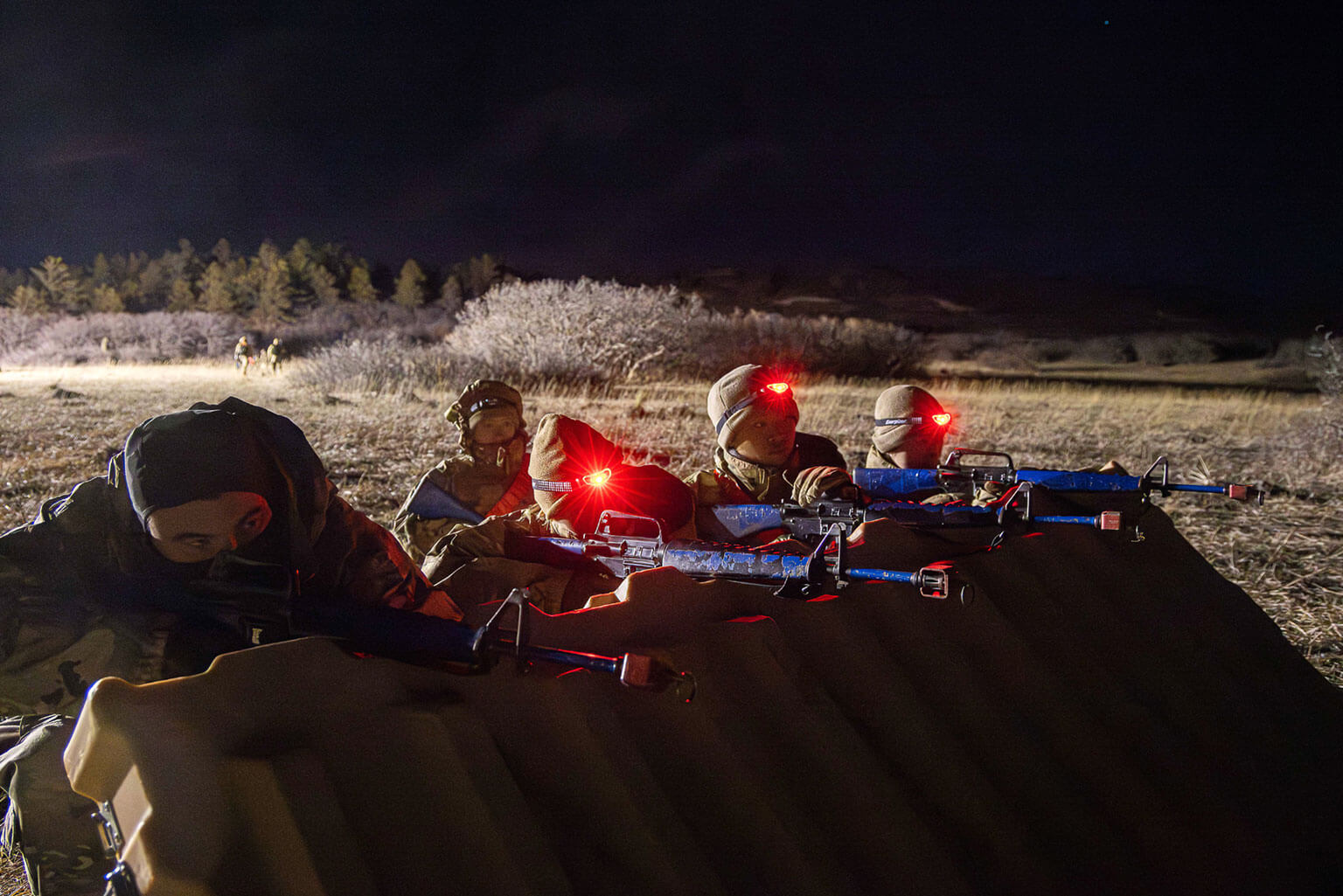
Cadets participate in the Spring Culminating Exercise (CULEX) at the U.S. Air Force Academy, Colo., March 6, 2025. Warfighter training is a core component of the Cadet Military Education Training Plan, reinforcing cadets’ ability to operate in realistic training environments. (U.S. Air Force photo by Trevor Cokley)
New plan streamlines cadet development
The CMETP consolidates multiple military development plans and an accountability list into a single document for cadet military education. It establishes a progressive, military-focused program that spans a cadet’s development.
“We have a much cleaner document,” said Watts. “It makes it easier for cadets and permanent party to see what must be accomplished each semester.”
By working closely with mission units, Watts said his curriculum development team gained a fresh insight into cadet challenges. They focused on helping cadets understand why they perform tasks, not just how to complete them.
“Once you can get somebody to understand the ‘why’ of what you’re doing,” Watts said, “the outcome is always going to be 100 times better than what you thought it was going to be to begin with.”
Learn more about cadet military education. See more photos of cadets Fitzgerald, Kent and Rust on Flickr.