The breakdown: Class of 2030 in-processing stats
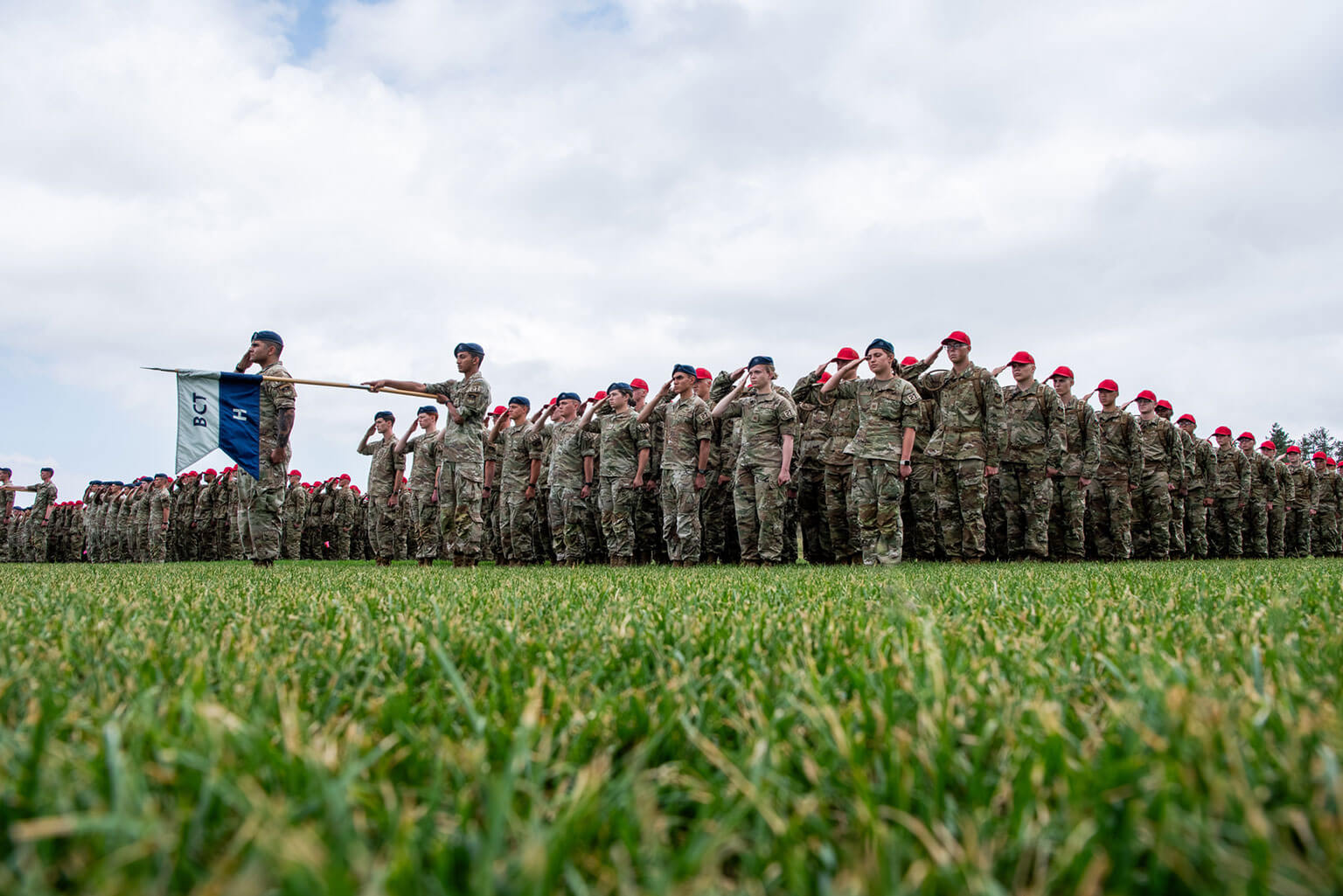
Class of 2030 basic cadets salute during their swearing-in ceremony at the U.S. Air Force Academy, Colo., June 25, 2026. Class of 2030 in-processing stats show the class includes basic cadets from every state, the U.S. territories of Guam and Puerto Rico, and international partner nations. (U.S. Air Force photo by Trevor Cokley)
By Tali Burress
U.S. Air Force Academy Strategic Communications
U.S. AIR FORCE ACADEMY, Colo. – More than 1,120 appointees arrived at the U.S. Air Force Academy on June 24 to begin Basic Cadet Training, taking the first step in their journey toward becoming Air Force and Space Force officers.
The Class of 2030 includes students, prior-enlisted servicemembers and other appointees from across the nation and around the world. While the numbers highlight the class’s achievements and backgrounds, Basic Cadet Training is designed to transform those accomplishments into the qualities required of future military leaders.
Master Sgt. Kayla Welch, Master Military Training Instructor, said the purpose of Basic Cadet Training extends far beyond physical fitness and military instruction.
“Basic Cadet Training is intentionally demanding,” Welch said. “It is designed to build the foundation that everything else at the Academy rests on: discipline, teamwork, resilience and a sense of obligation to something larger than yourself. What these young men and women are beginning today is hard, and that’s the point.”
Cadet 1st Class Sarah Price, the Cadet in Charge of Basic Cadet Training, said the incoming class has already begun to distinguish itself.
“On day one, the Class of 2030 distinguished themselves through their empathy for one another, ownership of their actions, and remarkable willingness to learn,” Price said. “What has stood out most, however, is how quickly they have begun forming meaningful bonds. Their class motto is ‘Rise to Glory,’ and they have embraced the idea that they will rise, not as individuals, but together.”
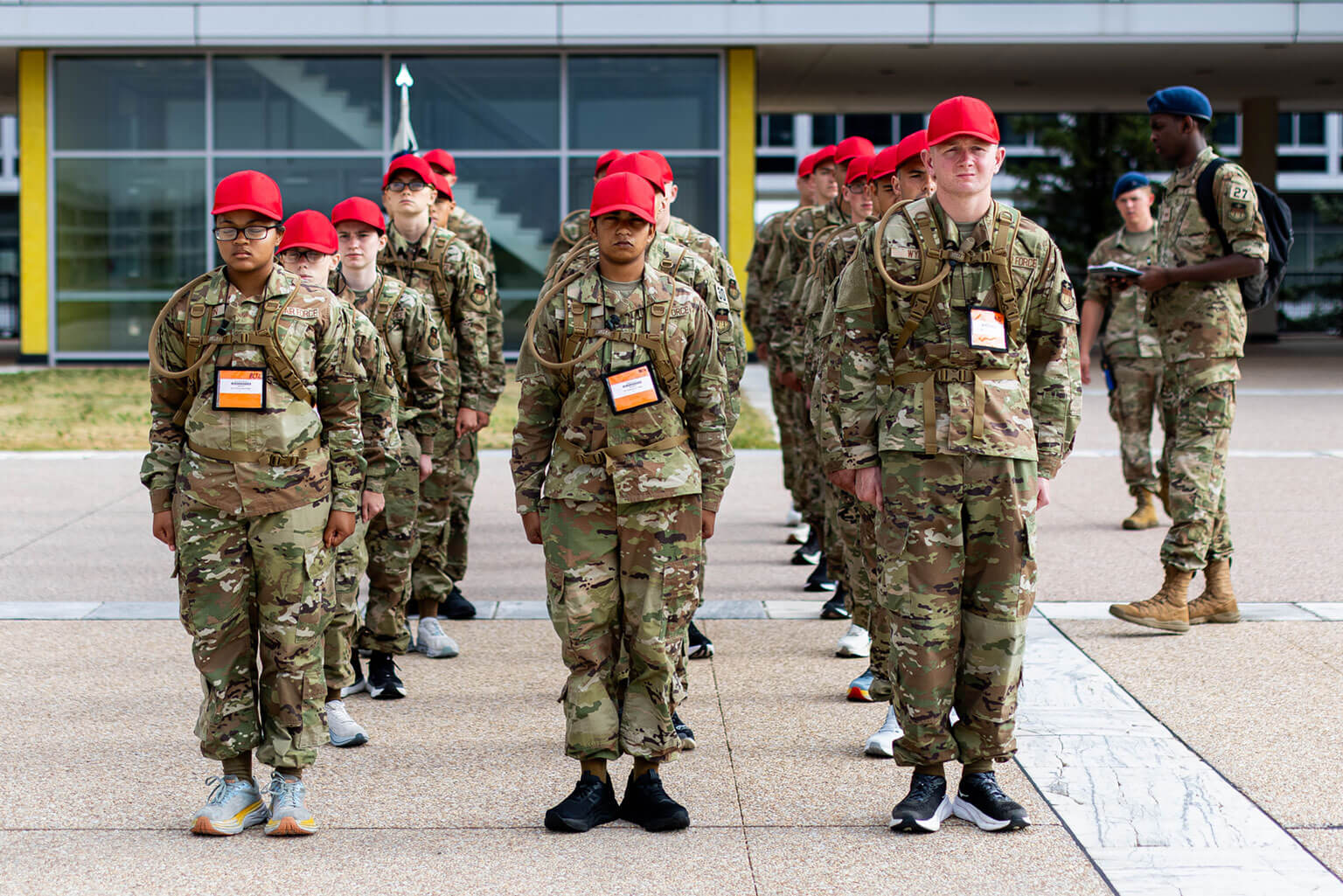
Class of 2030 basic cadets stand at attention during drill instruction at the U.S. Air Force Academy, Colo., June 26, 2026. Class of 2030 in-processing stats show 7.4% of the incoming class are children of service academy graduates. (U.S. Air Force photo by Trevor Cokley)
Building the Class of 2030
The statistics provide an overview of the Class of 2030 based on data from the Academy’s Admissions database and COMPASS.
Members of the Class of 2030 were admitted from every state, the U.S. territories of Guam and Puerto Rico, as well as Germany, Italy, South Korea, and the U.S. Virgin Islands. Women make up 24.1% of the class.
High school academic excellence
The incoming class enters the Academy with strong academic credentials. That preparation will be put to the test through a demanding curriculum that develops the critical thinking and technical expertise required of future Air Force and Space Force officers.
The average high school GPA was 3.89, and 52.8% of the class graduated in the top 10% of their high school class, 82.5% in the top 25% and 97.6% in the top 50%. Nearly half of the class, 47%, were members of the National Honor Society.
Leadership and high school activities
Many members of the Class of 2030 participated in varsity athletics before arriving at the Academy. Those experiences required teamwork, discipline and perseverance, qualities that are emphasized throughout Basic Cadet Training. A total of 97% of the class participated in varsity athletics, and 87% earned an athletic letter in one or more sports.
Leadership experiences extended beyond athletics. A total of 29.2% participated in student government, 19% participated in band or orchestra, 16% attended Boys State or Girls State or served as national representatives, 16% participated in JROTC, 9% participated in Boy Scouts or Girl Scouts, and 6% participated in Civil Air Patrol.
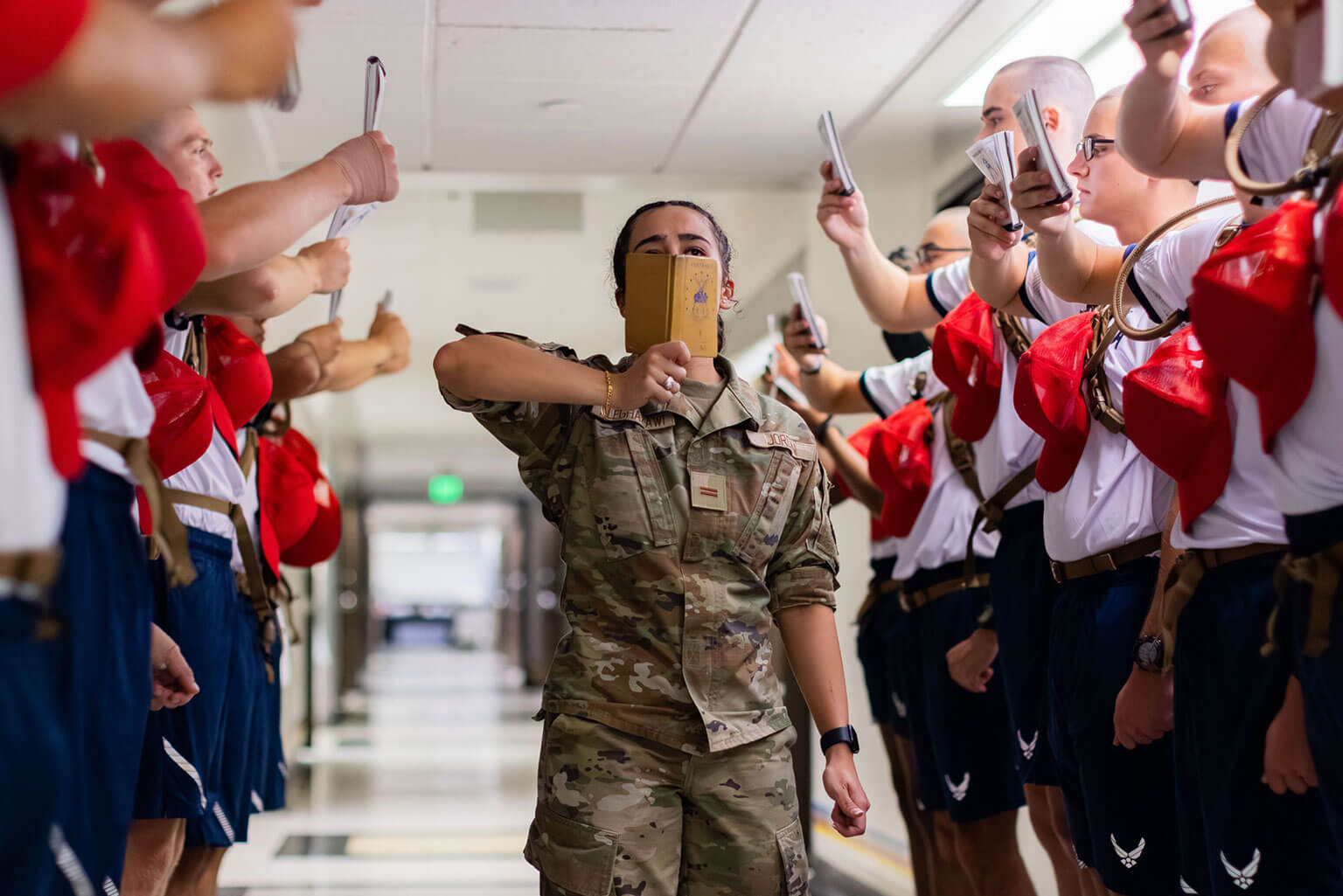
Cadet First Class Banda Aleghazawi, an international cadet from Jordan and member of the cadet cadre, provides instruction as Class of 2030 basic cadets read Contrails at the U.S. Air Force Academy, Colo., June 26, 2026. Class of 2030 in-processing stats show 52.8% of the class graduated in the top 10% of their high school class. (U.S. Air Force photo by Trevor Cokley)
Different paths, one purpose
Although they arrived with different experiences and backgrounds, every member of the Class of 2030 begins Basic Cadet Training together. Over the next six weeks, they will train as members of the same class.
The Class of 2030 includes 85 children of service academy graduates, representing 7.4% of the class. Of those, 68 have a parent who graduated from the U.S. Air Force Academy (USAFA), 17 have a parent who graduated from the U.S. Military Academy (USMA), nine have a parent who graduated from the U.S. Naval Academy, and one has a parent who graduated from the U.S. Merchant Marine Academy. Eight cadets had both parents attend USAFA, while two had both parents attend USMA.
Among the incoming class, 15.2% basic cadets graduated from the U.S. Air Force Academy Preparatory School. The Prep School provides select cadet candidates with an opportunity to strengthen their academic, military and physical preparation before earning an appointment to the Academy.
Price said one of the defining characteristics of the incoming class is the range of experiences each basic cadet brings to the Academy.
“Basic cadets arrive at the Academy from every imaginable background,” Price said. “Whether the basic cadets are intercollegiate athletes, JROTC or CAP cadets, preparatory graduates, or prior enlisted personnel [4.6%], they are on the same path now. It is our mission to take this group of highly accomplished individuals and turn them into a team, and even a family.”
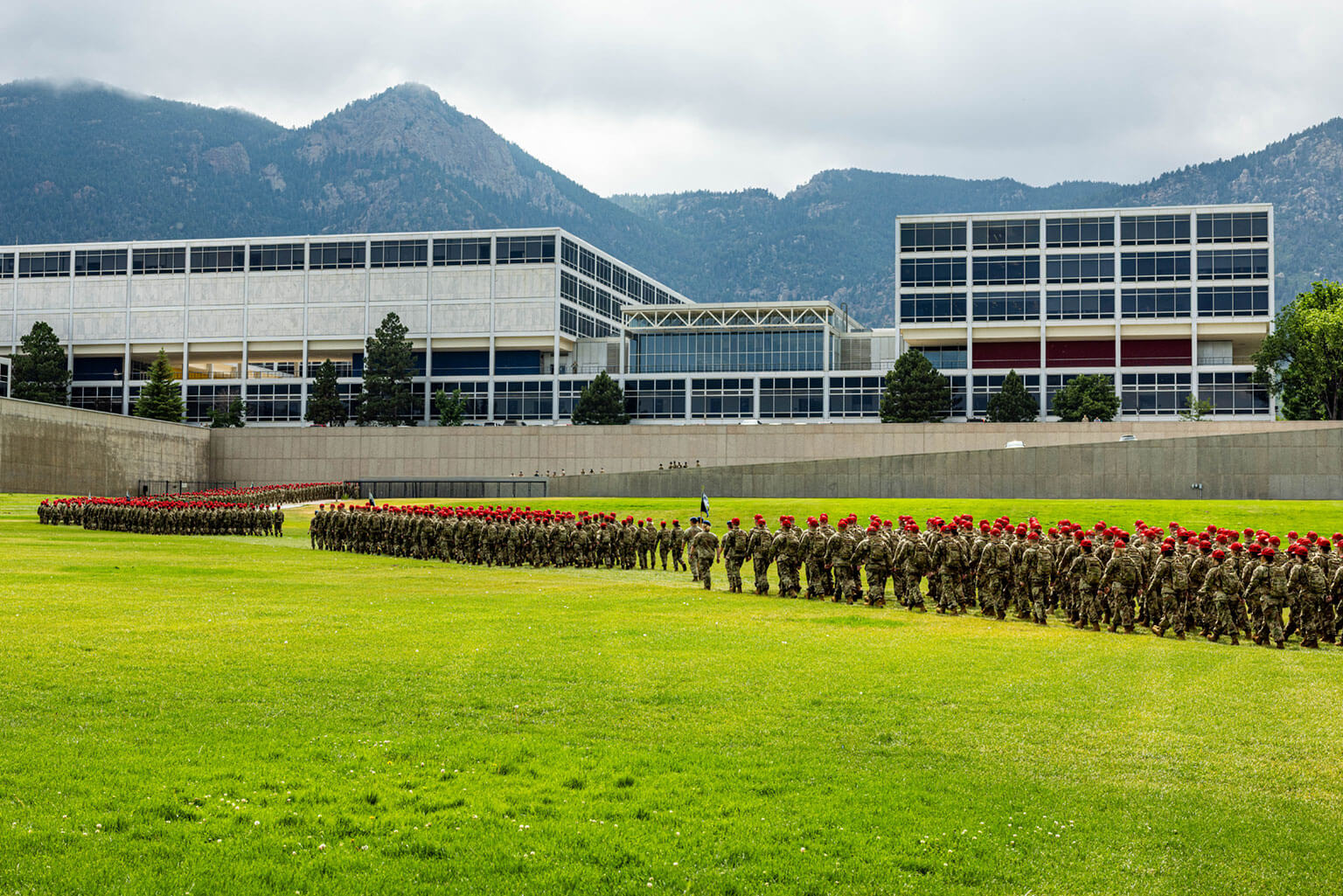
Basic cadets march by squadron from Stillman Field back to the Cadet Area following the swearing-in ceremony at the U.S. Air Force Academy, Colo., June 25, 2026. Class of 2030 in-processing stats show 97% of the class participated in varsity athletics and 87% earned an athletic letter in one or more sports. (U.S. Air Force photo by Johnathan Suni)
From individuals to one team
Throughout Basic Cadet Training, cadre establish a common foundation built on discipline, accountability and attention to detail while preparing basics for the responsibilities of military leadership.
Welch said the upperclass cadets leading Basic Cadet Training understand the challenges facing the newest members of the Cadet Wing because they faced the same ones just a few years ago.
“The upperclassmen running BCT today were basic cadets themselves not long ago,” Welch said. “They know what this experience demands, and they take that responsibility seriously. They are not here to break people. They are here to build them.”
Price said the transformation also depends on the relationships basics built with one another throughout training.
“No one succeeds at the Academy alone,” said Price. “The people standing next to them during Basic Cadet Training will become their classmates, their wingmen, and, for many, lifelong friends. Years from now, they may even serve together around the world. It is up to them to recognize their strengths and weaknesses and work together to rise to the call of our nation.”
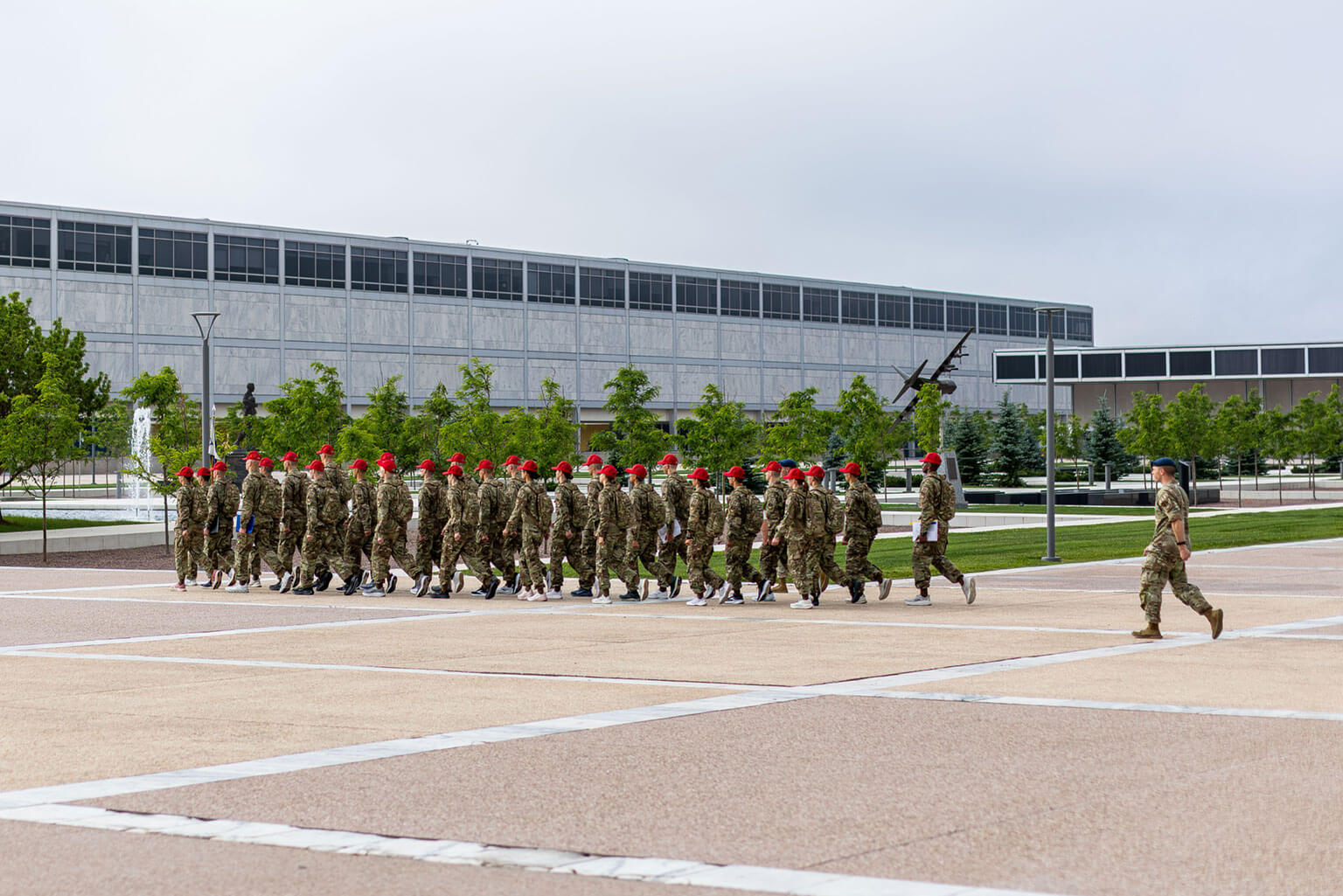
Class of 2030 basic cadets participate in drill instruction on the Terrazzo at the U.S. Air Force Academy, Colo., June 26, 2026. Class of 2030 in-processing stats show nearly half of the incoming class, 47%, were members of the National Honor Society. (U.S. Air Force photo by Trevor Cokley)
The journey ahead
Over the next weeks, the Class of 2030 will learn military customs and courtesies, develop physical and mental resilience, and prepare for life as members of the Cadet Wing. Following Basic Cadet Training, they will be formally welcomed into the Cadet Wing as fourth-class cadets during the Acceptance Day Parade.
Welch said the Academy’s mission extends well beyond commissioning second lieutenants.
“The U.S. Air Force Academy doesn’t just produce officers,” Welch said. “It produces leaders of character prepared to serve in the most demanding environments our Air Force and Space Force will face.”
See photos of the Class of 2030 In-processing Day and Swearing-in Ceremony.