United States Air Force Academy

Go to home page
Supporting Our

Cyber Mission

Advanced computer and software systems

Mission-Critical Cyber

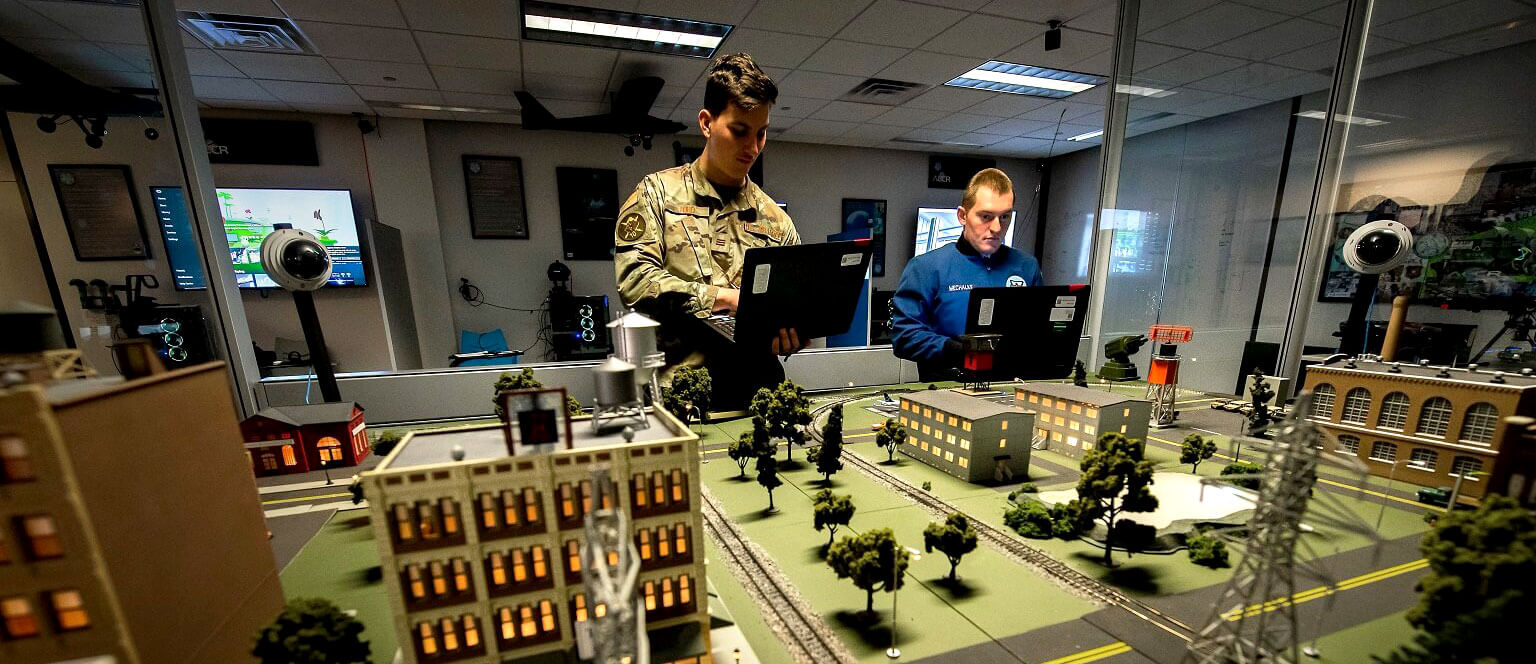
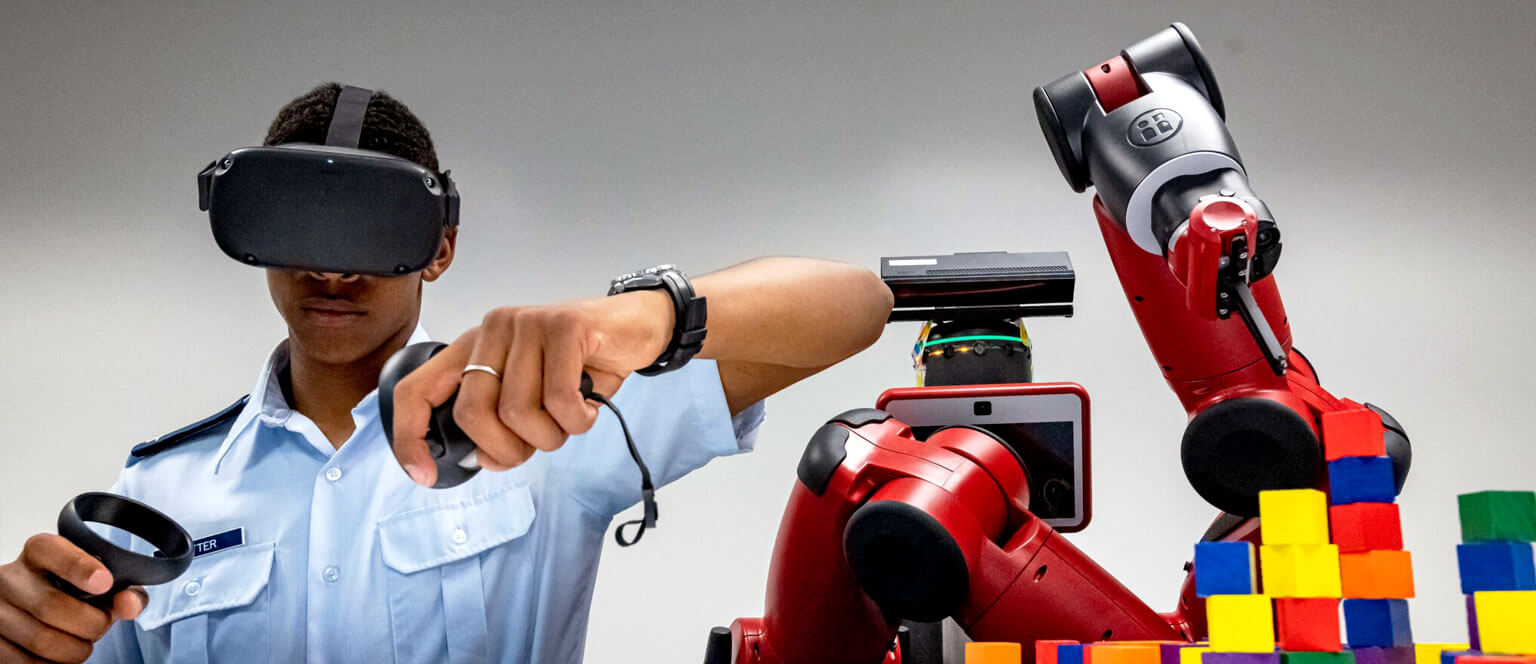
Cadets simulating a cyber scenario.

The Air Force and Space Force depend heavily on advanced computer and software systems, making their protection essential to mission success. As technology evolves, the need for optimized and hardened systems grows increasingly critical in congested and contested operational environments.

Cyber operations support a wide range of weapon systems, training platforms and intelligence functions. From computerized, satellite and airborne communications, these irreplaceable assets play a critical role in mission planning and the effectiveness of cyberspace operations.

Every Air and Space Force mission depends on countless computers. But technology is only as strong as the software behind it and the people who use it. Cyber professionals write, analyze, design and develop programs that power our warfighting capabilities. From maintenance tracking systems to tools that organize and display intelligence data, they ensure the software supporting our missions is reliable, secure and effective.


At the U.S. Air Force Academy, we train and educate leaders who will shape the future of modern warfare and outpace our adversaries on a rapidly changing battlefield.

In everything we do, the Academy is fueled by innovation, accelerating change across air, space, cyber and beyond. Cadets are problem solvers who develop inventive solutions to real operational Air and Space Force challenges. They are tinkerers and troubleshooters who put critical thinking into practice through the Nation’s top-funded undergraduate research program.

These efforts will pay dividends in the conflicts of the future. By strengthening technological advancement and embracing rapid innovation, the Academy helps safeguard our national security and prepare leaders for the demands of tomorrow.

High Demand Skills

Computer Science

Major

The Computer Science major focuses on computer programming, software engineering and computing theory. The skills and abilities taught are in high demand and may be applied in all U.S. Air Force career fields. Computer Science majors who become cyber operations officers conduct offensive and defensive cyber operations; establish and operate combat communications capabilities; operate, maintain and defend computer and communications networks; provide command and control capabilities; and contribute to the development and acquisition of new systems.

Explore Computer Science

Computer Science

Establish, Operate and Defend

Cyber Science

Major

The Cyber Science major focuses on computer programming, embedded systems, networks, telecommunications, computer systems, computer investigations and cyber operations. Cyber Science majors who become pilots have greater insight into their aircraft and weapons systems which are highly dependent on software systems. They will have an in-depth knowledge of how cyberspace risks may impact mission capabilities. Previous programming experience is neither assumed nor required to succeed in this program.

Explore Cyber Science

Cyber Science

Information Dominance

Data Science

Major

Data Science focuses on planning for acquisition, management, analysis of, and inference from data. Government and industry alike are experiencing a massive growth in the volume, velocity, and variety of available data. As a result, a competitive advantage is available to those with Data Science knowledge, skills, and abilities.

Explore Data Science

Data Science

A Systems View

Electrical and Computer Engineering

Major
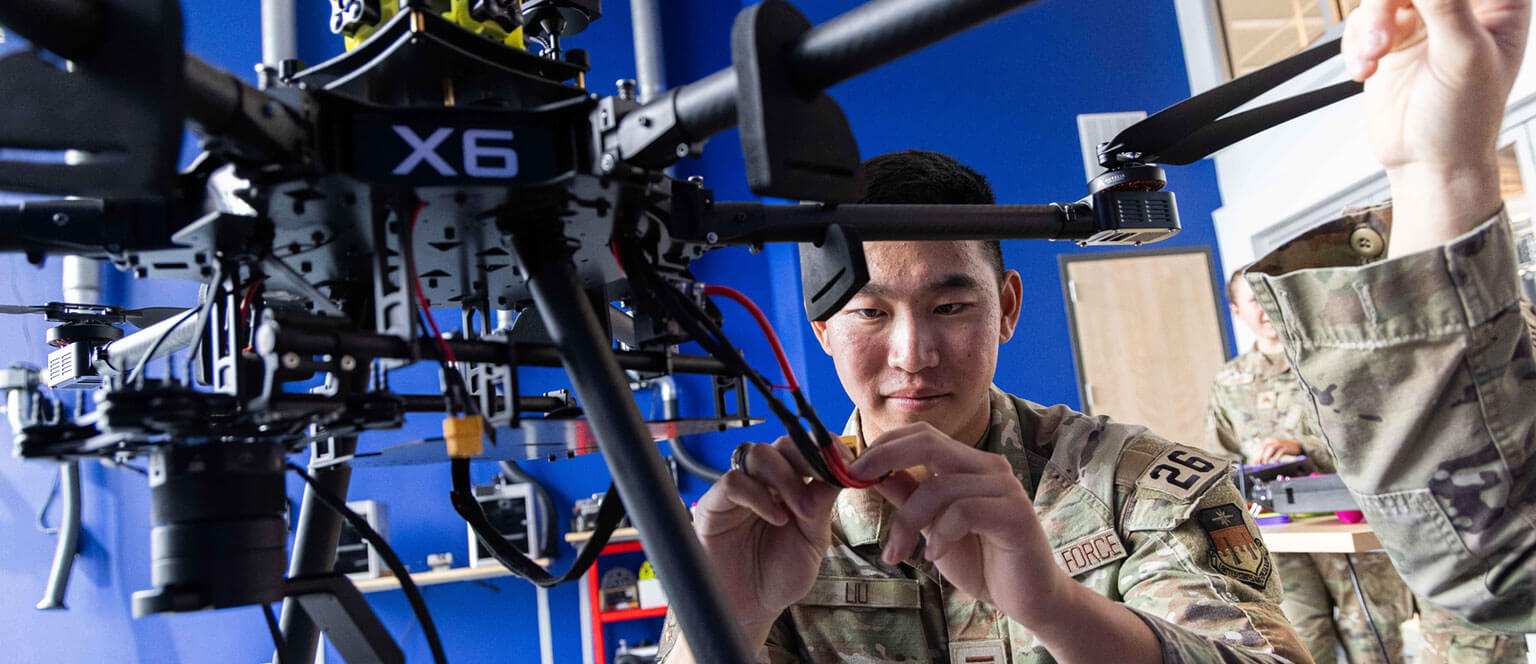
The victor on the 21st century battlefield will likely be the side that can best bend the electromagnetic spectrum to their will. Radar, communication, stealth, “smart” weapons, autonomous aircraft flown by artificial intelligence (AI), fly-by-wire manned aircraft, space-based sensors, offensive and defensive cyber operations, and more all have their roots in electrical engineering. At the U.S. Air Force Academy, the Electrical and Computer Engineering (ECE) major prepares cadets to fulfill their potential as officers and technical leaders by giving them a deep understanding of the principles of modern electronic systems that they can leverage as operators on the air/space/cyber battlefield or engineers developing and testing the sensors, weapons, and capabilities of tomorrow.

Explore Electrical and Computer Engineering

Electrical and Computer Engineering

Master complexity

Systems Engineering

Major

Systems Engineering crosses many disciplinary boundaries to create a holistic, integrative approach to enable the successful realization of complex engineered systems used by our U.S. Air Force in defense of our nation. The Systems Engineer implements systems principles and concepts, as well as scientific, technological and management methods.

Explore Systems Engineering

Systems Engineering

Cluster your computing

High Performance Computing

Minor

High Performance Computing is becoming increasingly important in many aspects of our lives. For example, simulations of multiscale, multiphysics problems such as modeling and simulation of hypersonic and space vehicles or modeling of multiple earth system components to increase fidelity and skill of weather and climate predictions require tremendous computational resources.

Explore High Performance Computing

High Performance Computing

The Physics of Sub-Atomic Particles

Quantum Technologies

Minor

The Biology Major will prepare cadets to become Air Force officers skilled at critical thinking, grounded in the natural world, open to alternative perspectives, and capable of identifying solutions in complex environments.

Explore Biology

Quantum Technologies