
- This event has passed.
Homeschool Program: Exploring Mars from Robots to Humans on Wed, Apr 22 @ 10:30 a.m.
Homeschool Program: Exploring Mars from Robots to Humans on Wed, Apr 22 @ 10:30 a.m.
Wednesday, April 22 from 10:30 a.m. – 12:00 p.m.
Mars – the next planet out from the Sun in our solar system, and humanity’s next target for human exploration after returning to the Moon.
Join Dr. Dan Polsgrove, Astronomer, Planetarium educator and former Astronomy professor here at the Academy, for a detailed discussion of Martian exploration – which is a compendium of science, engineering, robotics, and human ingenuity. From telescopes on Earth and in space to orbiters, landers, robotic rovers and NASA’s future plans to get humans out to Mars – the story of the study of red planet is one of the most scientifically ambitious programs humans have ever undertaken – and it’s taught us tons!
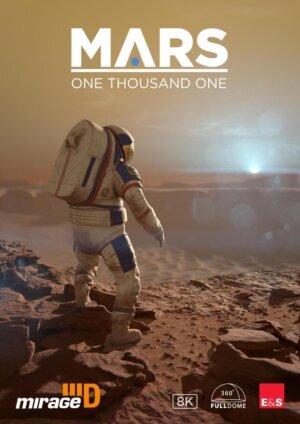
In addition to the Live portion, this program will also include the film, Mars 1001. One of our newest films in the planetarium, Mars 1001 detailed the fictitious first human voyage to the red planet. Encompassing science lessons galore, from engineering, spacecraft, and orbits to plants, astrobiology and psychology – Mars 1001 is a wonderful look at what our first human mission to Mars could look like.
With our limited seating, please only reserve seats if you know you will be attending. If you RSVP and your plans change for any reason, please email Jeff our Planetarium Director at planetarium@afacademy.af.edu so we can release your seats.
UPDATED BASE PASS PROCESS:
All visitors to the Air Force Academy, 18 years old and older need to either be accompanied by a DoD card holder or request a base pass by clicking the appropriate dated request button on the planetarium webpage (https://www.usafa.edu/facilities/planetarium/) for a Planetarium Visit.
Related NGSS Science Standards:
- Earth-Mars Comparisons: Lessons highlight differences in atmosphere (thin,
-heavy), seasons (due to tilt/orbit), and geology (volcanoes like Olympus Mons, canyons like Valles Marineris).
- Engineering & Design (NGSS: K-2-ETS1, 3-5-ETS1, MS-ETS1): Students act as engineers, such as in Marsbound!, to balance, power, mass, and budget constraints for a mission.
- Scientific Investigation: Activities involve analyzing real data to examine surface features, such as cratering (Hellas Planitia) and geological processes.