FalconSAT program builds cadet skills through space projects
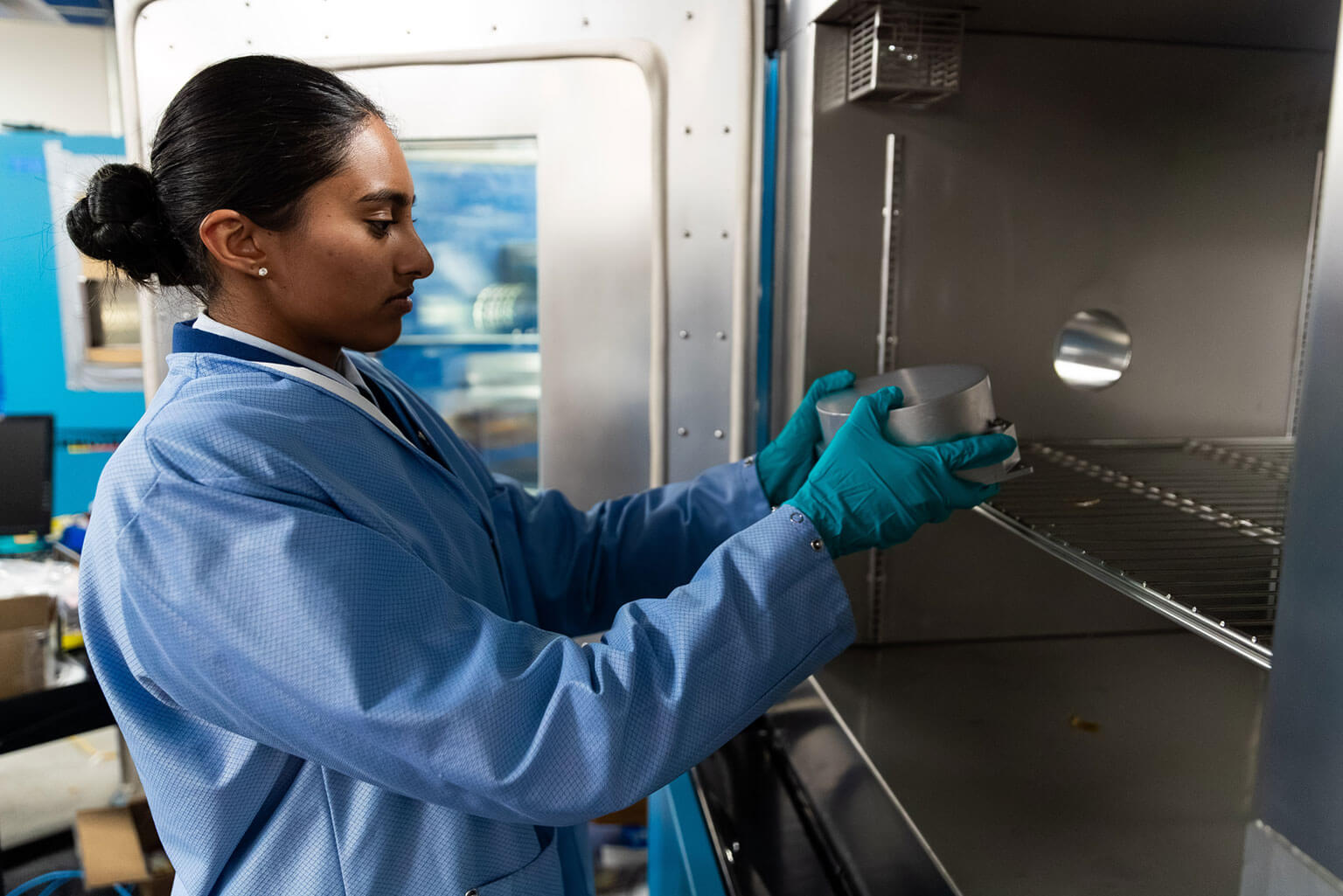
Cadet 1st Class Keerthana Avvaru places a reaction wheel into a thermotron at the U.S. Air Force Academy, Colo., May 6, 2026. Components used in the FalconSAT program are tested in hot and cold temperatures to evaluate how they respond in space. (U.S. Air Force photo by Ray Bahner)
By Harry Lundy
U.S. Air Force Academy Strategic Communications
U.S. AIR FORCE ACADEMY, Colo. – At the U.S. Air Force Academy, cadets deliver end-of-semester reviews to faculty and leaders from the Department of War and the aerospace industry for the Academy’s Falcon satellite program.
Cadets focus on a specific FalconSAT area, such as design, testing, building or operations. Faculty provide guidance throughout the yearlong capstone project. Cadets present findings, receive feedback and generate interest in future collaborations.
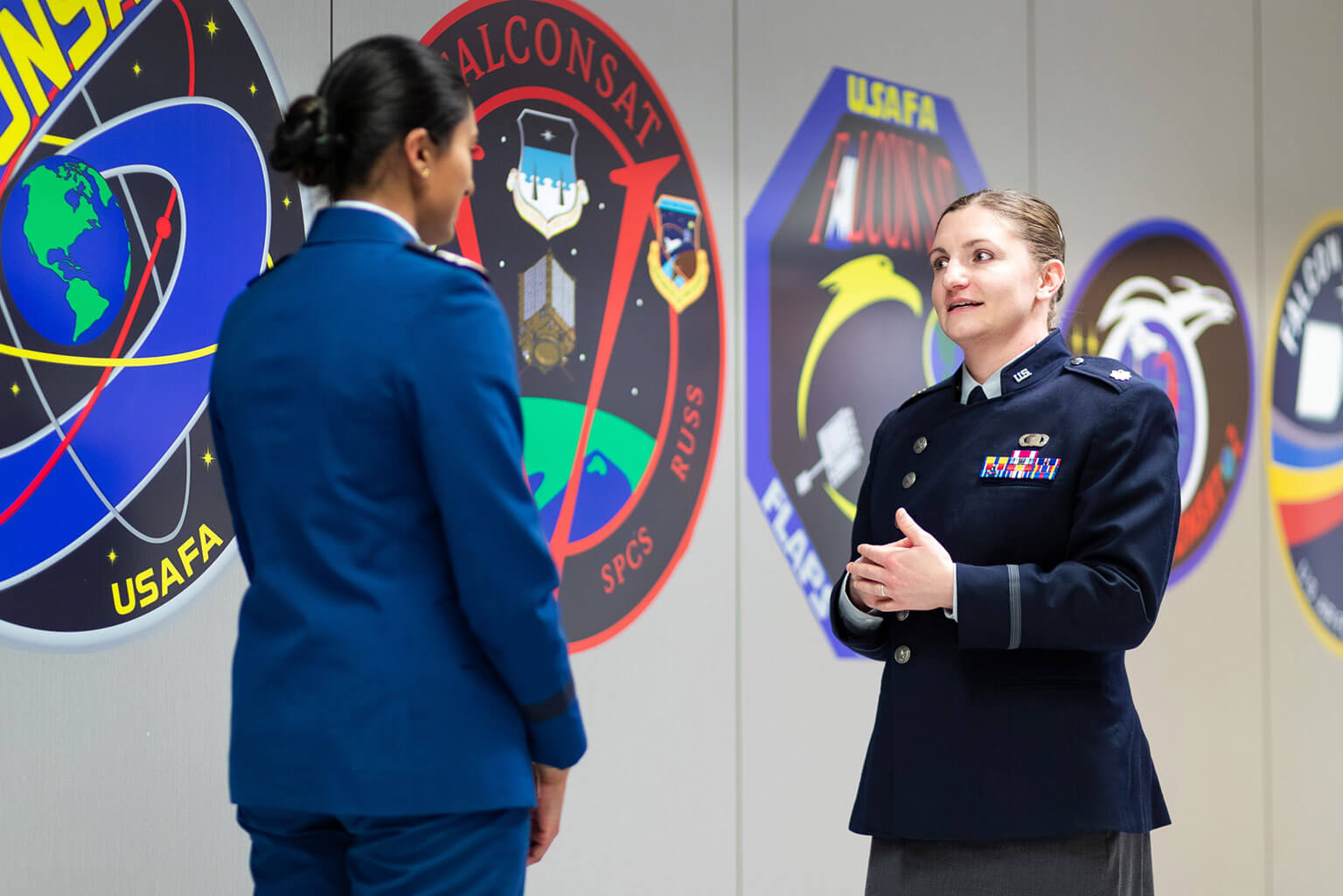
Cadet 1st Class Keerthana Avvaru, left, receives feedback from Maj. Julia Bell in the Space Systems Research Center, at the U.S. Air Force Academy, Colo., May 6, 2026. Avvaru and her team developed a reaction wheel for the FalconSAT program that helps satellites adjust their position in space. (U.S. Air Force photo by Ray Bahner)
Cadets take active role in satellite development
Maj. Julia Bell, director of the Space Systems Research Center, said the review focuses on a cadet-first mission concept when supporting mission partners.
“We get them involved as much as we can in development efforts,” said Bell. “We look at every project and decide how cadets can take part in important projects that provide a meaningful learning experience in the capstone.”
Cadet 1st Class Keerthana Avvaru works on the reaction wheel team. The wheel allows the satellite to adjust its position in space. This marks the first year cadets have built the reaction wheel in-house rather than outsourcing the component.
“This is really important for the FalconSAT program,” said Avvaru, an astronautical engineering and applied mathematics major, “This is a capabilities-based program, so we are able to manufacture the component, change the design and test based upon changing requirements.”
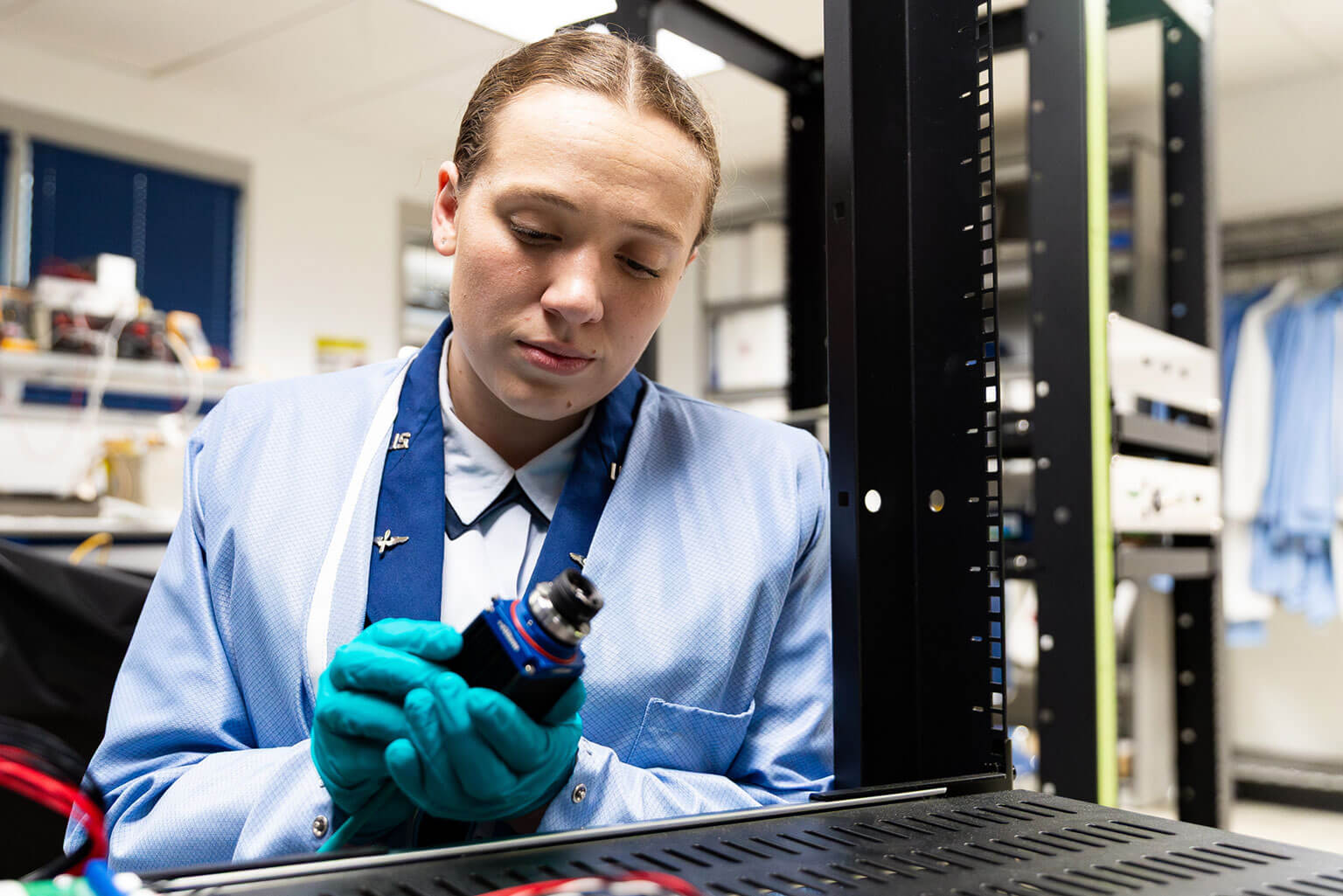
Cadet 1st Class Emma Sanchez prepares a star tracker camera for a pointing test at the U.S. Air Force Academy, Colo., May 6, 2026. The camera supports the FalconSAT program by helping operators to change a satellite’s position and orientation during its mission. (U.S. Air Force photo by Ray Bahner)
Cadets learn to adapt under pressure
Cadet 1st Class Emma Sanchez, an astronautical engineering major, worked on the star tracker team. The team is responsible for adjusting the satellite orientation using a camera that captures images of stars to ensure the satellites are properly aligned during missions.
“There have been a couple of times we have had a test ready to execute, and on the day we were presenting, we learned that the mission is going in a different direction,” said Sanchez. “At first, it was frustrating to lose two months’ work, but you quickly learn that in a competitive field, this is an operational reality, and now I like knowing that I can deal with that change and continue to move forward.”
Sanchez and her team encountered another challenge while calibrating a star tracker camera during an evening pointing test. The team initially planned to use the North Star because it was easiest to identify, but nearby mountains blocked their view.
With limited time to adjust, Sanchez and her partner quickly identified an alternative solution.
“Luckily, we thought of a well-known star in Orion’s belt, Betelgeuse,” said Sanchez. “We were able to pivot and use that start to conduct the test.”
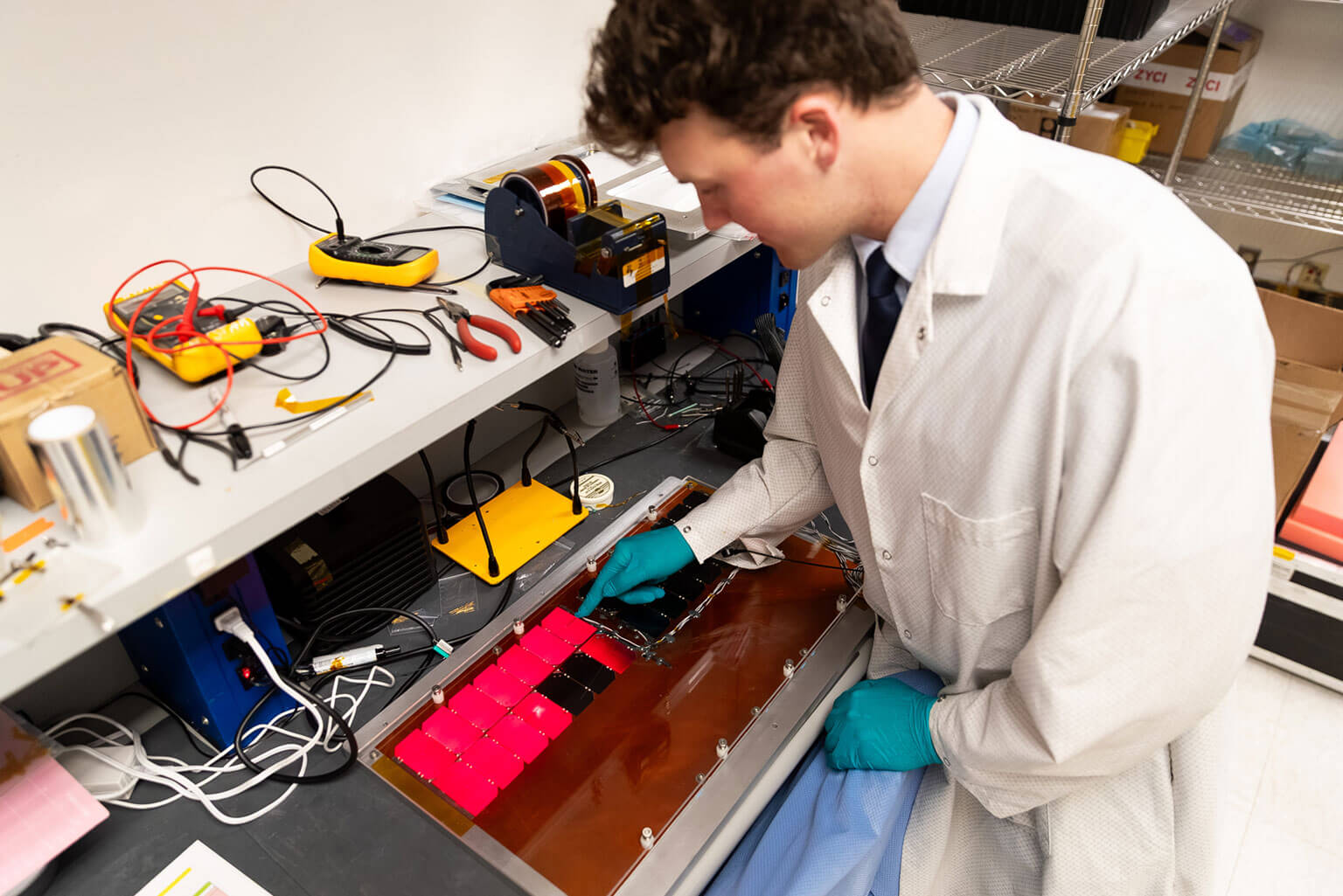
Cadet 1st Class Giorgio Simoncioni tests a solar array in the Space Systems Research Center at the U.S. Air Force Academy, Colo., May 6, 2026. The array will help power future FalconSAT program missions. (U.S. Air Force photo by Ray Bahner)
Sustaining progress across cadet classes
Although the capstone is a year-long senior design experience, building a Falcon satellite can take up to two years, making continuity essential.
The SSRC maintains contractors in the lab year-round. They provide continuity by advancing projects during academic breaks and integrating cadets with each new capstone class.
“Cadets have to build annual continuity documents,” said Bell. “It is part of their grade to document everything they have done to support the next class of cadets.”
This knowledge management process helps preserve technical expertise and ensure long-term project continuity.
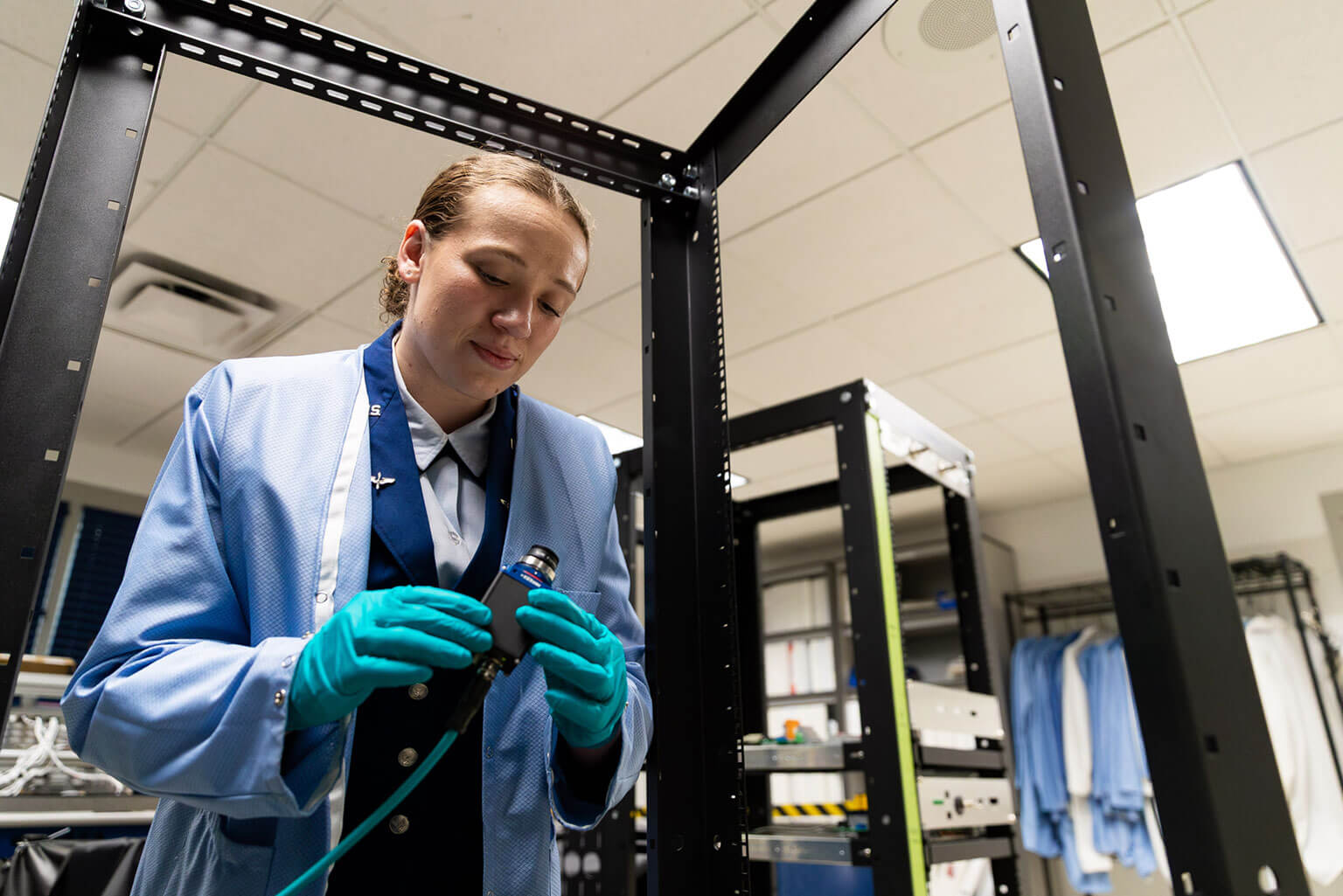
Cadet 1st Class Emma Sanchez checks the connection for a star tracker camera before conducting a test at the U.S. Air Force Academy, Colo., May 6, 2026. The camera supports the FalconSAT program by helping operators determine a satellite’s position and guide its movement during the mission. (U.S. Air Force photo by Ray Bahner)
Developing critical thinking and leadership skills
The FalconSAT program helps cadets develop critical thinking and problem-solving skills they can apply anywhere.
“We do not want cadets to focus on one way to solve an issue,” said Bell. “We ask them to solve problems in several ways, so they think about options they have to use across a broad range of situations in their future.”
Cadets also learn to take ownership of decisions while working through complex problems as a team.
“Cadets don’t know what the right answer is when they start a project, but they work together to solve a problem,” said Bell. “That is what they are going to have to do on day one.”
Avvaru experienced this firsthand while serving as the avionics lead for a nine-person team. She said managing a team and seeking their input when making decisions with limited information has helped prepare her for a future career as an Air Force engineer.
For nearly 20 years, the FalconSAT program has provided cadets hands-on experience while supporting research for government and industry partners.
See cadets working on their projects on Flickr.