
Homeschool Program: Big Planets and Moons = Big Science! on Fri, May 8 @ 10:30 a.m.
Homeschool Program: Big Planets and Moon = Big Science! on Fri, May 8 @ 10:30 a.m.
Friday, May 8 from 10:30 a.m. – 12:00 p.m.
The Big planets and moons of our solar system are a treasure trove of science, information, and wonder – from planets that rain diamonds, to 1,000 mile per hour winds, to a moon that has the most active volcanoes that humans have ever discovered!
Join Dr. Dan Polsgrove, Astronomer, Planetarium educator and former Astronomy professor here at the Academy, for an in-depth show which will serve as a microcosm of all science standards talking about the macro worlds of the outer solar system. From planets that have hundreds of moons, moons that are larger than planets, and the robotic explorers which have visited them, some of which are still orbiting to this day – to solids, liquids and gases, this show will be a wealth of space & science data!
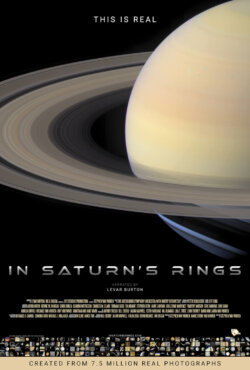
In addition to the Live portion, this program will also include the film, In Saturn’s Rings, a film made completely of REAL images from the Cassini spacecraft mission to the ringed planet.
With our limited seating, please only reserve seats if you know you will be attending. If you RSVP and your plans change for any reason, please email Jeff our Planetarium Director at planetarium@afacademy.af.edu so we can release your seats.
UPDATED BASE PASS PROCESS:
All visitors to the Air Force Academy, 18 years old and older need to either be accompanied by a DoD card holder or request a base pass by clicking the appropriate dated request button on the planetarium webpage (https://www.usafa.edu/facilities/planetarium/) for a Planetarium Visit.
Related NGSS Science Standards:
- MS-ESS1-2: Solar System Formation
- Description: Develop and use a model to describe the role of gravity in the motions within galaxies and the solar system.
- Application to Gas Giants: Students explain how the solar system formed from a disk of gas and dust drawn together by gravity, including the development of the large outer planets.
- MS-ESS1-3: Scale Properties
- Description: Analyze and interpret data to determine scale properties of objects in the solar system.
- Application to Gas Giants: Students compare the size, composition, and distance of gas giants (Jupiter, Saturn, Uranus, Neptune) relative to terrestrial planets.
- MS-ESS1-1: Orbital Mechanics
- Description: Develop and use a model of the Earth-sun-moon system to describe the cyclic patterns of lunar phases, eclipses of the sun and moon, and seasons.
- Application to Gas Giants: While focused on Earth, this standard often involves comparing Earth’s tilt and orbit with those of outer planets to discuss atmospheric characteristics and solar intensity.
Homeschool Program: Big Planets and Moons = Big Science! on Fri, May 8 @ 10:30 a.m.
Homeschool Program: Big Planets and Moon = Big Science! on Fri, May 8 @ 10:30 a.m.
Wednesday, April 22 from 10:30 a.m. - 12:00 p.m.
The Big planets and moons of our solar system are a treasure trove of science, information, and wonder - from planets that rain diamonds, to 1,000 mile per hour winds, to a moon that has the most active volcanoes that humans have ever discovered!
Join Dr. Dan Polsgrove, Astronomer, Planetarium educator and former Astronomy professor here at the Academy, for an in-depth show which will serve as a microcosm of all science standards talking about the macro worlds of the outer solar system. From planets that have hundreds of moons, moons that are larger than planets, and the robotic explorers which have visited them, some of which are still orbiting to this day - to solids, liquids and gases, this show will be a wealth of space & science data!
In addition to the Live portion, this program will also include the film, In Saturn's Rings, a film made completely of REAL images from the Cassini spacecraft mission to the ringed planet.
With our limited seating, please only reserve seats if you know you will be attending. If you RSVP and your plans change for any reason, please email Jeff our Planetarium Director at planetarium@afacademy.af.edu so we can release your seats.
UPDATED BASE PASS PROCESS:
All visitors to the Air Force Academy, 18 years old and older need to either be accompanied by a DoD card holder or request a base pass by clicking the appropriate dated request button on the planetarium webpage (https://www.usafa.edu/facilities/planetarium/) for a Planetarium Visit.
Related NGSS Science Standards:
MS-ESS1-2: Solar System Formation
Description: Develop and use a model to describe the role of gravity in the motions within galaxies and the solar system.
Application to Gas Giants: Students explain how the solar system formed from a disk of gas and dust drawn together by gravity, including the development of the large outer planets.
MS-ESS1-3: Scale Properties
Description: Analyze and interpret data to determine scale properties of objects in the solar system.
Application to Gas Giants: Students compare the size, composition, and distance of gas giants (Jupiter, Saturn, Uranus, Neptune) relative to terrestrial planets.
MS-ESS1-1: Orbital Mechanics
Description: Develop and use a model of the Earth-sun-moon system to describe the cyclic patterns of lunar phases, eclipses of the sun and moon, and seasons.
Application to Gas Giants: While focused on Earth, this standard often involves comparing Earth's tilt and orbit with those of outer planets to discuss atmospheric characteristics and solar intensity.