Silver weekend training builds cadet warfighting skills and leadership
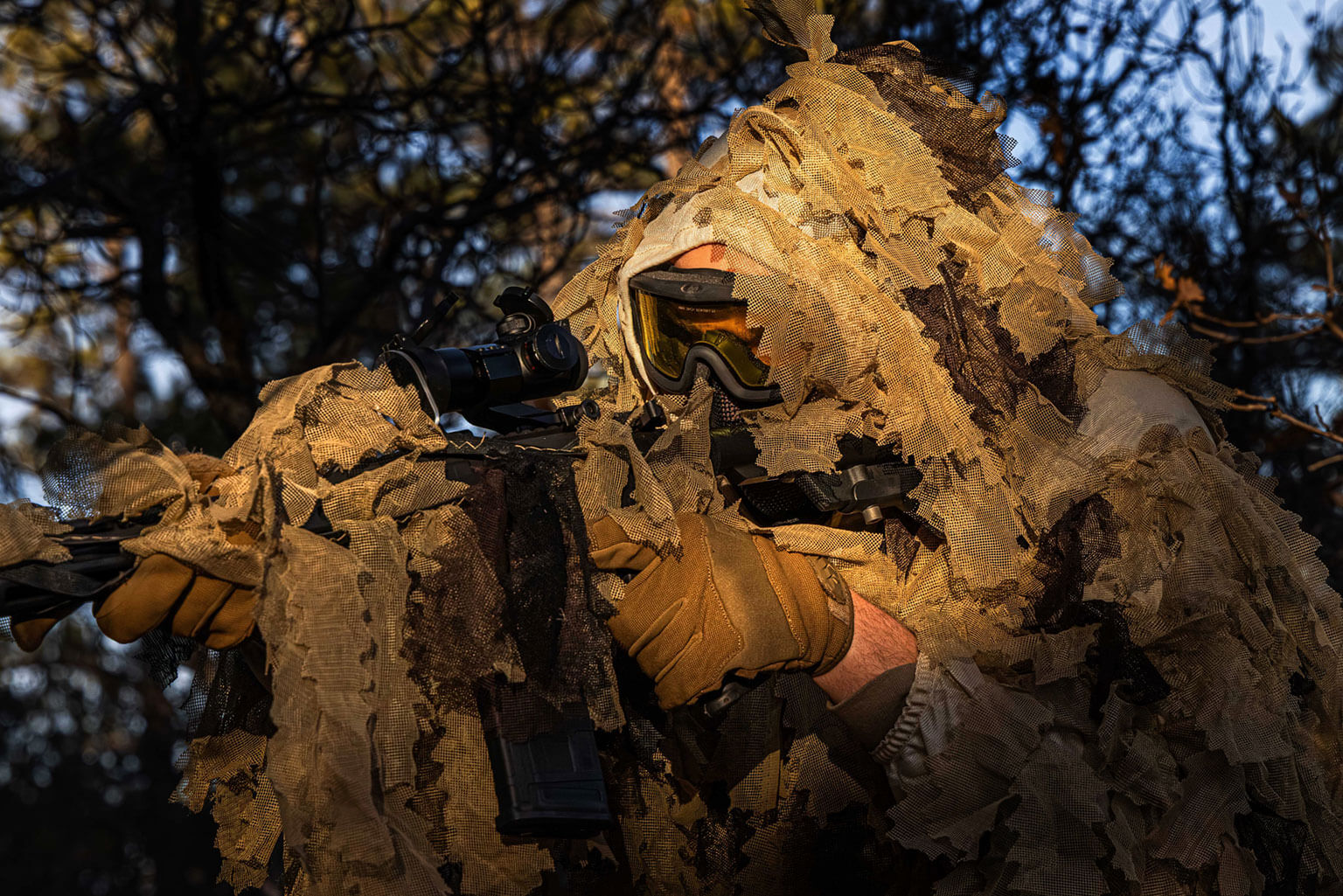
Cadets participate in small-unit tactics scenarios as the Cadet Wing conducts silver weekend Training at the U.S. Air Force Academy, Colorado, Feb. 6, 2026. The training reinforced military fundamentals and cadet-led competencies, including simulated weapons handling, land navigation, Tactical Combat Casualty Care and mission planning. (U.S. Air Force photo by Trevor Cokley)
By SSgt Michael Ward
U.S. Air Force Academy Strategic Communications
U.S. AIR FORCE ACADEMY, Colo. – Silver weekend training is a multi-day cadet-led, wing-directed military training event that engages thousands of cadets across the Cadet Wing simultaneously. It is designed to bridge the gap between classroom instruction and real-world application. While cadets spend the academic week studying doctrine and concepts, silver weekends place them in realistic scenarios that demand teamwork, accountability and time-sensitive decision-making.
The weekend also serves as preparation for the Spring Culminating Exercise (CULEX), allowing cadets to apply desired learning outcomes in operationally focused environments before formal evaluation later in the semester.
“The purpose of silver weekend training is to deliberately transition cadets from classroom understanding to scenario-based execution,” said Cadet 1st Class John Stevenson, Wing A3 Division Chief. “This training reinforces core military skills while requiring cadets to operate as cohesive teams in dynamic situations.”
“Silver weekends like this one help us develop skills you can’t fully replicate in a classroom,” airsoft exercise team lead, Cadet 1st Class Reilly Hill, said. “We learn how to think quickly with limited time and resources and how to communicate effectively when conditions aren’t ideal.”
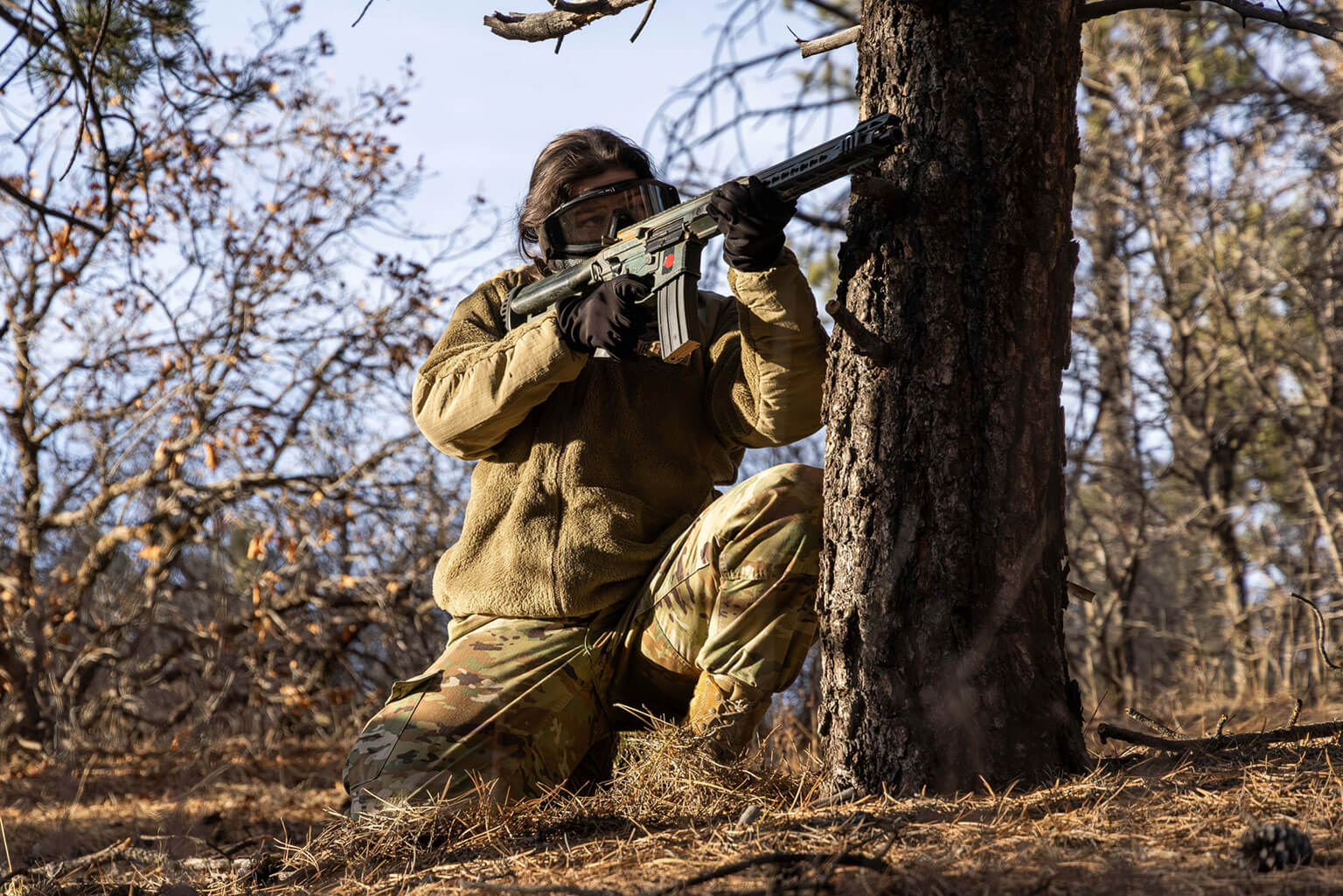
Cadet 1st Class Reilly Hill participates in small-unit tactics scenarios as the Cadet Wing conducts silver weekend Training at the U.S. Air Force Academy, Colorado, Feb. 6, 2026. The training reinforced foundational military skills and cadet-led competencies, including simulated weapons handling, land navigation, Tactical Combat Casualty Care and mission planning. (U.S. Air Force photo by Trevor Cokley)
Cadet-led planning and command and control
Planning and execution of silver weekends requires coordination across training lanes, facilities, transportation, equipment, subject matter experts, safety oversight and weather contingencies. During this event, Group 4 conducted a group-wide exercise, which included 400 cadets participating in airsoft familiarization training.
“As the Deputy Group 4 Commander, my role was to manage command and control from the Tactical Operations Center,” said Cadet 1st Class Samuel Nissen. “I tracked squadron locations and training status’ while providing real-time updates to the Group Commander and the Commandant.”
Nissen said the experience underscored the importance of command and control in complex operations.
“Helping to plan and execute this exercise prepared me for future service as an Air Force officer,” Nissen said. “Effective command and control enables disciplined execution and informed decision-making at every level.”
Coordination with Academy staff members, Cadet Warfighter Instructor Course instructors and cadet organizations, such as the U.S. Air Force Academy’s Tactical Simulation Club (TACSIM), ensured training was conducted to standard.
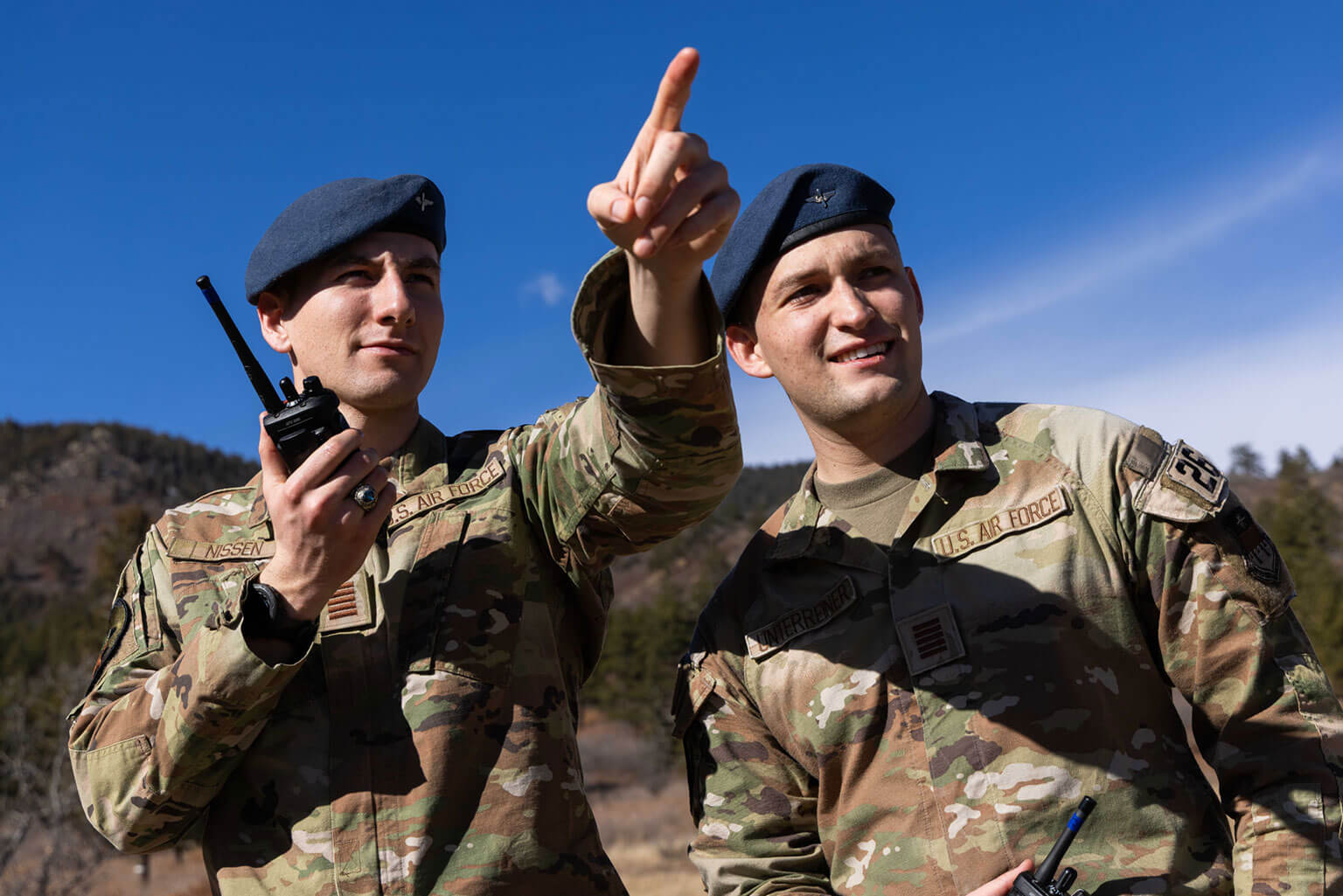
Cadets 1st Class Samuel Nissen and Gavin Unterreiner participate in small-unit tactics scenarios as the Cadet Wing conducts silver weekend Training at the U.S. Air Force Academy, Colorado, Feb. 7, 2026. The training reinforced foundational military skills and cadet-led competencies, including simulated weapons handling, land navigation, Tactical Combat Casualty Care and mission planning. (U.S. Air Force photo by Trevor Cokley)
Leading in uncertainty
Silver weekends are structured to empower all levels of leadership. Cadets are responsible not only for participating, but also for planning, briefing, executing and debriefing events with commander oversight.
Leadership opportunities span every echelon, from squadron commanders delivering operations orders to flight commanders, element leaders and individual cadets making time-sensitive decisions during integrated base defense, casualty response and multi-domain scenarios.
“These environments allow cadets to practice leading peers and managing uncertainty,” Stevenson said. “Those are the same skills that will be assessed later during the CULEX.” On the ground, cadets applied both leadership and tactical fundamentals in increasingly contested scenarios.
“This weekend gave us the chance to put last semester’s training into practice in more realistic scenarios,” Hill said. “The TACSIM club also provided valuable insight into how to move and operate effectively as a team during a firefight.”
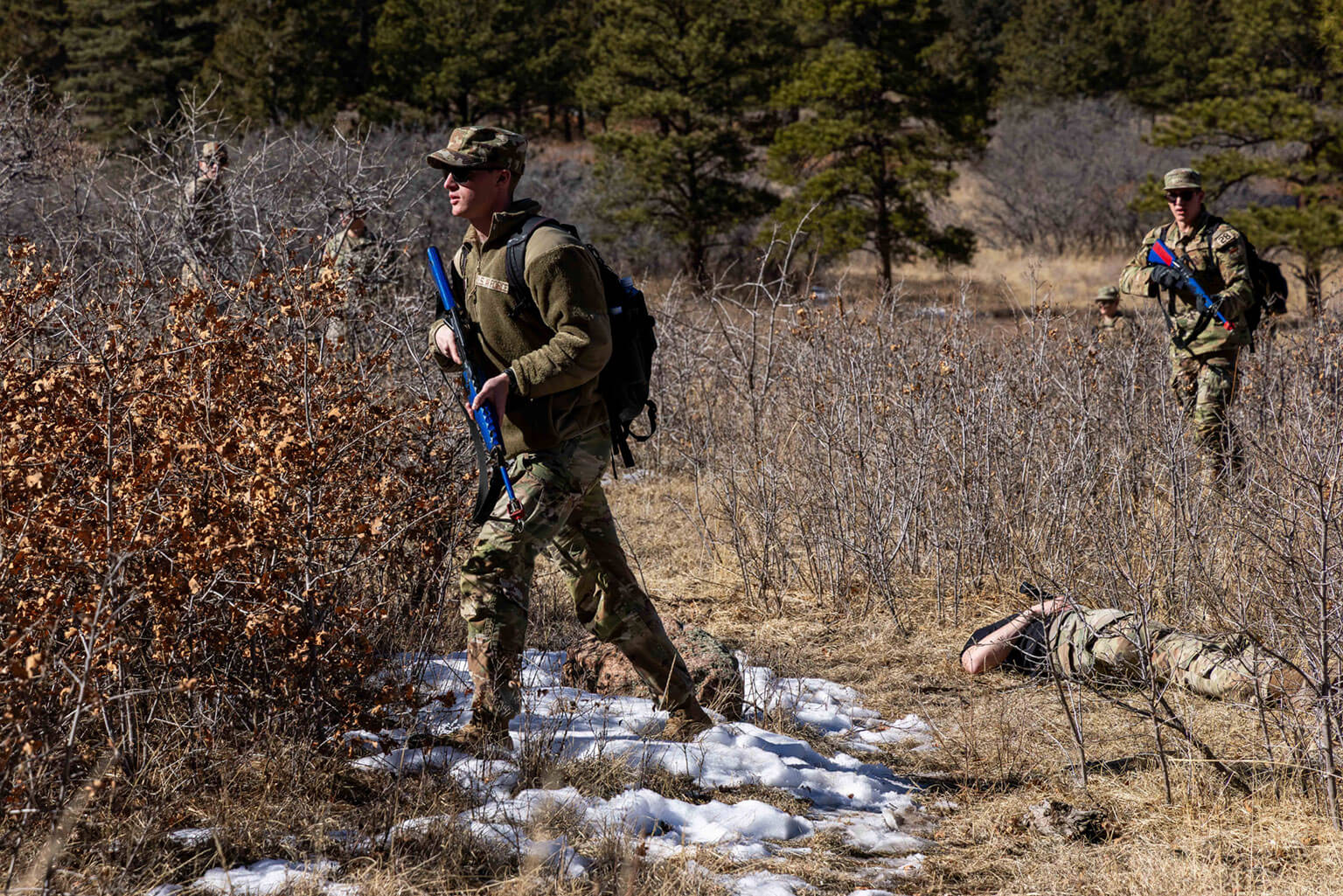
Cadets participate in small-unit tactics scenarios as the Cadet Wing conducts silver weekend training at the U.S. Air Force Academy, Colorado, Feb. 6, 2026. The training reinforced foundational military skills and cadet-led competencies, including simulated weapons handling, land navigation, Tactical Combat Casualty Care and mission planning. (U.S. Air Force photo by Trevor Cokley)
Measuring growth
Success at the conclusion of silver weekends is measured through development rather than perfection. While previous semesters emphasized individual task proficiency in controlled environments, this semester shifts toward team-based operations in contested scenarios.
“We want cadets to walk away more confident, competent and cohesive as a team,” Stevenson said. “That includes clear communication, disciplined tactics and understanding how individual actions contribute to mission success.”
Preparing future officers for complex operations
Planning and executing silver weekends require cadets to think critically, adapt to changing conditions and take ownership of outcomes, skills essential for future officers.
As part of this training, the Academy provides simulated mission environments where cadets can test decision-making, problem-solving and leadership under pressure, often with incomplete information. This training reflects the dedication and collective effort across the Cadet Wing and Academy at large to develop the next generation of Air Force and Space Force officers.
See more photos of Silver Weekend training on Flickr.